
By Aaron Miller-
A widening divide between the United States and its European allies has exposed one of the most serious fractures in the transatlantic alliance in decades, as President Donald Trump sharply escalates his criticism of NATO members over their reluctance to support U.S. military operations in the Middle East.
What began as policy disagreements over the war involving Iran has rapidly evolved into a broader confrontation over the future of the alliance itself.

AD: Capeesh Restaurant
In recent days, Trump has openly questioned the value of NATO, accusing member states of failing to back American efforts to secure critical shipping routes such as the Strait of Hormuz. He has gone as far as suggesting that the United States could withdraw from the alliance altogether, a move that would fundamentally reshape global security dynamics.
The remarks represent one of the most forceful attacks yet on NATO from a sitting U.S. president. Trump has argued that European allies benefit disproportionately from American military protection while contributing too little in return, a longstanding complaint that has intensified amid the current conflict.
His frustration has been compounded by reports that several NATO countries declined to provide logistical or military support, including restrictions on the use of bases and airspace for U.S. operations.

AD: Oysterian Sea Food Restaurant And Bar
At the heart of the dispute is the war involving Iran, which has already disrupted global oil flows and heightened geopolitical tensions. The United States has pushed for a more assertive international response, urging allies to help secure maritime routes and counter Iranian influence. Many European governments, however, have resisted direct involvement, emphasising diplomacy and warning against further escalation.
This divergence has laid bare deeper disagreements about the role of NATO in conflicts beyond its traditional geographic scope. While the alliance was originally designed for collective defense in the Euro-Atlantic region, Washington’s push for broader engagement has met resistance from allies who argue that the Middle East conflict falls outside NATO’s core mandate.
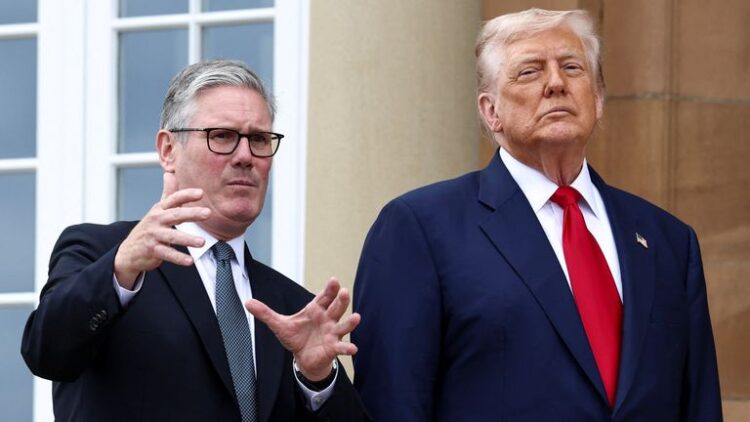
European leaders have responded cautiously but firmly to Trump’s rhetoric, seeking to preserve unity while defending their own strategic positions. British Prime Minister Keir Starmer reaffirmed the United Kingdom’s commitment to NATO, even as he made clear that participation in the Middle East conflict would not align with national interests.
Similarly, officials in France, Germany and other NATO members have emphasised that the alliance is not obligated to support operations that fall outside its agreed framework.
Some countries have called for renewed diplomatic efforts with Iran, warning that military escalation could destabilise the region further and worsen economic fallout, particularly in energy markets already strained by disruptions in the Strait of Hormuz.
The disagreement has also exposed operational tensions within the alliance. Reports that certain European nations restricted U.S. access to military infrastructure have underscored the limits of cooperation in times of crisis. With Washington, such moves are seen as a failure of solidarity; for European governments, they reflect a desire to avoid being drawn into a conflict they did not initiate.
Behind the diplomatic language lies a deeper concern about the future of transatlantic relations. NATO has long been regarded as the cornerstone of Western security, but Trump’s repeated threats to reconsider U.S. participation have raised questions about its durability.
Even without formal withdrawal, analysts warn that reduced American engagement could weaken the alliance’s deterrent power and embolden adversaries.
The rhetoric has also reverberated within the United States, where lawmakers from both parties have expressed support for NATO and cautioned against actions that could undermine long-standing alliances. Legal constraints may complicate any attempt to withdraw from NATO without congressional approval, adding another layer of uncertainty to the unfolding situation.
The current crisis represents more than a disagreement over a single conflict; it reflects a broader shift in how the United States and its allies perceive their roles in global security. Trump’s “America First” approach has increasingly emphasised unilateral action and transactional relationships, challenging the cooperative framework that has defined NATO for decades.
With European nations, the possibility of a less reliable U.S. partner has accelerated discussions about strategic autonomy and defense independence. Some leaders have called for increased military spending and greater coordination within Europe, aiming to reduce reliance on American support. These efforts have gained urgency as tensions with Washington continue to mount.
At the same time, the war in the Middle East has underscored the complexities of modern conflict, where regional disputes can have global repercussions. The closure or disruption of key shipping routes has sent shockwaves through energy markets, highlighting the interconnected nature of economic and security challenges.
NATO’s ability to respond effectively to such crises may depend on its capacity to adapt to evolving threats while maintaining unity among its members.
Experts warn that the alliance is now facing one of its most consequential tests since the end of the Cold War, as tensions between Washington and its European partners deepen amid the ongoing Middle East conflict.
The current standoff has been described by former U.S. ambassador Ivo Daalder as “NATO’s worst crisis in its 77-year history,” underscoring the severity of the moment and raising questions about the credibility of the alliance’s collective defence commitments.
The combination of escalating geopolitical tensions, economic strain linked to disruptions in global energy markets, and widening internal disagreements among member states has created a volatile environment in which missteps could carry far-reaching consequences.
Analysts caution that even without a formal U.S. withdrawal, a reduction in American engagement could significantly weaken NATO’s cohesion and deterrence, placing greater pressure on European nations to reconsider their defence strategies.
Whether the alliance can navigate this period of strain will depend largely on the willingness of its members to reconcile their differences and reaffirm shared commitments at a time when unity is being tested as never before.
With transatlantic rift shows little sign of closing. Trump’s continued criticism, coupled with Europe’s cautious stance on the Middle East conflict, suggests that tensions may persist in the weeks and months ahead. Diplomatic efforts to bridge the divide are ongoing, but the outcome remains uncertain.
What is clear is that the stakes extend far beyond the immediate conflict. The future of NATO and by extension the broader architecture of global security may hinge on how this moment is resolved.
While allies grapple with competing priorities and shifting geopolitical realities, the alliance that once symbolised unity now finds itself at a crossroads, facing questions about its purpose, cohesion and long-term viability.

AD: Heritage And Restaurant Lounge Bar