
By Sammy Jones-
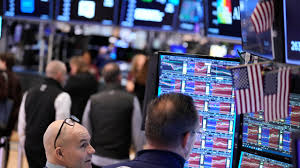
A dramatic turnaround on Wall Street Tuesday sent U.S. markets sharply higher as investors rallied behind signs of easing geopolitical tensions and a potential shift in global risk sentiment.
The Dow Jones Industrial Average climbed more than 1,100 points, marking its strongest single‑day gain since last spring, while the S&P 500 and Nasdaq Composite also delivered some of their best performances in nearly a year.

AD: Capeesh Restaurant
Traders and analysts pointed to growing optimism that the long‑running conflict involving Iran could be nearing a resolution, easing one of the major sources of market volatility in recent weeks.
Reports that global leaders were discussing de‑escalation including comments attributed to U.S. officials and counterparts in Tehran helped soothe nerves about the impact of war on global oil supplies and inflation. Lower energy prices in turn boosted sentiment across broad sectors of the market.
The Dow’s 1,125‑point surge (about 2.5 %) on Tuesday brought the blue‑chip index to roughly 46,341.51, while the S&P 500 rose 2.9 % its largest one‑day uptick since May. The tech‑heavy Nasdaq jumped nearly 3.8 %, with strong gains among major technology and growth stocks.

AD: Oysterian Sea Food Restaurant And Bar
Geopolitical Hopes and Market Dynamics
Investors have endured a volatile quarter as surging oil prices tied to the Middle East conflict weighed on equities and contributed to rising inflation expectations. Earlier this month, persistent geopolitical risk pushed the Dow into correction territory defined as a decline of at least 10 % from recent highs leaving markets anxious and uneven.
But on Tuesday, optimism that hostilities could slow sparked a broad rally. Headlines suggesting potential diplomatic breakthroughs and diminishing threats to key maritime chokepoints like the Strait of Hormuz encouraged investors to buy back shares that had been sold off amid earlier uncertainty. Lower crude oil prices also eased concerns around costs for businesses and households, factors that had previously pressured markets.
Market breadth was notably strong, with energy, technology, and travel sectors all participating in the rebound. Corporate earnings reports and several high‑profile mergers and acquisitions added fuel to the rally, helping to absorb some of the earlier market pessimism.
Analysts noted that although the one‑day surge was impressive, broader economic challenges including inflationary pressures and lingering global instability still loom.
Tuesday’s rebound also lifted smaller stocks, with the Russell 2000 index climbing alongside major benchmarks. Despite the strong performance, year‑to‑date returns for the major indexes remained negative, underscoring the uneven nature of the market’s recovery and the influence of headline‑driven trading.
Market watchers stressed that the recent rally, while substantial, could prove fragile if geopolitical risks resurface or if inflation indicators deteriorate. Some analysts cautioned that the U.S. Federal Reserve’s approach to interest rates whether it opts to tighten policy further to combat inflation or maintain current levels to support growth could shape market direction in the coming months.
Consumer confidence and other economic data remain focal points for traders. A sustained improvement in inflation measures or stronger economic growth figures could reinforce bullish sentiment, while disappointing data might trigger renewed volatility.
Observers also highlighted the influence of oil prices: while they eased during Tuesday’s session, energy markets remain a key driver of economic expectations due to their impact on transportation, manufacturing, and household expenditures.
Despite the uncertainty, the market’s strong performance on Tuesday offered a respite for investors who have been navigating a challenging first quarter. The sharp rebound served as a reminder of how quickly sentiment can shift when geopolitical tensions show signs of easing.
But analysts emphasised that caution is still warranted in an environment where headline news, commodity prices, and policy decisions can rapidly reshape the investment landscape.
Wall Street’s rally represents a hopeful break from weeks of uneven trading, suggesting that even in the shadow of global conflict, markets can respond vigorously to positive signals. Investors who have weathered months of volatility welcomed Tuesday’s surge as a sign that optimism can return when uncertainty begins to ease, even if only temporarily.
The jump in major indices, particularly the Dow’s more than 1,100-point gain, demonstrates the market’s sensitivity not only to economic fundamentals but also to geopolitical developments. Analysts note that the rally was fueled as much by hopes of diplomatic progress and a reduction in global tensions as by corporate earnings or economic data, underlining how sentiment-driven today’s markets have become.
Whether the optimistic momentum will extend into the coming weeks will depend on several interrelated factors. Foremost among them is the trajectory of diplomacy and the potential for de-escalation in conflict regions that have recently rattled investors.
Markets tend to react sharply to perceived threats to global trade and energy stability, particularly when key shipping lanes or oil-producing regions are involved. Any concrete signals from international leaders that negotiations are advancing, or that military risks are abating, could provide further fuel for equities.
Conversely, renewed tension or unexpected flare-ups could quickly reverse the gains, reminding investors of the fragility of sentiment in times of uncertainty.
Economic indicators also remain a central driver of market direction. Data on inflation, employment, consumer spending, and corporate earnings will shape investor expectations regarding the Federal Reserve’s interest rate policies.
If inflation shows signs of slowing while economic growth remains resilient, markets may interpret that as an opportunity for the Fed to maintain or ease monetary policy, potentially extending the rally. On the other hand, persistently high inflation or disappointing growth could temper enthusiasm, keeping investors cautious despite positive geopolitical developments.
Domestic political developments will similarly play a role, as policy decisions on taxation, infrastructure spending, and regulatory changes can influence corporate profitability and market confidence. Analysts emphasize that in today’s interconnected global economy, U.S. markets do not operate in isolation.
Shifts in international trade policy, energy markets, and the economic performance of key partners can amplify domestic trends, further affecting investor sentiment.
In addition to these macroeconomic and geopolitical drivers, market psychology is an increasingly powerful factor. Traders’ perceptions, media coverage, and the influence of social media commentary can accelerate buying or selling trends, sometimes independently of fundamental data.
The recent rally underscores how quickly confidence can rebound when positive narratives take hold, even after prolonged periods of caution and losses.
Tuesday’s surge represents a bright moment for investors, but the sustainability of this rally is uncertain. Economists believe the sustainability will hinge on the interplay of diplomacy, economic performance, domestic policy, and investor psychology. Markets have shown resilience in the face of previous shocks, but the coming weeks are expected to test whether this optimism is durable or merely a fleeting response to favourable headlines.

AD: Heritage And Restaurant Lounge Bar