
By Frank Offiong-
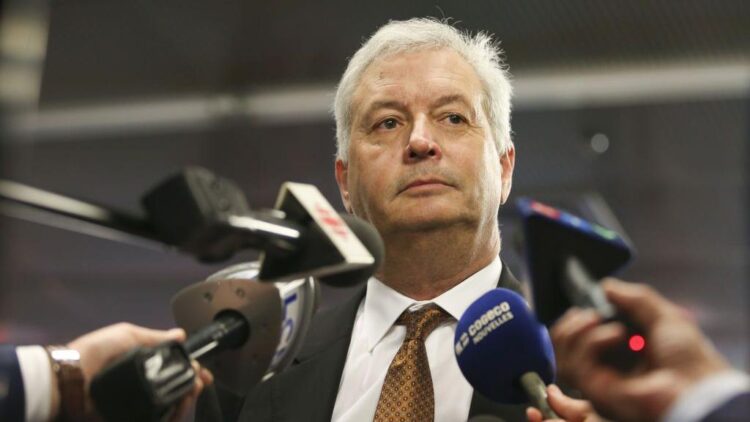
The chief executive of Canada’s flag carrier, Air Canada, announced Monday that he will retire later this year amid a fierce public and political backlash over a largely English‑language condolence message he delivered after a deadly plane crash.
Michael Rousseau, who has led the airline since 2021, informed the board that he intends to step down by the end of the third quarter of 2026, capping nearly two decades in senior leadership. The decision follows intense criticism of a video message issued after a March 22 collision at New York’s LaGuardia Airport, which killed two Air Canada pilots and injured dozens of others.

AD: Capeesh Restaurant
The controversy began when Rousseau posted a four‑minute recorded message expressing sorrow for the victims of the crash. The message, however, was delivered almost entirely in English, with only two words in French “bonjour” and “merci” and French subtitles accompanying the video.
That choice ignited a national outcry in Canada, an officially bilingual country, particularly because one of the pilots killed, Antoine Forest, was a French‑speaking Quebecer. Critics said the message appeared insensitive to the linguistic and cultural realities of Canada and especially to the French‑speaking communities that form the heart of Air Canada’s customer base.
Prime Minister Mark Carney publicly rebuked Rousseau’s decision to issue condolences primarily in English, calling the unilingual message a sign of “lack of judgment and lack of compassion” in the aftermath of a tragic event.

AD: Oysterian Sea Food Restaurant And Bar
The Quebec legislature also passed a unanimous motion calling for Rousseau’s resignation, amid calls from provincial leaders such as Quebec Premier François Legault for more meaningful acknowledgment of French language and culture in official communications. Hundreds of complaints were filed with the Office of the Commissioner of Official Languages following the video.
Rousseau’s retirement announcement has spotlighted broader tensions in Canada over bilingualism and the role of corporate leadership in respecting cultural norms. Although formally a private company, Air Canada has, over decades, come to symbolise Canadian national identity.
It is headquartered in Montreal, the predominantly French‑speaking provincial capital of Quebec, where the majority of residents speak French as their first language. With a result, critics argued, leaders of the airline are expected to command both official languages, especially when addressing sensitive tragedies that affect families and communities across cultural divides.
The debate over language expectations was already underway before the crash incident. According to longstanding media coverage, Rousseau had faced criticism in prior years for not speaking French fluently despite serving in Montreal and had pledged to improve his language skills when he became CEO.
That pledge and his limited progress toward fluency reignited scrutiny when he delivered the condolence video mostly in English. Federal lawmakers summoned him to appear before the House of Commons official languages committee, underscoring the political sensitivity of the issue.
Air Canada’s own statement on Monday framed Rousseau’s retirement as part of a planned succession process. The airline’s board said it has been working for more than two years on leadership development and succession planning, including through internal programs and a global search for potential candidates.
That search, the company noted, will consider a range of leadership criteria, including the ability to communicate in French a clear signal that language skills figure prominently in future expectations for the airline’s top job.
In his public remarks accompanying the retirement announcement, Rousseau acknowledged his long tenure and the contributions he and his team made to strengthen Air Canada’s financial footing, expand its network, and guide the airline through past crises, including the COVID‑19 pandemic and earlier industry challenges. He expressed gratitude to employees and shareholders while committing to support a smooth transition to his successor.
Yet outside observers insist that this episode will be remembered as more than a routine corporate transition. Language and cultural advocates argue that the uproar highlights enduring questions about national identity and the responsibilities of leadership in a bilingual society.
“To many Quebecers and Canadians alike, this was not just about video subtitling,” one language policy expert noted. “It spoke to deeper issues of respect and recognition at a moment of grief.”
Opponents of the backlash, however, say the criticism was overstated, arguing that Rousseau’s primary obligation was to convey sincerity and support in a way he felt comfortable and effective. Some commentators suggested that an imperfect attempt at French might not have resonated genuinely or could even have sparked further controversy.
Others went further, questioning whether language fluency should be a qualification for corporate leadership in Canada’s global airline industry.
While the story continues to unfold, the LaGuardia crash itself remains the focal point of investigations into aviation safety. While condolences and communications have dominated headlines, federal and U.S. authorities are still probing the mechanics of the runway collision and its causes, with Air Canada and regulators cooperating in those inquiries.
The human toll of the accident particularly among crew members and passengers continues to shape public sentiment and underscore the urgency of thoughtful leadership.
To many Canadians, particularly those in Quebec, the controversy over Rousseau’s language choices may leave a lasting imprint on how leadership accountability and cultural sensitivity are understood in both corporate and public spheres.
The episode has sparked a wider cultural conversation about how linguistic rights and national identity intersect, even within private institutions, and what responsibilities leaders carry in honouring that tradition.
Michael Rousseau’s departure may thus mark not only the end of an era at Air Canada but also a pivotal moment in Canada’s ongoing dialogue about bilingualism, representation, and leadership in a culturally diverse nation.
His retirement underscores the growing expectations placed on leaders of nationally symbolic institutions to reflect Canada’s linguistic duality and cultural plurality, particularly in times of crisis.
The backlash over his English-only condolence message following the LaGuardia crash illuminated the tension between corporate communication practices and the country’s deep-rooted commitment to both English and French language communities.
Beyond Air Canada, the episode has sparked broader reflection on how cultural sensitivity intersects with executive accountability across Canada’s private and public sectors.
It raises pressing questions about whether senior leaders should be required to possess fluency in both official languages, not only as a technical skill but as a demonstration of respect for the country’s diverse population.
Media coverage, political commentary, and social media debates have amplified these discussions, suggesting that Canadians are increasingly attentive to symbolic acts of inclusivity and recognition, even in high-pressure moments such as crises or tragedies.

AD: Heritage And Restaurant Lounge Bar