
By Ben Kerrigan-
In a diplomatic and media firestorm this week, the head of Germany’s largest defence firm ignited fierce debate by comparing Ukrainian drone production to “children playing with Lego,” an analogy that Kyiv’s leadership and many observers have roundly rejected as insulting and dismissive of Ukraine’s wartime innovations.
The comments by Armin Papperger, chief executive of Rheinmetall, came in an interview published Friday and have reverberated across political and social media circles in Europe and Ukraine alike, underscoring rising tensions even among countries that remain formally allied.

AD: Capeesh Restaurant
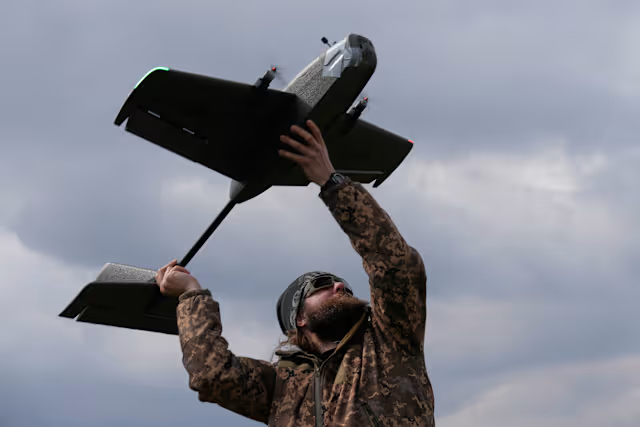
Papperger told The Atlantic magazine that Ukraine’s current approach to building and deploying drones which have become a crucial tool on the battlefield against Russia resembles improvised tinkering rather than advanced weapons development.
“It’s like playing with Lego,” he said, and went further by suggesting that some components were produced by “Ukrainian housewives” using 3D printers in kitchens, rather than through sophisticated technological innovation.
The remarks immediately triggered strong responses from Ukrainian officials. President Volodymyr Zelenskyy dismissed the comments as “strange” and responded sarcastically that if such capabilities truly emerged from housewives, then those same housewives “could also be the CEO of Rheinmetall.”

AD: Oysterian Sea Food Restaurant And Bar
Kyiv’s prime minister and presidential advisors added their voices in defence of Ukraine’s defence industry, emphasising that both women and men are instrumental in maintaining production under the extreme conditions of wartime.
The fallout from Papperger’s remarks has been swift. Social media in Ukraine saw a wave of criticism and reclamation of the narrative under the hashtag #MadeByHousewives, as ordinary Ukrainians and analysts alike pointed to the real-world success of inexpensive, home-grown drones that have effectively targeted much costlier Russian equipment.
Supporters of Kyiv’s defence efforts argue that this type of technology often small, expendable, and easy to produce reflects the changing nature of modern warfare rather than a lack of innovation. Many such drones have been credited with degrading armoured columns and key logistics points, giving Ukraine an asymmetric edge despite the vast industrial advantages of its adversary.
Rheinmetall, for its part, has attempted to defuse the controversy. In statements on social platforms like X, the company expressed “the utmost respect” for the sacrifices made by the Ukrainian people and their military, stressing admiration for the determination and resilience that has characterised Kyiv’s defence efforts.
The episode has opened a rare public fracture between German defence industry leadership and Ukrainian government officials, at a time when Western support for Ukraine’s war effort is already under scrutiny within Germany and across Europe.
Analysts say the criticism taps into broader debates over how Western governments and corporations perceive the dynamics of the Ukraine war. While traditional defence contractors like Rheinmetall are rooted in decades-old models of high‑tech military manufacturing, Ukraine’s defence sector has shown agility in deploying lower‑cost, rapidly iterated systems that can be produced at scale.
The contrast between these approaches has challenged assumptions about what constitutes “innovation” in contemporary conflict, particularly in an era of drone warfare where small, modular technology can have outsized battlefield impacts.
On the political front, the fallout comes amid ongoing discussions within NATO about how to sustain support for Ukraine. As the war enters its fifth year, debates remain over the scale, type, and pace of weapons deliveries from Western capitals.
The German government has faced both domestic and international pressure over its posture on heavy weapons deliveries, issues further complicated by controversies such as the one ignited by Papperger’s remarks.
Critics of the German position argue that dismissiveness toward Ukraine’s contributions risks undermining the solidarity that has kept Western backing relatively cohesive.
Others suggest that such comments, while inflammatory, highlight a necessary conversation about strategic defence priorities and the evolving role of conventional arms producers in the age of innovative, decentralised defence manufacturing.
At the heart of the dispute lies a broader question: what defines technological progress in warfare? Is it the massive, expensive platforms developed by established defence firms, or the smaller, more adaptable systems that can be fielded quickly and often at lower cost?
Ukraine’s utilisation of drones many of which are inexpensive, commercially accessible, and produced in surprising numbers has challenged many Western military assumptions, even as it forces allied nations to reconcile industrial interest with frontline effectiveness.
The political leadership in Kyiv appears intent on turning the episode to its advantage, using the controversy to highlight Ukrainian ingenuity and resolve.
Well as rejecting Papperger’s characterisation outright, President Zelenskyy is simultaneously advancing Ukraine’s defence industry as a potential exporter of technology to partners in the Middle East and beyond an effort designed to expand Kyiv’s diplomatic and economic footprint while alleviating the material pressures of prolonged conflict.
In Berlin, reaction among policymakers has been more measured, with government officials avoiding direct confrontation with Rheinmetall while affirming continued support for Ukraine. However, Germany still grapples with internal tensions over military aid, reflected in persistent debates about weapons deliveries and defence policy direction.
These dynamics underscore the complex interplay between industrial interests, diplomatic relationships, and public perceptions as Western allies navigate support for Ukraine in a long, costly war.
With Ukrainians, the episode has become more than a media story; it has become a rallying point. The widespread social media response and political rebuttals illustrate a determination to assert legitimacy and pride in the country’s homegrown defence capabilities.
Whether dubbed “Lego” or lauded as groundbreaking, Ukraine’s drone producers have symbolised the broader resilience of a nation fighting for its survival and sovereignty.
While the controversy evolves, it also highlights how closely national narratives and military effectiveness are intertwined in the information age. In a conflict where morale and perception carry strategic weight, even offhand remarks by defence officials can have diplomatic impacts far beyond their original intent.
Words that may seem trivial in traditional defence circles can quickly become global talking points, shaping international opinion, influencing media coverage, and affecting the political calculations of both allies and adversaries.
The reactions to Rheinmetall CEO Armin Papperger’s “Lego” analogy underscore this reality: what began as a critique of Ukraine’s drone production immediately became a flashpoint for discussions about national pride, resilience, and the legitimacy of grassroots innovation in wartime.
The incident also illuminates the evolving nature of modern conflict, where asymmetrical approaches such as small, modular drone systems challenge conventional assumptions about military power. Ukraine’s successes with inexpensive, rapidly produced technologies have forced traditional defence companies and allied governments to reconsider definitions of effectiveness and strategic value.
Beyond the battlefield, this debate over innovation, respect, and alliance cohesion will influence policy decisions, funding priorities, and diplomatic messaging for years to come. In a war where perception can be as decisive as firepower, the careful calibration of rhetoric has become a critical component of strategy, making even casual statements a matter of geopolitical consequence.

AD: Heritage And Restaurant Lounge Bar