
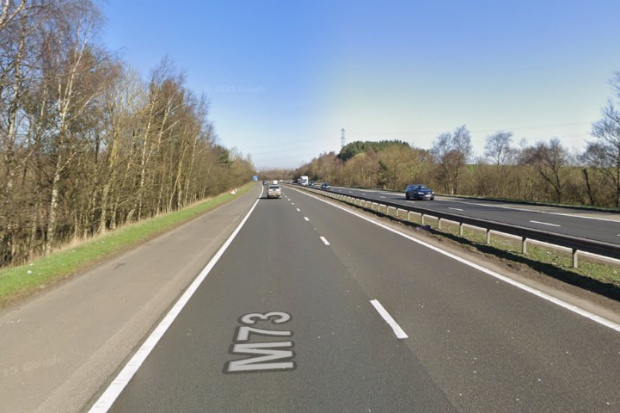
By Lucy Caulkett-
A multi-vehicle pile-up on the M73 that left five people hospitalized has once again brought into sharp focus the fragile balance between speed, safety, and human error on Britain’s motorways. While the immediate aftermath of the crash saw emergency services responding swiftly and casualties receiving prompt medical attention, the incident raises deeper questions about the conditions that lead to such collisions—and whether enough is being done to prevent them.
The crash, which involved up to 15 vehicles in quick succession, unfolded in a manner that has become all too familiar on high-speed roads. A sudden disruption—whether caused by braking, poor visibility, or momentary distraction—triggered a chain reaction that drivers behind had little time to avoid. Within seconds, what may have begun as a minor incident escalated into a serious collision involving multiple cars and resulting in injuries significant enough to require hospital treatment. The injured were rushed to Queen Elizabeth hospital for treatment.

AD: Capeesh Restaurant
Although authorities have not yet released a full breakdown of the causes, early indications suggest that typical contributing factors may have been at play. These often include reduced stopping distances at high speeds, tailgating, and the unpredictable nature of traffic flow during busy periods. Even in good weather conditions, the margin for error on motorways is remarkably thin.
Emergency services arriving at the scene were faced with a complex and potentially dangerous situation. Multi-vehicle incidents present unique challenges: multiple casualties, obstructed carriageways, and the risk of secondary collisions if approaching drivers fail to slow down in time. Fire crews, paramedics, and police officers worked in coordination to secure the area, treat the injured, and manage traffic disruption.
Five individuals were transported to hospital, though the severity of their injuries has not been publicly detailed. What is clear, however, is that incidents like this rarely affect only those directly involved. Families are left shaken, commuters face hours of disruption, and emergency resources are stretched—sometimes diverting attention from other urgent calls.

AD: Oysterian Sea Food Restaurant And Bar
In the hours following the crash, sections of the M73 were closed, causing significant delays and forcing drivers to seek alternative routes. Traffic congestion quickly spread beyond the immediate area, illustrating how a single incident can ripple across the wider road network. For many motorists, the disruption is an inconvenience. For others, it is a reminder of how quickly routine journeys can turn into emergencies.
Yet beyond the immediate impact lies a more persistent issue: the frequency of such incidents and the apparent normalization of motorway collisions. Despite advancements in vehicle safety technology and increased awareness campaigns, multi-vehicle crashes continue to occur with troubling regularity.
Beyond the Headlines: What the M73 Crash Reveals About Modern Driving
The M73 incident is not an isolated event. Across the UK, motorways are witnessing a steady stream of collisions that share similar characteristics—high speeds, dense traffic, and split-second decision-making. Together, these factors create an environment where even minor lapses can have major consequences.
One of the most significant underlying issues is driver behavior. While most motorists understand the importance of maintaining safe distances and staying alert, real-world driving often tells a different story. Tailgating remains common, particularly during peak travel times when impatience and time pressure come into play. The reduced gap between vehicles leaves little room for error, making chain-reaction collisions almost inevitable when something goes wrong.
Distraction is another critical factor. With the increasing integration of technology into vehicles—navigation systems, touchscreens, and mobile connectivity—drivers are faced with more potential distractions than ever before. Even a brief glance away from the road can mean the difference between stopping safely and becoming part of a pile-up.
Weather conditions, while often cited, are not always the primary cause. In many cases, accidents occur in relatively clear conditions, suggesting that human factors play a more decisive role. That said, sudden changes in visibility—such as glare, rain, or fog—can exacerbate already risky situations, particularly on stretches of road where traffic density is high.
Infrastructure also plays a part. The design of motorways, including entry and exit points, lane configurations, and signage, can influence driver behavior and accident likelihood. On busy routes like the M73, where traffic flow can fluctuate rapidly, the ability of the road to accommodate sudden changes becomes crucial. Even small design inefficiencies can contribute to larger problems when combined with high speeds and heavy usage.
The response to incidents like the M73 crash also highlights the resilience—and limitations—of emergency services. Rapid response times and effective coordination are essential in minimizing harm, and in this case, responders appear to have acted swiftly. However, the increasing frequency of such incidents places ongoing pressure on resources, raising questions about long-term sustainability.
There is also a psychological dimension that is often overlooked. For those involved, even minor injuries can be accompanied by lasting trauma. Witnessing or experiencing a high-speed collision can have profound effects, influencing how individuals approach driving in the future. For some, it leads to increased caution; for others, anxiety that can persist long after physical injuries have healed.
From a policy perspective, incidents like this may prompt renewed discussions about road safety measures. These could include stricter enforcement of speed limits, increased use of smart motorway technology, or expanded public awareness campaigns. However, the effectiveness of such measures depends on consistent implementation and public cooperation.
Technology, too, offers potential solutions. Modern vehicles are increasingly equipped with features such as automatic emergency braking, adaptive cruise control, and collision warning systems. While these innovations can reduce the likelihood of accidents, they are not fool proof. Overreliance on technology can create a false sense of security, leading some drivers to pay less attention than they otherwise might.
Ultimately, the M73 crash serves as a reminder that road safety is a shared responsibility. While authorities can implement regulations and improve infrastructure, individual behavior remains a critical factor. Every driver’s decision—how closely to follow, how fast to travel, how attentively to drive—contributes to the overall safety of the road.
As traffic volumes continue to grow and vehicles become more technologically advanced, the challenge will be to ensure that safety keeps pace. This will require not only investment and innovation but also a cultural shift in how driving is perceived. Rather than viewing it as a routine or mundane activity, there is a need to recognize the inherent risks and responsibilities involved.
In the days following the M73 incident, investigations will likely provide more clarity on the specific causes and sequence of events. These findings may inform future safety measures or reinforce existing guidance. However, the broader lessons are already evident.
Collisions like this do not occur in isolation. They are the result of a complex interplay of factors—human, technological, and environmental. Addressing them requires a holistic approach that goes beyond immediate responses and looks toward long-term prevention.
For now, the five individuals recovering in hospital represent the human cost behind the headlines. Their experiences, along with those of countless others affected by similar incidents, underscore the importance of continued vigilance on the roads.
The M73 crash may fade from the news cycle in the coming days, replaced by newer stories and shifting priorities. But the issues it highlights will remain. Each journey on a motorway carries with it an element of risk, and each driver plays a role in determining how that risk is managed.
In that sense, the true significance of the incident lies not only in what happened on that stretch of road, but in what it reveals about the broader state of road safety,and what must be done to improve it.

AD: Heritage And Restaurant Lounge Bar