
By Gavin Mackintosh-
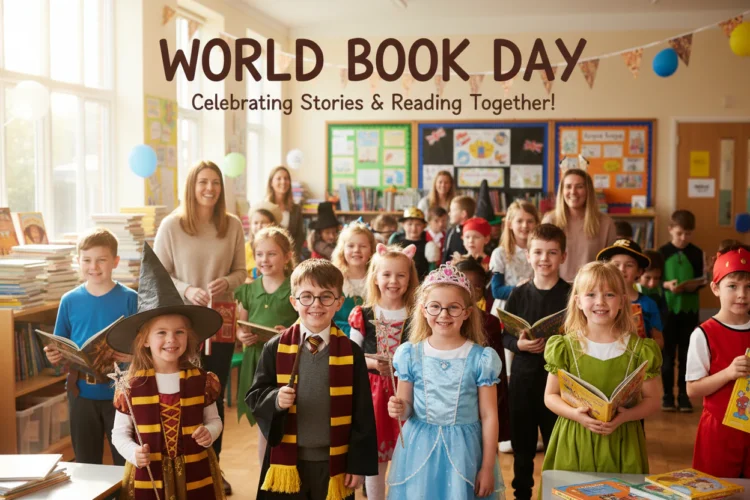
Each year, classrooms across the United Kingdom transform into miniature literary festivals as pupils arrive dressed as their favourite characters, teachers read aloud from beloved stories, and millions of children receive book tokens encouraging them to discover a new title. The occasion is World Book Day, a global celebration of books and reading that has grown into one of the most influential literacy initiatives in the world.
What began as a simple idea—to encourage children to develop a love of reading—has evolved into a powerful reminder of something educators, psychologists and writers have long understood, for reading is one of the most important habits a person can develop. For children in particular, the act of reading is far more than an educational requirement. It is a gateway to language development, critical thinking, imagination and personal ambition.

AD: Capeesh Restaurant
According the National Literacy Trust, the benefits of reading extends to growing empathy, building a child’s confidence, growing imagination
In an age increasingly dominated by screens, short-form content and rapid information consumption, World Book Day has become a moment to pause and reflect on the enduring power of books. The evidence is overwhelming that regular reading, especially during childhood, plays a crucial role in shaping intellectual development and long-term success.
Across the UK, the initiative is supported by schools, publishers and charities working to place books directly into the hands of young readers. One of the key partners is the National Literacy Trust, which has repeatedly highlighted the relationship between reading for pleasure and improved educational outcomes. According to literacy researchers, children who read regularly outside the classroom consistently outperform those who do not, not only in English but across a wide range of academic subjects.

AD: Oysterian Sea Food Restaurant And Bar
The reasons for this are both simple and profound. Reading exposes children to language in its richest form. Every page introduces new vocabulary, sentence structures and ways of expressing ideas. Over time, this exposure strengthens both comprehension and writing ability. Children who read frequently develop a larger vocabulary, stronger grammar and a deeper understanding of how language works.
Teachers often observe that pupils who read widely tend to produce more sophisticated written work. Their essays show greater clarity, their storytelling becomes more imaginative and their ability to articulate complex ideas improves dramatically. In many ways, reading functions as an invisible teacher, quietly shaping a child’s communication skills long before formal writing instruction takes place.
The benefits extend far beyond vocabulary. Reading also plays a crucial role in developing cognitive abilities such as concentration, memory and analytical thinking. When a child reads a story, they are not simply absorbing words. They are following plotlines, interpreting characters’ motivations and anticipating what might happen next. This process engages the brain in ways that encourage deeper thinking and problem-solving.
For primary school children, these skills are particularly important. Early exposure to books helps establish the neural pathways associated with language processing and comprehension. Educational psychologists have long argued that the earlier children begin reading regularly, the stronger their academic foundations become.
Stories also stimulate imagination, an often overlooked but essential component of intellectual development. When children read, they must construct entire worlds in their minds. Unlike film or television, where images are provided by the screen, books require readers to visualise settings, characters and events for themselves. This mental exercise strengthens creativity and encourages flexible thinking.
The impact of reading becomes even more pronounced during the transition into secondary school. At this stage, academic subjects become more demanding and students are expected to analyse information critically, construct arguments and interpret complex texts. Students who have developed strong reading habits during their early years are better equipped to handle these challenges.
Literature also introduces young people to perspectives beyond their own experiences. Through novels, biographies and historical narratives, readers encounter different cultures, social realities and moral dilemmas. This exposure fosters empathy and emotional intelligence—qualities increasingly recognised as essential for personal and professional success.
Educators often describe reading as a bridge between knowledge and imagination. It allows young people to explore worlds they may never physically encounter while simultaneously strengthening their ability to understand the real one.
The influence of reading on personal ambition is another important dimension. Many successful individuals credit books with shaping their aspirations during childhood. Stories about explorers, scientists, leaders and innovators can ignite a sense of possibility that inspires young readers to pursue their own ambitions.
When children read about characters overcoming obstacles or achieving extraordinary goals, they begin to internalise similar narratives about their own potential. Books become sources of motivation, quietly reinforcing the belief that effort and curiosity can lead to achievement.
The relationship between reading and educational attainment is particularly relevant in a society where literacy levels remain uneven. Despite significant progress in recent decades, surveys suggest that a substantial number of children leave school without strong reading skills. Literacy advocates warn that this gap can have long-term consequences, affecting employment opportunities and social mobility.
Initiatives like World Book Day aim to address this challenge by encouraging reading as an enjoyable activity rather than a purely academic obligation. The idea is simple: if children associate books with pleasure and discovery, they are more likely to continue reading throughout their lives.
One of the most successful elements of the campaign is the distribution of book tokens to pupils. These vouchers allow children to select a book of their own choosing, giving them a sense of ownership over their reading experience. For many families, particularly those facing financial constraints, the tokens provide access to books that might otherwise be out of reach.
The involvement of authors, illustrators and publishers also plays a vital role in maintaining enthusiasm for reading. School visits, storytelling sessions and literary workshops allow children to meet the creators behind their favourite stories, transforming books from abstract objects into living works of imagination.
For primary school pupils, these experiences can be transformative. Meeting an author or hearing a story read aloud can spark a lifelong interest in literature. Teachers frequently report that such encounters motivate reluctant readers to pick up books they might otherwise ignore.
At the secondary school level, reading becomes increasingly linked to independent learning. Teenagers who read widely often demonstrate stronger research skills, greater curiosity and a more confident approach to academic challenges. Reading encourages them to explore topics in depth, to question assumptions and to develop informed opinions.
These intellectual habits are essential not only for academic success but for navigating the complexities of modern society. In an era of misinformation and rapid digital communication, the ability to read critically and evaluate information is more important than ever.
The long-term benefits of reading are not limited to childhood. Adults who maintain regular reading habits often report improved concentration, reduced stress and greater intellectual engagement with the world around them. Books provide opportunities for reflection and personal growth, offering insights that can influence careers, relationships and decision-making.
Research into cognitive health has also suggested that reading may contribute to maintaining mental sharpness later in life. Engaging with complex texts exercises the brain, strengthening neural connections and encouraging lifelong learning.
The habit of reading begins with memories formed during childhood. A favourite bedtime story, a gripping adventure novel or an inspiring biography can leave a lasting impression. These early experiences shape attitudes towards books that persist long after formal education has ended.
World Book Day therefore serves not only as a celebration of literature, but as a reminder of the broader cultural value of reading. Books remain one of the most accessible and powerful tools for education and personal development.
The challenge facing educators today is ensuring that reading retains its central place in children’s lives. The rise of digital entertainment has transformed how young people spend their time. Smartphones, social media and streaming platforms compete for attention in ways that books rarely did in previous generations.
Yet many teachers argue that the solution is not to view technology as an enemy of reading but to reinforce the unique benefits that books provide. Unlike fast-paced digital media, reading encourages sustained concentration and deeper engagement with ideas.
Parents and schools both play a crucial role in nurturing this habit. Simple practices such as setting aside time for reading, discussing books at home and providing access to libraries can make a significant difference. When children see adults reading regularly, they are more likely to view books as valuable and enjoyable.
Libraries themselves remain vital institutions in this effort. Public libraries offer access to thousands of books free of charge, creating spaces where children and families can explore literature together. In many communities, librarians serve as literacy champions, organising reading clubs, storytelling sessions and educational events.
The continued success of World Book Day demonstrates that enthusiasm for books remains strong despite the challenges of the digital age. Each year, the celebration brings together schools, publishers and families in a shared effort to promote reading.
Behind the costumes and classroom activities lies a deeper purpose. The day is designed to spark curiosity and encourage children to discover the joy of stories. For some pupils, it may mark the beginning of a lifelong relationship with books.
The impact of that relationship can be profound. Reading shapes the way people think, communicate and understand the world. It strengthens the foundations of education while simultaneously expanding imagination and ambition.
For primary and secondary school pupils navigating the formative years of their development, books offer guidance, inspiration and intellectual stimulation. They provide access to knowledge accumulated over centuries while encouraging readers to imagine new possibilities for the future.
In a society increasingly defined by rapid change and information overload, the quiet act of reading remains one of the most powerful tools for personal growth. World Book Day serves as an annual reminder that nurturing this habit is not simply an educational objective but a cultural investment in the next generation.
The stories children discover today may well influence the ideas, careers and innovations that shape tomorrow’s world.

AD: Heritage And Restaurant Lounge Bar