

By James Simons-
A powerful new campaign launched this week is calling on the NHS to improve early diagnosis of a rare but potentially life-threatening childbirth condition a demand that comes amid growing scrutiny of maternity safety across the health service.
The Action for Accreta campaign, founded by mother-and-campaigner Amisha Adhia, aims to transform how the NHS detects and manages placenta accreta spectrum (PAS) a serious condition in which the placenta embeds too deeply into the wall of the uterus, putting women at risk of catastrophic bleeding if undiagnosed before delivery.

AD: Capeesh Restaurant
Adhia’s own experience in which five hospitals failed to diagnose her condition correctly has become a rallying cry for advocates and clinicians alike, who warn that many women could be entering labour without vital specialist care because the condition was not spotted early enough in pregnancy.
“The Guardian reports her story adding that placenta accreta can cause catastrophic bleeding in minutes if it isn’t anticipated,” Adhia told reporters this week, highlighting the urgency of improving diagnostic pathways and access to specialist teams before women go into labour.
The Challenge Of Placenta Accreta

AD: Oysterian Sea Food Restaurant And Bar
Placenta accreta spectrum conditions are considered uncommon, affecting roughly between 1 in 300 and 1 in 2,000 pregnancies, according to NHS figures but some research suggests it could be more frequent than previously thought.
The condition is associated with risk factors that are becoming more common in the UK, particularly previous caesarean deliveries and conception via fertility treatments such as IVF. Women who have had multiple caesarean sections are especially vulnerable.
If not diagnosed before labour, PAS can trigger severe haemorrhage, leading to emergency hysterectomy or, in the worst cases, maternal death. The need for a planned caesarean birth with a multidisciplinary specialist team is critical for those identified at risk.
Campaigners argue that current NHS practice does not consistently ensure early detection because specialist diagnostic services are unevenly available, and awareness among clinicians and pregnant women remains variable.
Dr Charlotte Hamlyn, a maternal health specialist not directly involved in the campaign, said that improving early detection is a key step in reducing avoidable complications. “We know the risk factors and we know what to look for,” she said. “The challenge is embedding that knowledge into routine antenatal care and ensuring that scans and referrals are timely and uniform across services.”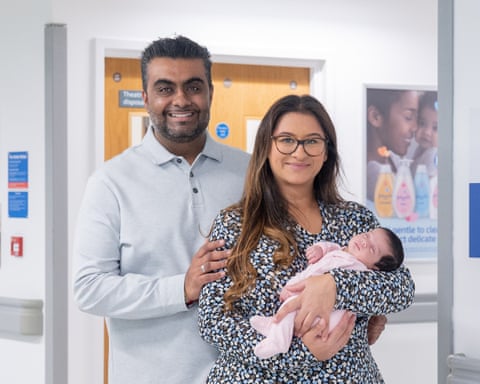
Adhia’s campaign follows her personal ordeal navigating multiple routine appointments where her symptoms were missed or misread before a specialist finally recognised the danger and organised a safe delivery.
“She was told her placenta looked normal but it was burying itself into her uterine wall,” said her husband, Nik Adhia, speaking outside the launch event. The couple say their experience reflects systemic gaps that could affect many other women unless protocols are strengthened.
Their concerns resonate with wider reports about patient experiences within maternity services. A recent NHS maternity survey found nearly one in five women felt their concerns during childbirth were not taken seriously, a sign of deeper frustrations with communication and responsiveness in maternity care.
Maternal health advocacy groups have also focused attention on broader disparities. In a 2025 study, advocates highlighted that Black women in the UK are up to four times more likely to die during childbirth and often feel their concerns are dismissed, raising questions about equity and trust in maternity care systems.
Health professionals recognise the strain maternity services are under. Midwives and obstetricians report being stretched thin, with disproportionate workloads and limited time for detailed risk-assessment discussions, particularly in hospitals with fewer dedicated specialists.
“Every woman deserves to know her risk profile and to have a team ready to act if things go wrong,” said Dr Hamlyn. “But the reality is that workforce shortages and service variation create a postcode lottery in care.”
Calls for Systemic Change and National Action
The Action for Accreta campaign comes at a moment when national scrutiny of NHS maternity services has intensified. In 2025, the government appointed Baroness Valerie Amos to lead an independent national investigation into maternity and neonatal care, with an explicit aim to uncover failings and strengthen safety across services.
The review is expected to produce actionable recommendations after examining performance, staffing, training and safety culture in maternity units across England. Its terms of reference include engaging bereaved families and drawing on a range of evidence to drive transformative change.
NHS leaders have emphasised that improvements are underway but acknowledge the scale of the challenge. The NHS Confederation described the investigation as an “important opportunity” to support frontline staff while acknowledging that maternity services face ongoing pressures around safety, staffing and equity of care.
Clinical bodies have also signalled support for updating best-practice guidelines. The Royal College of Obstetricians and Gynaecologists (RCOG) is being urged to revise its recommendations for screening, imaging and referral for at-risk women, a move campaigners say could ensure more uniform diagnostic standards across trusts.
“Had I been properly diagnosed earlier,” Adhia said, “I could have avoided weeks of fear, uncertainty and potentially life-threatening labour. This has to change.”
PAS is not the only condition prompting questions about the quality of maternity diagnostics. Recent data suggest other issues in perinatal care, such as misdiagnosis or delayed diagnosis of severe perineal tears following childbirth, in which nearly six in ten injuries were initially classified as less severe than they actually were in NHS cases reviewed.
These delays can lead to prolonged pain, incontinence and psychological harm for mothers. Similarly, there is evidence that gestational diabetes may go undiagnosed in a significant proportion of pregnancies under current testing regimes, affecting outcomes for mother and child alike.
Advocates say that improvements in one area such as earlier detection of accreta must be part of a broader overhaul of antenatal screening and risk assessment practices so that expectant mothers, regardless of background or locality, receive timely and accurate diagnoses.
The campaign is also calling for enhanced training for sonographers and obstetric teams, improved guidance on interpreting placental position and invasion on scans, and integrated care pathways that flag women at risk early in pregnancy.
“This isn’t about scaremongering it’s about equipping women and their clinicians with the knowledge and tools they need to avoid preventable tragedy,” Adhia said at the campaign launch.
Whether the NHS can respond with the necessary speed and consistency remains to be seen. But with national reviews underway, professional bodies engaged and affected families becoming vocal advocates for change, there is growing momentum behind one message: maternal safety must be a priority, and early diagnosis is essential.

AD: Heritage And Restaurant Lounge Bar