
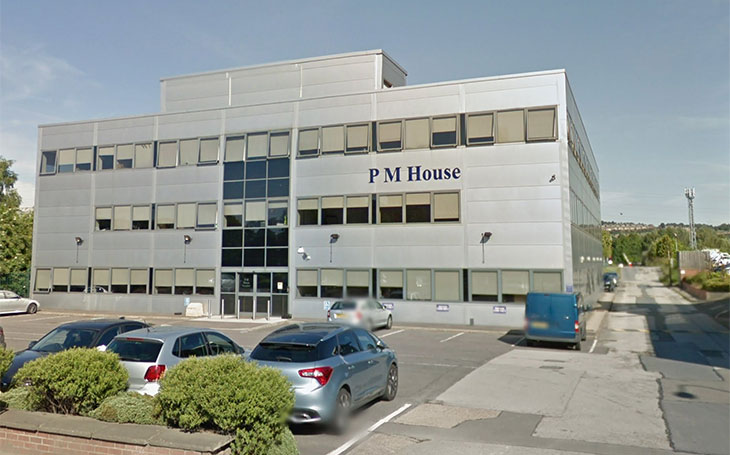
By Tony O’Reilly-
The SRA has confirmed it is conducting a formal investigation into possible fraud and the misappropriation of client funds linked to the collapse of PM Law, a development that has shocked the legal profession, rattled clients caught mid-transaction and reignited long-standing questions about how law firms are regulated in England and Wales.
In what is already being described within legal circles as an unfolding saga, the SRA has not only intervened — taking control of client files and monies — but has also begun issuing emergency compensation payments to former clients left out of pocket or in legal limbo because of the firm’s sudden demise.

AD: Capeesh Restaurant
Those payments, drawn from the regulator’s Compensation Fund, represent a high-stakes balancing act: protecting the public while the investigation continues to unpick a complex and murky business collapse.
The regulator revealed last week that it had received more than 50 applications to the fund, and had begun issuing payments to clients with the most urgent need.
In order to understand the scale of the crisis, it helps first to trace the evolution of PM Law, a name that until recently was firmly established in the local legal landscapes of northern and southern England.

AD: Oysterian Sea Food Restaurant And Bar
Originally launched as a modest solicitors’ practice in Berkshire, PM Law over the past three decades expanded through a series of acquisitions, building what became a sprawling legal network covering conveyancing, wills and probate, personal injury, and other everyday legal services.
By early 2026, the group — headquartered in Sheffield — had a footprint encompassing more than 20 distinct trading names, including well-known local brands such as Proddow Mackay, Butterworths Solicitors, WB Pennine Solicitors and Angela Viney Conveyancing Services, among others.
Clients often chose PM Law for its accessibility and reach: local offices where customers could walk in for advice on selling a home, finalising a will, or managing the fallout of an accident. Its broad network was marketed as both community-rooted and increasingly efficient through shared administrative systems.
But behind that local veneer, the business structure was complex . It revealed a corporate group with multiple legal entities trading under different names yet operating from common back-office systems. That complexity may, in hindsight, have masked deeper governance and financial controls issues that have now surfaced in the wake of the collapse.
The first signs of trouble became unmistakably public. Notices appeared on the windows of PM Law offices informing clients the firm “could no longer trade due to regulatory matters.” Phones went silent. Employees were told not to attend work. Within hours, the firm’s website was offline, its digital presence reduced to fragments.
For many clients, the shock was immediate and consequential. Homebuyers found themselves weeks — sometimes days — away from completion with no solicitor to represent them.
One buyer reported losing a significant deposit when funds already transferred to the firm could not be accessed; others described having no communication from the firm about their ongoing cases.
Staff were equally stunned. Trainee solicitors and support staff posted on professional networks about losing their jobs with little notice and no explanation, many expressing heartbreak and anger at how their careers had been abruptly derailed. One lawyer told colleagues they had been left “in tears” with clients’ cases suddenly unresolved.
Within days, the SRA moved to intervene formally, using its statutory powers to take control of all cases, client files and client funds held by PM Law and its associated entities. Intervention in this context is a regulatory mechanism reserved for when the public interest is at risk — designed to protect clients and maintain continuity where a firm’s closure threatens legal matters mid-stream.
The regulator appointed an external agent, Gordons LLP, to assist with the process of securing and managing those assets, though crucially without taking over the underlying work.
Missing Money and Legal Alarm Bells
What began for the SRA as a regulatory intervention has now escalated into a potential fraud investigation. In a statement this week, the regulator acknowledged that it was not merely stepping in to wind down a distressed business but was actively probing allegations that client monies may have been improperly used or misappropriated.
“We are investigating a potential fraud, including the misappropriation of client money,” said Jonathan Peddie, the SRA’s Executive Director of Legal and Enforcement. “We recognise that there is a strong public interest in this case, given the significant impact on clients. Alongside doing everything we can to protect clients, we are moving as quickly as we can with our investigation.”
The SRA is tracking the flow of funds within PM Law’s complex corporate structure, attempting to ascertain how much, if any, client money is unaccounted for and where it might have gone.
That process is proving neither simple nor swift because it involves combing through thousands of individual cases, bank accounts, trust ledgers and financial records — a task made harder by the sheer scale of the firm’s operations and the interconnections among its many trading names.
Exactly how much money might be missing — if indeed it is missing — remained unclear at the time of reporting. SRA officials have been circumspect, stressing that the situation is still under investigation and that it is too early to quantify any shortfall or to make definitive statements about wrongdoing.
They have also briefed law enforcement, sharing intelligence with agencies that may become involved if evidence of criminality emerges.
The Serious Fraud Office has declined to confirm publicly whether it has opened its own investigation, but the regulatory community is acutely aware of past cases in which seemingly respectable law firms collapsed amid allegations of financial misconduct.
One such high-profile example was the 2023 failure of Axiom Ince, in which approximately £60 million in client money disappeared before the firm’s closure, prompting criticism of the SRA’s oversight and leading to binding directives from the Legal Services Board to improve regulatory responsiveness.
That history looms large over the PM Law affair, raising questions about whether systemic weaknesses in monitoring and risk assessment may have allowed troubles to escalate undetected until it was too late.
Amid the uncertainty and unease, the SRA has taken a proactive step that many observers see as crucial to limiting the immediate damage to clients: the activation of emergency compensation payments from its Compensation Fund.
The regulator revealed last week that it had received more than 50 applications to the fund, and had begun issuing payments to clients with the most urgent need.
Designed as a safety net for consumers who suffer financial loss due to a solicitor’s dishonesty or inability to meet obligations, the Compensation Fund has traditionally been used sparingly.
But in the cramped offices of the SRA’s client protection team, there has been an urgent effort in recent weeks to process claims from former PM Law clients seeking relief while the broader investigation continues.
More than 80 applications have already been received for urgent awards, with payments going to individuals whose house sales, purchases, probate matters or personal injury claims were thrown into disarray.
The regulator has said it does not currently need to raise additional contributions from the practising profession to bolster the fund . This is a positive sign for stability in the near future, but it has not ruled out further measures as the full financial picture comes into focus.
Despite this, many clients remain anxious. Legal matters are not simply financial transactions; they involve personal stakes, emotional stress and often strict statutory time limits. Losing continuity of representation can mean lost evidence, delayed claims and, in some cases, irrecoverable setbacks.

AD: Heritage And Restaurant Lounge Bar