
By Ben Kerrigan-
The UK has handed over the last of five modernised medical rehabilitation wards to the Armed Forces of Ukraine, as part of Project Renovator. Defence Equipment and Support and the Defence Medical Services have been working together for two years on this project, and representatives were on site to sign the formal handover documents.
Renovator is a NATO funded project to expand Ukraine’s military medical rehabilitation services and help troops who suffered life-changing injuries to return to the frontline and help them readjust to civilian life.

AD: Capeesh Restaurant
The UK was the first nation to join the project, responsible for refurbishing, equipping and providing training to one site, and providing urgent support to the other sites as they awaited NATO partners. Norway, Sweden, Lithuania and Latvia have now joined the project and the UK is working alongside them to deliver a fully integrated rehabilitation capability for Ukraine.
The handing over marks the completion of a major two-year defence cooperation project designed to enhance the recovery and long-term care of wounded Ukrainian service personnel.
The project, known as Project Renovator, represents one of the most comprehensive medical support initiatives yet delivered by a NATO member in support of Ukraine’s military medical infrastructure.

AD: Oysterian Sea Food Restaurant And Bar
It involved refurbishing entire facilities, equipping wards with modern clinical and diagnostic equipment, and providing training to Ukrainian medical staff. As part of the effort, 250 additional beds were created and over 21,000 pieces of rehabilitation kit — from physical training apparatus to advanced diagnostics — have been delivered.
Strengthening Rehabilitation for Ukraine’s Wounded
The refurbished facilities are not ordinary hospital wards; they are dedicated rehabilitation wards designed to support soldiers who have suffered life-changing injuries — including amputation, spinal trauma, and other battlefield wounds — to not only recover physically but also reintegrate into military service or civilian life.
With Ukraine reporting that more than 33,000 servicemembers received medical rehabilitation in 2025 alone, the need for expanded and modernised care capacity is clear.
The UK’s decision to support Ukraine’s medical rehabilitation infrastructure stems from several strategic, humanitarian, and political considerations:
Since Russia’s full-scale invasion in 2022, the UK has been one of Ukraine’s largest military supporters in Europe, providing weapons, training, and logistical aid. Strengthening medical support for wounded soldiers forms part of the broader British strategy to help Ukraine sustain its defence and sovereignty.
It is also seeking to mitigate the long-term human costs of war
Battle wounds are unavoidable in high-intensity conflict, and prolonged warfare increases the risk of life-changing injuries. By funding rehabilitation facilities, the UK helps ensure wounded soldiers have the best chance of recovery, whether they return to service or transition to civilian life.
Project Renovator is officially a NATO-funded effort, with the UK among the first to join. Other nations — including Norway, Sweden, Lithuania, and Latvia — have since come on board. The collaboration aims to build integrated rehabilitation capabilities that align with broader alliance standards.
Beyond providing material aid, the UK has also trained thousands of Ukrainian soldiers and medics through programs such as Operation Interflex, which runs training courses on British soil.
Taken together, these efforts signal a long-term strategic commitment from London — not merely to supply weapons but to help shape Ukraine’s military and medical resilience over years or even decades.
During the First World War, volunteer and civilian medical units from the United Kingdom — such as the Scottish Women’s Hospitals for Foreign Service — were established to care for Allied soldiers on European fronts. These efforts included staffing hospitals, supplying ambulances, and treating wounded French and Serbian troops well before national rehabilitation systems existed.
Similarly, during the Franco-Prussian War of 1870–71, British organisations mounted ambulance services with field hospitals to care for combatants on both sides, illustrating early forms of cross-national medical support.
Evolution of Military Rehabilitation
Historically, rehabilitating wounded soldiers has been central to military medical services. After the First and Second World Wars, specialist hospitals were established to help wounded veterans regain function or adapt to disability — for example, prosthetics and rehabilitation centres in the UK and elsewhere.
However, those initiatives typically took place within national frameworks or under humanitarian organisations rather than through formal defence cooperation agreements between states. What distinguishes the current UK–Ukraine partnership is its integration into a NATO strategic framework and its explicit role in supporting an allied military engaged in ongoing conflict.
In that sense, while the idea of medical assistance across borders is not new, the scale of the Renovator project and its direct linkage to allied military readiness is unprecedented in the post–Cold War era.
The physical handover of the wards is only the latest milestone. Project Renovator still requires the installation of advanced diagnostic tools, including a modern CT scanner, before reaching full operational capability.
Meanwhile, as the fighting continues, Ukraine’s need for medical resources — from frontline stabilization units to long-term rehabilitation centres — remains pressing. The UK and its allies are likely to continue providing training, equipment, and institutional support to ensure that wounded soldiers can recover with dignity and resilience
Nearly all core work for the project has now been delivered, including; two heating and hot water systems to enhance resilience at two sites; five modernised wards with accommodation, treatment spaces and staff facilities; a range of physical training kit, clinical equipment and diagnostics capabilities to support rehabilitation and training; and four deployed training teams providing specialist clinical shoulder-to-shoulder mentoring and training.
The project has increased bed capacity by 250, and delivered over 21,000 items of equipment. The final element before achievement of Full Operating Capability will be the installation of a modern CT scanner to enhance diagnostics for complex trauma injuries.
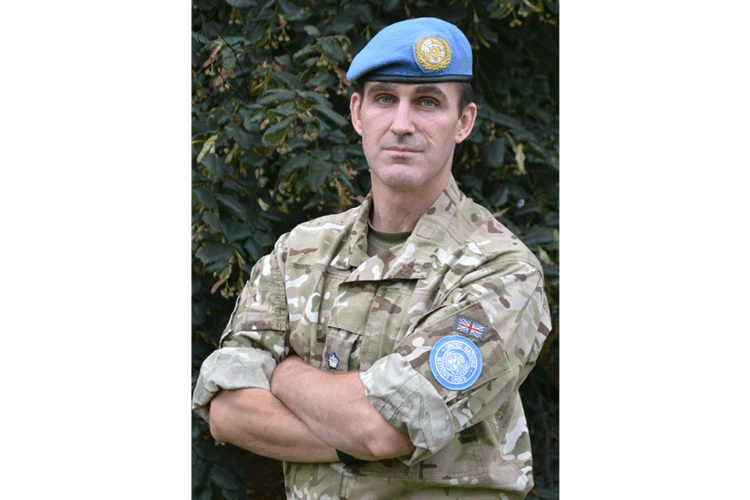
Colonel Simon Doyle(pictured), the Renovator Project Director said:
This has been an enormous team effort from our Ukrainian hosts and colleagues, industry, and the UK. Standing here now it is difficult to believe that the full scale invasion had put this facility totally out of action, and now it is helping return Defenders to the fight with the brand-new high-quality facilities they deserve. We look forward to helping you on the next stage of developing this amazing facility.
Colonel Victor Korchenok, the Site Deputy Commander said:
It is a great honour to mark the handover of the last ward. The UK was the first nation to support Renovator, providing infrastructure development, modern rehabilitation, surgical and diagnostic equipment, and training for our professionals. Each component has greatly enhanced our rehabilitation capabilities and improved the quality of care for our defenders who protect our sovereignty.
Rickie Nixon, the Defence Equipment and Support Operations Team Leader said:
We started this project two years ago, and have come a long way. Our small team has achieved so much here on the Renovator sites, and we are hugely grateful for the opportunity to support our friends in Ukraine on such an important project.
Andriy Dyshuk, director of Ukrainian construction company Fragola Government Services, said:
This project demonstrates how proper cooperation between two countries, even in the most difficult conditions, can deliver massive results. It is not just words but the physical outcome that matters. This success was only possible through stakeholder collaboration, and I thank Prevail and the United Kingdom for their efforts.

AD: Heritage And Restaurant Lounge Bar