
By Tony O’Reilly-
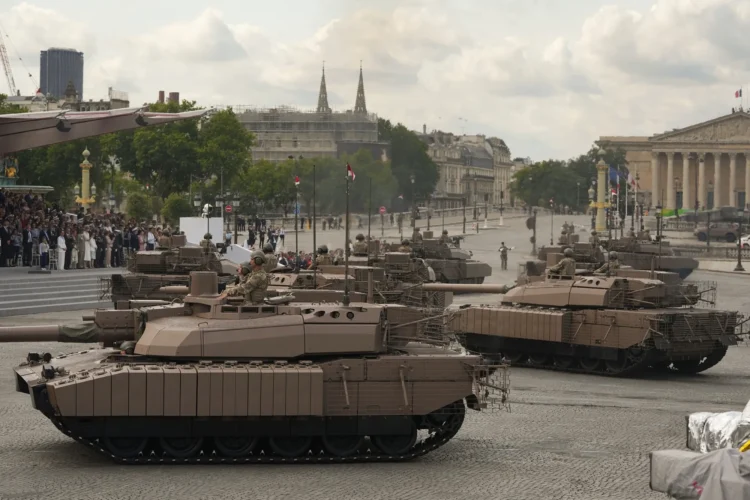
Berlin’s criticism of Paris’s defence budgets has emerged as a flashpoint in European security discussions, with Germany’s foreign minister this week openly saying that France’s defence spending is “insufficient” at a moment when NATO and EU partners are pushing for stronger military capabilities amid rising threats from Russia and uncertainties in transatlantic backing.
The comments, made at the Munich Security Conference, reflect growing friction between two of Europe’s largest military powers over how best to “back words on sovereignty with concrete capabilities.”

AD: Capeesh Restaurant
German diplomats argue that if European “strategic autonomy” is more than rhetoric, then national budgets must match the ambitions. France, however, faces fiscal constraints and political pressures that complicate efforts to shift billions more into defence.
The debate is unfolding as NATO allies have agreed to raise defence spending targets to at least 5 % of GDP by 2035 a significant uptick from the long‑standing 2 % benchmark.
Despite France and Germany together accounting for a large share of Europe’s defence outlays about 44 % of total EU defence spending in 2024 the two countries diverge on tempo and ambition, raising questions about leadership and cohesion at a time of strategic uncertainty.

AD: Oysterian Sea Food Restaurant And Bar
Germany’s criticism was delivered by Foreign Minister Johann Wadephul, who said that while French President Emmanuel Macron frequently speaks about the need for strong European defence and autonomy, the budgetary follow‑through has been lacking. “Anyone who talks about it needs to act accordingly in their own country,” Wadephul said in a radio interview ahead of the Munich Security Conference.
Paris has increased defence spending significantly over the past decade, but France’s national defence effort remains close to around 2 % of GDP, roughly in line with NATO guidelines and higher than many other European states. Data indicate that in 2025, France’s total defence spending was about €61.8 billion, equating to approximately 2.07 % of GDP, meeting core NATO targets but falling short of the more ambitious figures discussed for the future.
Germany has been ramping up its own defence outlays even more significantly since Russia’s full‑scale invasion of Ukraine in 2022. Berlin has exceeded the traditional 2 % NATO target and is now working toward even higher goals, both through regular budgets and a special fund to modernise its armed forces a departure from decades of underinvestment.
A key point of contention lies in future commitments. NATO allies agreed in 2025 at the Hague to raise core defence spending to 3.5 % of GDP, with an additional 1.5 % for security‑related expenditure by 2035, bringing the total to the 5 % cluster. Some German planners want to meet the 3.5 % threshold by 2029, though recent assessments suggest the actual figure may land closer to 3.05 % around that date.
For French policymakers, however, fiscal realities including a high debt‑to‑GDP ratio that exceeded 110 % in recent years constrain how quickly and how much spending can grow without risking economic stability. Paris has expressed cautious support for higher spending but remains wary of overextending.
The wider backdrop is an increasingly worried European public. A recent Eurobarometer survey found that 80 % of French citizens are concerned about national security the highest level in the EU while 74 % of Europeans overall support increased defence budgets, underscoring broad public pressure for action.
What’s at Stake for Europe’s Security Architecture
Beyond budgets and percentages, the debate points to deeper questions about European strategic autonomy the ability of the EU and its members to protect their own security interests without over‑reliance on external actors. Macron has been vocal about the need for a redesigned European security architecture and common deterrence, including discussions on nuclear strategy and broader cooperation among European states.
Officials in Berlin argue that stronger and more sustained spending by France would not only ease the burden on allies but also help unify European commitments. German leaders have been exploring deeper cooperation with Paris on nuclear deterrence and other strategic areas, even as tensions emerge over spending priorities.
The criticism over France’s spending also highlights the broader divergence within Europe over how to balance fiscal policy with security commitments. While some EU members like Poland and the Baltic states already dedicate significant shares of GDP to defence sometimes surpassing 4 % others lag far behind, leaving leadership responsibilities on the shoulders of a few big spenders.
Meanwhile, NATO as an institution continues to play a central role. Alliance leaders have repeatedly underscored the need for member states to take on fair shares of defence commitments. Germany’s shift toward increased spending, including efforts to meet or exceed NATO targets, is often cited as a model of burden‑sharing. Still, reaching even more ambitious goals will require sustained political consensus and strategic alignment across capitals.
Critics warn that failure to close capability gaps could weaken Europe’s deterrent posture at a time when geopolitical tensions are high. Security analysts point to ongoing conflicts, including Russia’s war in Ukraine and instability in the Middle East, as catalysts for increased urgency in defence planning and investment.
Experts also note that Europe’s overall defence spending while rising and now amounting to over €343 billion among EU countries in 2024 must translate into concrete capabilities, not just headline figures.
Beyond equipment and budgets, the debate also touches on industrial and technological capacity. Calls for higher spending inevitably raise questions about whether domestic defence industries can absorb the investment, accelerate production of key systems like artillery and missiles, and reduce reliance on foreign suppliers all vital to building credible deterrence.
Despite the criticism, French officials have reiterated their commitment to strengthening defence in line with evolving threats. Macron’s government has proposed incremental increases in the defence budget through 2030 and argued that France must balance defence priorities with broader economic stability. Such nuanced positions highlight the complex trade‑offs many European governments face in an era of overlapping security, economic, and social challenges.
While debate continues in Berlin and Paris, the broader question remains: can Europe reconcile differing national approaches to defence spending and build a cohesive strategy capable of responding to today’s security challenges? If not, critics warn, the continent may find itself vulnerable at a time when unity and capability are most demanded by allies and citizens alike. The issue is compounded by varying historical experiences, political priorities, and economic capacities across member states.
Some countries prioritise modernisation of armed forces and investment in cutting-edge technology, while others emphasise maintaining larger troop numbers or domestic defence industries. This divergence can slow decision-making, hinder joint operations, and create gaps in collective readiness.
Furthermore, external threats from cyber warfare to geopolitical tensions require rapid, coordinated responses that are difficult to achieve without a shared strategic framework. Proponents of deeper integration argue that pooling resources, standardising equipment, and harmonising procurement policies could enhance efficiency and interoperability.
Yet, national sovereignty concerns and domestic political pressures often limit the extent of such cooperation. As Europe navigates a complex security landscape, the challenge will be balancing national interests with collective responsibility, ensuring that the continent is not only prepared but also credible as a unified actor on the global stage.

AD: Heritage And Restaurant Lounge Bar