
By Ben Kerrigan-
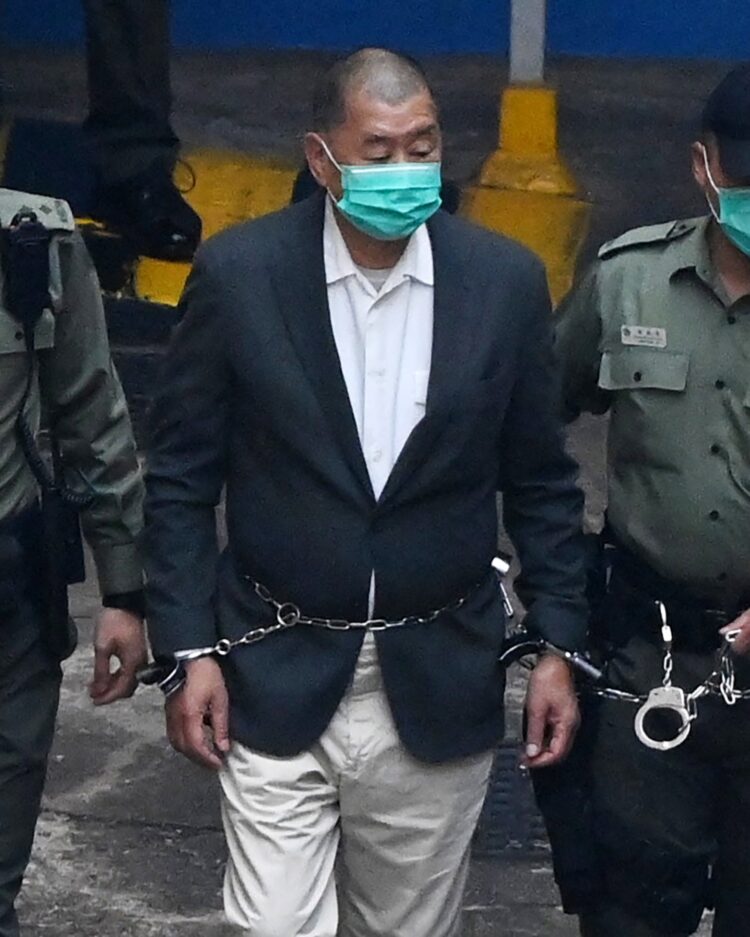
In a forceful rebuke of both Hong Kong and Beijing, the European Union has called for the “immediate and unconditional release” of pro-democracy media tycoon Jimmy Lai, condemning what it describes as a “politically motivated prosecution” that culminated in a 20-year prison sentence earlier today.
The decision has reignited international scrutiny of Hong Kong’s legal system under the National Security Law and sharpened tensions between democratic states and Chinese authorities over human rights, press freedom, and the rule of law.

AD: Capeesh Restaurant
Lai, 78, founder of the now-defunct Apple Daily and a staunch critic of Beijing’s tightening grip on the former British colony, was sentenced on 9 February 2026 after being convicted on multiple national security charges, including conspiracy to collude with foreign forces and publishing seditious materials.
The sentence described by many observers as effectively a life term, given Lai’s advanced age and fragile health has unearthed a wave of international condemnation.
The EU’s stance, anchored in official statements from both the European Parliament and the European External Action Service (EEAS), aligns with broader Western criticism of the trial and conviction, which rights groups, governments and media freedom advocates have labelled a travesty of justice aimed at silencing dissent.

AD: Oysterian Sea Food Restaurant And Bar
In a formal statement released by the EEAS in December, the EU “deplored” Lai’s conviction under Hong Kong’s National Security Law, calling it politically motivated and emblematic of a broader erosion of fundamental freedoms in the territory. The document emphasised that such prosecutions undermine confidence in Hong Kong’s legal system once a cornerstone of its reputation as a global financial hub.
“The European Union strongly condemns the politically motivated conviction of British citizen and pro-democracy media entrepreneur Jimmy Lai,” the statement said, reiterating that the prosecution “severely undermines Hong Kong’s rule of law.”
Lai’s prosecution dates back to his arrest in August 2020, shortly after Beijing implemented the National Security Law in response to months of large-scale pro-democracy protests in 2019. Authorities accused him of colluding with foreign forces and publishing material deemed seditious charges that critics say are overly broad, vague and designed to stifle free expression.
The EEAS also recalled the closure of Apple Daily in 2021 once Hong Kong’s most widely read pro-democracy newspaper as part of an escalating crackdown on independent media. “A free and independent media is vital for resilient societies and ensuring government accountability,” the statement asserted.
Underlining its position further, the European Parliament’s Delegation for relations with China condemned Lai’s conviction as a blatant violation of human rights and international agreements, and again urged his release alongside other pro-democracy activists and journalists held under similar charges.
This EU call dovetails with similar resolutions passed by the Parliament in previous years, including a widely supported 2023 resolution urging Hong Kong authorities to drop all charges against Lai and release him immediately a clear indication of sustained concern in Brussels about deteriorating freedoms in the territory.
Lai’s sentencing has prompted reactions far beyond the EU, reflecting deep unease among Western governments and rights organisations about the implications of Hong Kong’s national security regime.
In London, UK officials have described Lai’s prison term as “tantamount to a life sentence,” with British Foreign Secretary Yvette Cooper branding the prosecution politically motivated and urging Beijing to set him free on humanitarian grounds. The UK government even summoned China’s ambassador to emphasise its objections and underline its calls for Lai’s release.
Similarly, the United States and other members of the G7 have publicly condemned the case, urging authorities in Hong Kong to release Lai and expressing alarm over the broader erosion of rights in the territory.
Rights groups such as the Committee to Protect Journalists (CPJ) and Reporters Without Borders (RSF) have also decried the conviction as a direct attack on press freedom. CPJ labelled the verdict a “sham” and highlighted severe conditions in which Lai has been held, including long periods in solitary confinement that have contributed to deteriorating health.
RSF has applauded the EU’s repeated resolutions and pushed for stronger international pressure on authorities to ensure true judicial transparency and respect for fundamental rights.
Yet, not all reactions have been critical of the prosecution. Beijing and Hong Kong officials have defended the trial and conviction, framing the proceedings as necessary measures to safeguard national security and public order.
They have dismissed foreign criticism as interference in China’s internal affairs, summoning Western diplomats and reiterating that the rule of law in Hong Kong remains robust under the National Security Law.
The divergence in responses underscores an already strained geopolitical landscape in which human rights and rule-of-law issues increasingly intersect with broader strategic competition between China and democratic states.
The EU’s stance reflects this concern. Brussels has not only condemned Lai’s individual treatment but has also urged Beijing and Hong Kong authorities to honour their treaty obligations, including safeguarding fundamental rights as stipulated in international agreements like the International Covenant for Civil and Political Rights.
Public discourse and diplomatic commentary suggest that Lai’s case will remain a flashpoint in international relations, particularly as governments balance economic ties with China against mounting criticism of its human rights record.
At home in Hong Kong, the sentencing has sent a chilling message to activists, journalists, and civil society groups reinforcing fears that dissent and advocacy for democratic reform could be met with severe penalties. Observers believe this may further dampen political engagement and independence of thought in a city once known as Asia’s most open media environment.
The EU and its partners have framed their demands not merely as diplomatic rhetoric, but as a broader defence of the principles of freedom of expression, civic rights and the rule of law.
In their view, how Hong Kong responds and whether it heeds these calls could shape perceptions of its legal autonomy and global reputation in the years to come.

AD: Heritage And Restaurant Lounge Bar