
By Ben Kerrigan-
Russia’s Defence Ministry announced that the Oreshnik was among the weapons deployed during the assault, signalling a troubling chapter in the conflict and prompting urgent diplomatic concern across Europe and NATO capitals.

AD: Capeesh Restaurant
Ukraine reported civilian casualties and infrastructure damage as air raids and drone strikes accompanied the ballistic missile strike that shook communities far beyond the frontline.
The Oreshnik missile, capable of reaching hypersonic speeds in excess of ten times the speed of sound and potentially fitted with multiple independently targetable warheads, represents one of Russia’s more advanced strategic weapons introduced in recent years.

AD: Oysterian Sea Food Restaurant And Bar
The choice to launch such a system in an active theatre of conflict has heightened fears about wider regional destabilisation, particularly given that the target area including parts of western Ukraine near the Polish and NATO border lies close to European Union territory.
Ukrainian authorities condemned the attack, calling it an unprecedented escalation and urging international partners to intensify political and military pressure on Moscow.
European leaders expressed alarm at the use of a ballistic missile system so close to allied borders, warning that such actions undermine continental security and could draw neighbouring states deeper into the conflict’s political reverberations.
The overnight bombardment was not limited to the ballistic missile launch. Ukrainian military officials indicated that a broad offensive was underway, involving more than a hundred unmanned aerial vehicles and a significant number of cruise and ballistic missiles targeting energy infrastructure, defence manufacturing sites, and logistical hubs across the country.
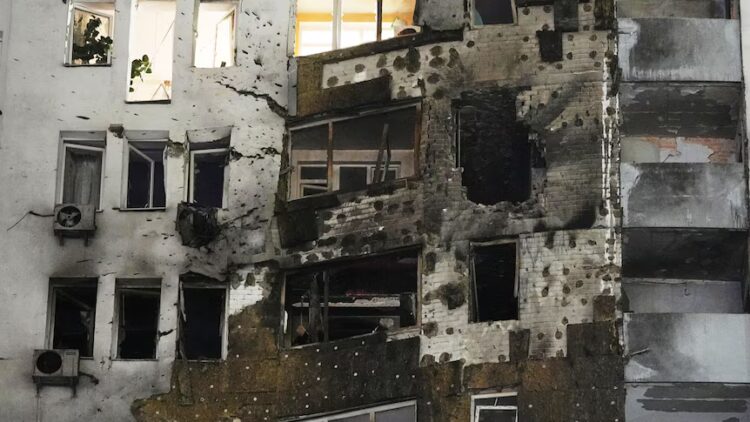
Kyiv confirmed that at least four civilians were killed in Kyiv during the attacks, with dozens more sustaining injuries and emergency responders struggling to manage fires and damage in residential areas.
Initial reports highlighted that the Oreshnik missile likely struck critical infrastructure near Lviv, a major city in western Ukraine close to the border with Poland. The Ukrainian Air Force acknowledged that ballistic missile attacks were confirmed in that region, noting the extraordinary speed of the projectile and the challenge it posed to existing air defence systems.
Russian official statements framed the operation as a response to an alleged Ukrainian drone attack on President Vladimir Putin’s residence late in 2025. Moscow claimed that the Oreshnik was targeting facilities associated with drone production and energy infrastructure supporting Ukraine’s military activities.
Ukrainian and Western authorities dismissed the alleged attack on Putin’s residence as unfounded, reinforcing that there is no credible evidence that it had taken place. This contrast in narratives illustrates the deep mistrust that continues to shape each side’s portrayal of events.
The deployment of the Oreshnik missile in active combat is significant because earlier tests had been largely experimental or involved dummy warheads. The latest use marks one of the few instances in which the system has been employed against actual targets in Ukraine, underscoring how rapidly military capabilities have evolved along the frontlines over recent months.
Local officials in Lviv have described scenes of disruption and destruction in the aftermath of the strike. Natural gas storage facilities and energy distribution networks were reportedly damaged, sparking concerns over longer-term energy supply interruptions for civil heating and industrial activity in the region, which winters in Ukraine continue to test resilience amid ongoing conflict.
Response teams worked through the night to stabilise critical infrastructure and assist those affected by blast impacts and secondary fires sparked by the bombardment.
Political Fallout and International Response
The use of a ballistic missile with intermediate range capability has provoked swift reactions from both governmental and diplomatic channels across Europe and North America.
Ukrainian officials called on allies to intensify pressure on Russia through sanctions, military aid, and comprehensive mechanisms designed to prevent further use of weapons that could threaten allied territories.
Statements from Kyiv underscored the perceived danger of allowing such weapons to be normalised on the battlefield, particularly in areas near NATO member states.
European Union representatives expressed serious concern over the strike’s proximity to EU borders, noting that the use of sophisticated ballistic technology raises questions about wider regional security and the potential for unintended escalation.
Some leaders urged emergency consultations with alliance partners to assess defensive postures and readiness measures, given the missile’s capacity to travel great distances at hypersonic speeds. Heightened alerts and strategic discussions were underway in Brussels and other capitals as officials reviewed how best to balance deterrence with diplomatic engagement.
In the United States, senior figures reiterated support for Ukraine’s sovereignty and condemned Russia’s use of advanced ballistic systems against civilian and infrastructure targets.
Calls emerged for the United Nations to convene emergency sessions to address the ballistic missile use and to reinforce international norms against the deployment of weapons that carry destabilising potential in densely populated or allied border regions.
These discussions were seen as critical in shaping the next phase of diplomatic pressure and support mechanisms aimed at de-escalation.
Russian authorities, meanwhile, maintained that the operation was a legitimate military response to hostile actions, reiterating official claims around the purported Ukrainian attack on presidential property.
The Defence Ministry’s announcement emphasised that objectives were achieved and framed the use of the Oreshnik as part of a broader strategy to neutralise Ukraine’s capacity to produce unmanned systems and disrupt energy supplies that sustain military production.
Back in Kyiv, government officials and civil authorities pressed on with recovery operations, emergency medical treatment for the injured, and support for families of those killed. Public messages called for calm and resilience in the face of relentless missile assaults, while highlighting the bravery of first responders who worked under hazardous conditions at the blast sites.
The repeated use of ballistic technology has also drawn attention to the evolving nature of modern warfare in Ukraine, where technological advancements intertwine with political calculation and civilian cost.
While events continue to unfold, experts emphasise the importance of sustained international dialogue aimed at reducing the likelihood of miscalculation and expanding mechanisms that govern the use of advanced weapons in conflict zones.

AD: Heritage And Restaurant Lounge Bar