
By Charlotte Webster-
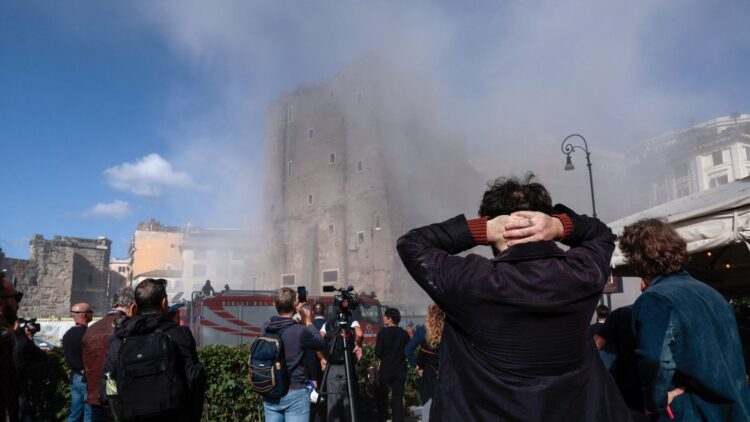
Tragedy struck at one of Rome’s historic landmarks this week when a construction worker died after being pinned under the wreckage of the medieval Torre dei Conti for approximately 11 hours. Crews from Italy’s emergency services worked tirelessly through the night at the base of the 13th-century tower, located prominently near the iconic Colosseum, battling treacherous conditions to reach the man. Italian news outlet Corriere della Sera sadly confirmed the worker’s death shortly after midnight on Tuesday, following his extraction and transport to a local hospital.
Pic: Reuters
Crowds of onlookers, who had gathered around the site for most of Monday evening, initially erupted in cheers when emergency teams successfully pulled the man free from the rubble. This brief moment of hope quickly dissolved into profound national sorrow with the confirmation of the tragic outcome. Italian Prime Minister Giorgia Meloni, issuing a statement after midnight, formally identified the deceased worker as Octay Stroici. She expressed her deepest condolences on behalf of herself and the government “for the tragic loss,” affirming, “We are close to his family and colleagues at this time of unspeakable suffering.” The Rome Tower Collapse Fatality has immediately raised serious questions about safety protocols during restoration work on ancient structures. This unfortunate Rome Tower Collapse Fatality forces a difficult examination of construction conditions at vulnerable historical sites.

AD: Capeesh Restaurant
The lengthy and dangerous rescue operation, which lasted far into the night, was severely hampered by the significant risk of further structural failure. Emergency crews continually navigated shifting debris and the real possibility of another section of the ancient monument collapsing. Fire department spokesman Luca Cari confirmed that one worker was already in a critical condition at the hospital following the initial incident. Fortunately, three other workers involved in the renovation work were quickly pulled out of the site unharmed, though they undoubtedly suffered intense shock. The rescue mission focused its attention on freeing Mr. Stroici, who was trapped on the upper level following the first collapse, which occurred sometime before noon.
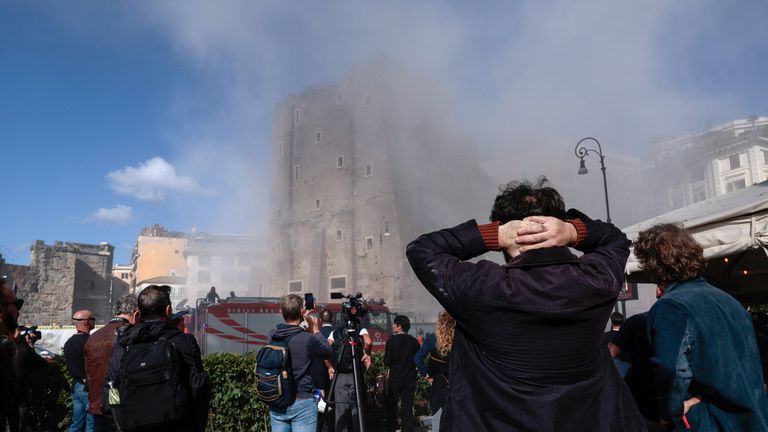
Hundreds of surprised tourists watched as firefighters cautiously used a mobile ladder to raise a stretcher toward the 29-meter (95 ft) tower’s upper level, attempting to secure the trapped man. During this highly precarious maneuver, an additional section of the fragile structure unexpectedly collapsed, sending a massive cloud of masonry dust and debris into the air. This extremely hazardous event forced the brave firefighters to retreat quickly for their own safety.
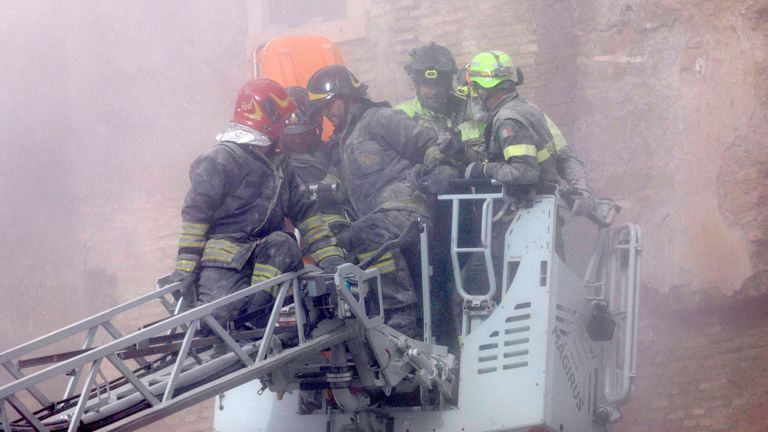
Firefighters work to free the worker. Pic: Reuters
Consequently, the emergency services deployed an advanced drone to fly up and check on the trapped worker’s condition from a distance, highlighting the extreme difficulty of the terrain. The sounds of collapsing masonry and two rapid loud noises alarmed workers nearby. Gelato shop worker Queen Paglinawan, 27, reported hearing the loud noises in quick succession, saying, “I was working, and then I heard some like falling, and then I saw the tower collapse in a diagonal way.” This devastating Rome Tower Collapse Fatality tragically illustrates the unpredictable nature of structural failures at historical sites, cementing the tragic outcome of the Rome Tower Collapse Fatality that had captured global attention.

AD: Oysterian Sea Food Restaurant And Bar
The Torre dei Conti, or the Tower of the Counts, stands as a formidable landmark on Via dei Fori Imperiali, possessing a rich and complex history. Pope Innocent III originally commissioned the tower’s construction in 1238 for his family’s defense. Originally, the tower stood almost twice as high as its modern counterpart. However, significant damage caused by major earthquakes in the 14th and 17th centuries dramatically scaled down its height. The tower has remained unused since 2006, undergoing a substantial four-year renovation project that officials scheduled to conclude next year. Rome city authorities confirm the surrounding area remained closed to pedestrians during the entire period of construction work.
Now, with the confirmed Rome Tower Collapse Fatality, authorities will initiate a thorough investigation into the causes of the double collapse and the adequacy of the safety measures in place. This inquiry must determine whether the structural assessment of the 800-year-old monument was sufficient before and during the complex renovation process. Furthermore, investigators will examine the adherence to current Italian workplace safety regulations, focusing on the equipment and procedures used by the construction crew.
Tragedies like this often spark fierce debate about balancing the preservation of historical artifacts with the safety of modern construction workers. Following the Rome Tower Collapse Fatality, Italian authorities must rigorously enforce safety standards to prevent future disasters at heritage sites. The incident forces a critical re-evaluation of existing safety protocols, necessitating a thorough review of construction methods used at ancient sites.

AD: Heritage And Restaurant Lounge Bar