

By James Simons –
A preliminary report into the massive power outage that plunged the Iberian Peninsula into darkness earlier this year has cited excessive voltage as the immediate cause.

People gathered outside Barcelona-Sants train station during the power outage. Pic: Reuters
The blackout, which occurred on April 28, 2025, represents the first known instance of a system-wide collapse triggered by overvoltage in the European synchronous electricity grid.

AD: Capeesh Restaurant
This power failure dramatically halted services and transportation across mainland Portugal and peninsular Spain, affecting millions of citizens.
Thousands of train passengers were stranded, while millions lost access to phone and internet services, along with electronic payments and ATMs.The unprecedented nature of this event, Europe’s most significant blackout in more than two decades, highlighted serious vulnerabilities in the power infrastructure.
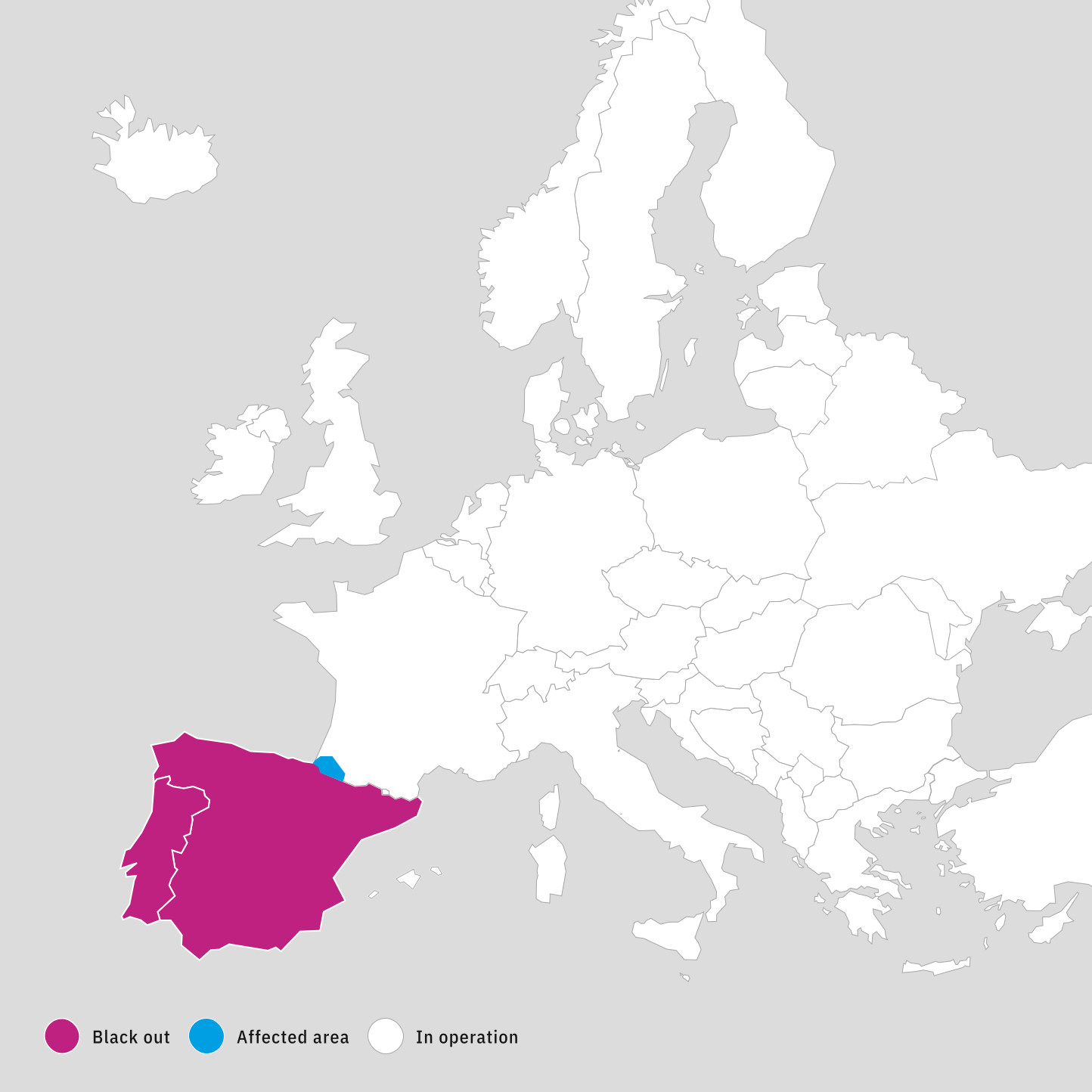
Geographic area affected by the incident of 28 April 2025. Pic:entsoe.eu
The factual report, released by the European Network of Transmission System Operators for Electricity (ENTSO-E), detailed a cascade of generation disconnections combined with a sharp rise in voltage.

AD: Oysterian Sea Food Restaurant And Bar
A key moment occurred at 12:33 Central European Summer Time (CEST), when the voltage in southern Spain sharply increased, consequently affecting Portugal.
This extreme excessive voltage then set off a chain reaction, leading to more generation losses and ultimately the system’s collapse. The total disconnected load reached 31 GW.
Unravelling the Sequence of Excessive Voltage and Collapse
The sequence of events leading up to the power system’s failure was rapid and complex, unfolding over mere milliseconds.
Initial power generation losses, the reasons for which remain partly unknown, preceded the main incident. The report highlighted difficulties in collecting complete, high-quality data, particularly concerning some initial generation trips in Spain.
Ultimately, the rapid increase in excessive voltage overloaded and tripped power generation components, preventing the power grid from stabilizing itself. Four Spanish nuclear reactors operating at the time automatically shut down, although backup generators immediately supplied cooling for safety.
Government investigations have been ongoing to determine the full context of the incident. Spanish authorities, including the grid operator Redeia, and utilities have pointed fingers at each other regarding the failure to maintain appropriate voltage control.
Officials have confirmed that no cyberattack was involved. Importantly, experts noted that the limited power interconnections between the Iberian Peninsula and the rest of Europe did not contribute to the initial cause of the outage.
A more robust and modern electricity grid, particularly with improved automatic voltage control mechanisms, could potentially mitigate such catastrophic failures in the future.
Consequently, Spanish and Portuguese governments are now strongly urging the EU to support developing new power links. Power restoration efforts began immediately- a long and challenging process that took over twelve hours in most areas.
Portugal’s transmission system was restored by 12:22 AM on April 29, 2025, while Spain’s transmission system followed by 4:00 AM. This incident prompted ENTSO-E to establish an Expert Panel to thoroughly investigate the matter.
The panel is currently working on a final report, expected in the first quarter of 2026, which will analyse the root causes and issue critical recommendations for all European power systems.
For more detailed technical information on the event, you can consult the ENTSO-E Factual Report. This unprecedented excessive voltage blackout serves as a crucial case study for improving global energy infrastructure resilience.

AD: Heritage And Restaurant Lounge Bar
