
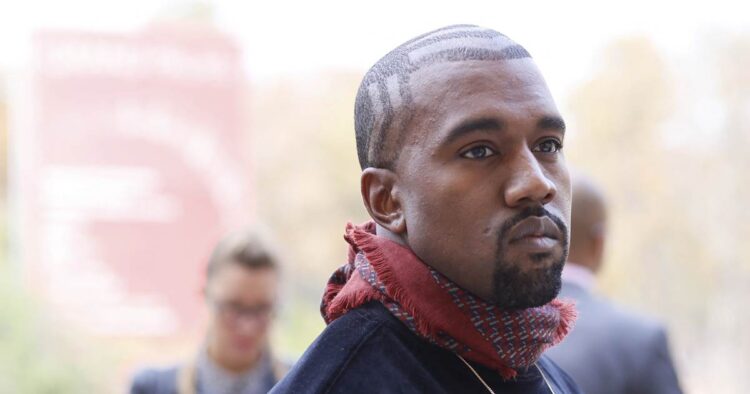
By Tony O’Reilly-
Wireless Festival has been cancelled after headliner Kanye West (pictured)was refused entry com to the UK.
The British government refused permission for West, now known as Ye, to travel to the UK after backlash to his planned set at the London festival this summer.

AD: Capeesh Restaurant
The sudden cancellation of the 2026 edition of Wireless Festival, one of Britain’s most prominent urban music events, marks a defining moment in the uneasy relationship between artistic expression, public morality, and state authority.
At the centre of the storm stands Kanye West—a figure whose influence on modern music is rivalled only by the scale of controversy that has followed him in recent years. His exclusion from the United Kingdom, and the resulting collapse of an entire festival built around his presence, has ignited debate far beyond the confines of the music industry, raising questions about censorship, responsibility, and the evolving boundaries of acceptable public conduct.
The chain of events unfolded with remarkable West, who had been announced as the headline act for all three nights of the July festival, was poised to make his first major UK appearance in over a decade.

AD: Oysterian Sea Food Restaurant And Bar
His booking alone had already generated intense scrutiny, reflecting a broader unease about his recent public statements and actions. Yet it was the decision by the UK government to revoke his permission to enter the country—effectively blocking his appearance—that transformed controversy into crisis.
Officials determined that West’s presence would not be “conducive to the public good,” a legal standard that has historically been invoked in cases involving extremism, incitement, or public safety concerns.
The decision followed mounting political pressure and widespread condemnation linked to the artist’s past antisemitic remarks and provocative behaviour, including the release of inflammatory material and symbolic imagery widely regarded as offensive. (
The consequences for the festvall is immediate and existential. The event had been structured around West as a singular, dominant headliner across three consecutive nights—a strategy that, while commercially bold, left little room for contingency.
With only months remaining and major sponsors already withdrawing support, the removal of its central act rendered the festival unviable. Within hours of the government’s decision, organisers confirmed its cancellation, issuing refunds to thousands of ticket holders and bringing an abrupt end to what had been expected to be one of the summer’s flagship cultural events. ()
The collapse of the festival is not merely a logistical or financial story; it is emblematic of a deeper shift in how cultural institutions navigate controversy. Music festivals have thrived on the rebellious energy of their performers, often embracing artists who challenge norms or provoke debate. Yet the West episode suggests that there are limits—limits increasingly defined not only by public opinion but by political intervention.
it is necessary to consider the historical context of Wireless Festival itself. Established in 2005 and evolving into a cornerstone of the UK’s hip-hop and urban music scene, the festival has long been a platform for global stars and emerging talent alike.
Its transformation from a multi-genre event into a celebration of contemporary urban culture mirrored broader shifts in the music industry, reflecting the global rise of hip-hop as a dominant cultural force. ()
Over the years, Wireless has weathered logistical challenges, artist cancellations, and shifting sponsorship landscapes. However, the complete cancellation of an entire edition due to the exclusion of a single performer is unprecedented in its history. It underscores both the centrality of headline acts in modern festival economics and the risks inherent in building an event around a polarising figure.
West’s own history with the UK adds another layer of complexity. His last major performance on British soil came in 2015, when he headlined Glastonbury amid a different but equally intense wave of controversy.
At that time, criticism centred on questions of artistic suitability and audience expectations. A decade later, the nature of the controversy has shifted dramatically—from debates about genre and relevance to concerns about ideology, speech, and social responsibility.
In the intervening years, West has become a lightning rod for public discourse, his statements and actions scrutinised not only by fans but by governments, advocacy groups, and corporate partners. His recent attempts to frame his past behaviour as the product of personal struggles, including mental health challenges, have done little to quell criticism.
While he has expressed a desire to engage with affected communities and promote messages of unity, scepticism remains widespread, particularly among those who view his actions as part of a recurring pattern rather than isolated incidents.
The government’s decision to block his entry reflects a broader willingness to intervene in cultural matters where they intersect with public values. This is not without precedent. The UK has previously denied entry to artists deemed controversial, including figures whose lyrics or public statements were considered inflammatory.
Wireless fallout distinguishes this case, illustrating how such decisions can reverberate across an entire industry.
The episode highlights the growing importance of reputational risk for sponsors and commercial partners. In the days leading up to the cancellation, several major brands withdrew their support from the festival, signalling a reluctance to be associated with controversy.
This exodus not only compounded the financial challenges facing organisers but also demonstrated the influence of corporate stakeholders in shaping cultural events.
The reaction from political leaders further amplified the situation. Senior figures, including Prime Minister Keir Starmer, publicly criticised the decision to book West, describing it as deeply concerning. Such interventions are relatively rare in the context of music festivals, underscoring the extent to which the issue had transcended the realm of entertainment and entered the sphere of national discourse.
Where the line should be drawn between artistic freedom and social responsibility? For some, the decision to block West represents a necessary stand against harmful rhetoric, a clear signal that certain forms of expression carry consequences. For others, it raises uncomfortable questions about censorship and the role of the state in regulating culture.
Dissenters of the ban argue that denying entry to an artist based on past statements sets a troubling precedent, one that could be applied inconsistently or politically. They contend that engagement, rather than exclusion, is a more effective means of addressing controversial views.
However, those in strong favour of the ban maintain that the government has a duty to act where there is a risk of harm, particularly in a climate where issues such as antisemitism remain deeply sensitive.
The cancellation of Wireless Festival thus becomes a focal point for these competing perspectives. It is not simply a story about a single artist or event, but about the mechanisms through which societies negotiate the boundaries of acceptable behaviour. In this sense, the episode reflects broader trends in the cultural landscape, where public figures are increasingly held accountable not only for their work but for their words and actions beyond it.
The immediate impact for musical fans is more tangible. Thousands who had anticipated a major summer event now face disappointment, their plans disrupted by forces beyond their control. While refunds offer financial restitution, they cannot replace the experience of a live performance or the communal energy that defines festivals. The loss is both economic and cultural, a reminder of how deeply such events are woven into the social fabric.
The implications for the music industry are likely to be long-lasting. Promoters and organisers may become more cautious in their booking decisions, weighing not only an artist’s popularity but their potential to attract controversy. This could lead to a more risk-averse environment, where the boundaries of acceptable expression are shaped as much by commercial considerations as by artistic ones.
The episode may prompt a reevaluation of how festivals are structured. The reliance on a single headline act to anchor an entire event has been exposed as a vulnerability, one that can have cascading effects if circumstances change. Future events may adopt more diversified line-ups as a safeguard against similar disruptions.
The cancellation of Wireless Festival stands as a stark illustration of the complex interplay between culture, commerce, and governance. It reveals a landscape in which artistic expression is no longer insulated from broader societal debates, and where the actions of a single individual can have far-reaching consequences.
Whether this marks the beginning of a new era or an isolated incident remains to be seen. Clearly, the boundaries of cultural acceptability are being renegotiated in real time, shaped by a combination of public sentiment, political intervention, and economic pressure. In that process, events like Wireless—once defined primarily by music—are becoming arenas for much larger conversations about the values that underpin society itself.
In the end, the story of Wireless 2026 is not just about a festival that did not happen. It is about the forces that made its cancellation inevitable, and the questions those forces leave behind. As the music industry looks ahead to future seasons, it does so in the shadow of an event that has redefined what is at stake when art, controversy, and power collide.

AD: Heritage And Restaurant Lounge Bar