
By Isabelle Wilson-
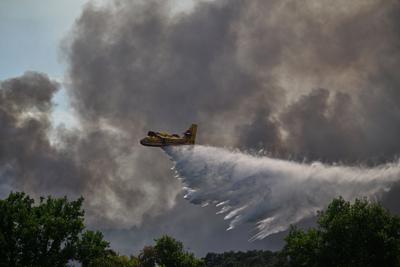
A thick layer of wildfire smoke has stretched across large parts of the United States, turning skies hazy across the Midwest and Northeast while forcing communities to confront worsening air quality, evacuation orders, and the growing impact of extreme wildfire conditions.
Rural towns to major metropolitan areas, residents have watched familiar landscapes disappear behind a blanket of gray as smoke from large wildfires drifted hundreds of miles from active fire zones. Officials have warned that the smoke poses serious health risks, particularly for children, older adults, and people with respiratory conditions, as air quality alerts remain in effect across multiple states.

AD: Capeesh Restaurant
The spread of wildfire smoke highlights how fire emergencies can extend far beyond the areas where flames are burning. Smoke from wildfires in Canada drifted across parts of the U.S. Midwest and Northeast, creating hazardous air quality conditions in communities hundreds of miles away from active fires. Wind patterns carried fine particles across state and national borders, officials urged residents to monitor air quality alerts, reduce outdoor activities when pollution levels increased, and take precautions to limit exposure.
Reports described how wildfire smoke blanketed large portions of the region, affecting daily life and prompting health warnings as officials responded to deteriorating air conditions. According to the National Weather Service, wildfire smoke can travel hundreds of miles from active fire zones, reducing air quality in communities far from the flames themselves.
Through smoke forecasting systems and air quality alerts, federal weather agencies continue to track changing conditions and provide guidance to the public as wildfire pollution spreads across regions. Officials have urged residents to monitor air quality updates and take precautions when smoke levels become unhealthy.

AD: Oysterian Sea Food Restaurant And Bar
The latest wave of wildfire smoke has created challenges for emergency officials attempting to balance evacuation decisions, public safety warnings, and rapidly changing fire conditions. In some communities, residents have been told to leave their homes as flames move closer, while others hundreds of miles away have faced the invisible threat of polluted air.
Wildfire evacuations are often complicated by uncertainty. Winds can shift quickly, changing the direction of fires and smoke, while emergency responders must coordinate road closures, shelters, and public communication efforts under intense pressure. The National Interagency Fire Center has tracked elevated wildfire activity across the country, with officials warning that dry conditions, strong winds, and extreme heat can increase the likelihood of fast-moving fires.
Residents affected by evacuation orders, leaving home can mean abandoning belongings, businesses, and communities built over generations. Many families have faced difficult decisions about when to stay, when to leave, and how to protect vulnerable relatives from both fire dangers and hazardous air.
The smoke has also affected daily life in cities across the Midwest and Northeast. Outdoor events have been cancelled, schools have adjusted activities, and transportation officials have warned that reduced visibility could create additional hazards. Health departments have advised people to check air quality forecasts before spending time outside.
Scientists and environmental officials have repeatedly warned that climate conditions are contributing to longer and more intense wildfire seasons. Warmer temperatures, prolonged drought, and dry vegetation can create conditions where fires spread more rapidly and become harder to contain. The smoke drifting across the country serves as a reminder that wildfire impacts are no longer limited to areas near burning forests. Communities far from fire zones are increasingly experiencing the consequences through poor air quality and public health concerns.
The spread of wildfire smoke across the Midwest and Northeast has renewed discussions about how communities prepare for increasingly frequent environmental emergencies. Emergency officials say public awareness and early warnings are becoming essential tools as wildfire events become more unpredictable.
Federal agencies have expanded monitoring systems designed to provide faster information about fires and smoke conditions. The National Oceanic and Atmospheric Administration tracks smoke movement through forecasting models, helping officials predict where hazardous conditions may develop. Health experts say the most immediate concern from wildfire smoke is exposure to fine particulate matter known as PM2.5. These tiny particles can travel deep into the lungs and are linked to respiratory and cardiovascular health problems, particularly among vulnerable groups.
The Centers for Disease Control and Prevention advises people to reduce smoke exposure by staying indoors when possible, improving indoor air filtration, monitoring air quality, and following guidance from local health officials.
Communities facing evacuation orders, the crisis extends beyond the immediate danger of flames. Residents must navigate temporary housing, financial losses, and the emotional strain of leaving homes behind. Recovery can continue long after fires are contained, with rebuilding efforts often lasting months or years.
The growing reach of wildfire smoke has also changed how Americans understand fire emergencies. A disaster that once seemed limited to certain regions can now affect millions of people who may never see the flames but still experience the consequences. Officials continue to emphasize that preparation remains one of the most effective ways to reduce risks. Keeping emergency supplies ready, following evacuation instructions, and monitoring official alerts can help residents respond quickly when conditions deteriorate.
Smoke continues to move through the Midwest and Northeast, and the challenge facing communities is not only managing the current crisis but preparing for a future where extreme wildfire events may become more common. The hazy skies serve as a warning that the effects of wildfires can travel far beyond the places where they begin.
Climate patterns shift and wildfire seasons grow longer in many regions, communities are being forced to rethink how they prepare for smoke events.
Local governments, health agencies, and residents are placing greater emphasis on air-quality monitoring, emergency communication, and public health planning. Schools, workplaces, and outdoor event organisers may also need to develop strategies for protecting people during periods of unhealthy air. The impacts of wildfire smoke highlight the growing need for long-term solutions, including stronger forest management practices, climate adaptation efforts, and improved access to clean indoor air.

AD: Heritage And Restaurant Lounge Bar