

Sheila Mckenzie-
When a prisoner walks out of custody earlier than they should — whether by days, weeks, or even months — the public outrage is swift and fierce. Headlines rightly focus on the individual offender, plastering their name across front pages and social media feeds.
But behind the scenes, a deeper and more pressing question that emerges is who should bear responsibility for administrative failures that allow potentially dangerous individuals to return to society prematurely? Increasingly, the political and operational heat is turning toward two key players: the Justice Secretary, David Lammy, and the leadership of the prison system.

AD: Capeesh Restaurant
Release errors, sometimes caused by miscalculated sentences, clerical oversights, faulty digital systems, or communication breakdowns between courts and prisons — are not merely bureaucratic hiccups. They are breaches of public trust with real-world consequences. Victims feel betrayed. Communities feel endangered. And government accountability is thrust into the spotlight.
Understanding why the Justice Secretary and prison bosses are expected to answer for these failures necessarily requires an examination of the system that governs incarceration, the mechanisms designed to safeguard accuracy, and the breakdowns that allow errors to slip through the cracks. The situation of a sex offender being released from prison in error should riles the conscience of everyone in office who heard of the incidence. The Ministry of Justice has confirmed that there have been 262 prisoners had been freed in error in the year to March 2025 out of 57,000 releases, a 128% rise on the previous year. Separate data shows that from April to the end of October this year, there were 91 releases in error from prison.
At the heart of the issue is a simple reality; the responsibility for overseeing safe, lawful and timely prisoner release ultimately lies with the state. Ministers and senior prison officials do not personally process release orders or tally sentence days, yet they are the stewards of the institutions that do. When such errors occur repeatedly and there is no known accountability for the multitude of errors, it questions whether the ministers in charge are actually bring responsible for what’s happening under their watch. Brahim Kaddour-Cherif, an Algerian man, who is a sex offender, was let out of Wandsworth Prison by mistake on 29 October.

AD: Oysterian Sea Food Restaurant And Bar
This stewardship includes ensuring adequate staffing, functional technology, proper training, rigorous oversight, and clear operational standards. When these safeguards fail, accountability flows upward because the decisions made at the top directly shape the conditions under which frontline staff operate.
The Justice Secretary, as the political head of the nation’s custodial system, carries ultimate responsibility for ensuring that the prison service is efficient, safe, and compliant with the law. This role includes setting policy, allocating resources, and responding to crises — even when those crises stem from systemic weaknesses years in the making. Release errors, by their nature, expose such weaknesses. Prison bosses also carry a huge responsibility in this regard.
Brahim Kaddour-Cherif, an Algerian man, who is a sex offender, and was let out of Wandsworth Prison by mistake on 29 October was another disgraceful error that occurred. The Governor of Wandsworth prison, Andy Davy ought to be answering serious questions about this failing under his watch.
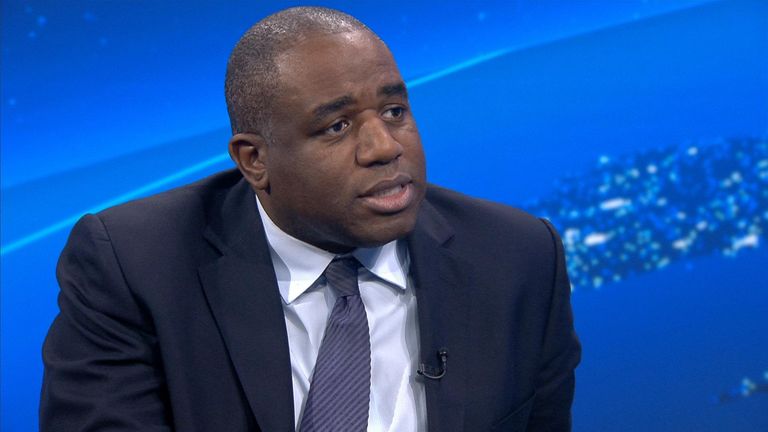
David Lammy must be held accountable for catastrophic prison errors Photo. news.sky.com
They illuminate where funding has been insufficient, where IT systems have become outdated, where staff shortages have strained capacity, and where bureaucratic processes have failed to keep pace with increasing pressure on the justice system.
The last decade has seen prison systems in many countries grapple with chronic overcrowding, budget constraints, and unprecedented staff turnover. In such environments, errors become more likely. Understaffed administrative teams are tasked with processing complex legal documents under tight time pressure. Prison officers are stretched thin, juggling operational duties with administrative tasks once handled by specialised personnel.
Meanwhile, digital infrastructure often decades old struggles to integrate new software, leading to mismatched data and erroneous calculations. These structural deficiencies fall squarely within the Justice Secretary’s remit, making it logical that the public and parliament demand answers when failures result in unlawful releases.
Equally central to the accountability debate are prison governors and senior operational leaders. While the Justice Secretary sets national policy, prison bosses execute it at the institutional level. They oversee local staffing, enforce administrative protocols, ensure legal checks are met, and manage the flow of communication between prisons, courts, probation services, and central authorities.
A release error at one prison has not been an isolated mistake. it can indicate deeper operational gaps. Governors are therefore expected to maintain rigorous internal checking systems designed to catch errors before they become catastrophic.
In several high-profile cases, inquiries have revealed that prison staff missed multiple opportunities to identify sentence miscalculations. Errors often stemmed from a mixture of factors: inexperienced personnel misinterpreting legal documents, digital systems failing to synchronise with court orders, and insufficient supervision to catch small mistakes with big consequences.
Prison governors ought to enforce robust quality-control procedures — including daily audits of release lists, double-checking of court warrants, and mandatory oversight from senior administrators. When these checks are missing, improperly enforced, or quietly abandoned due to staffing pressures, accountability lands firmly at the feet of the leadership.
One of the most compelling reasons for holding the Justice Secretary and prison bosses accountable lies in the principle of public protection. The criminal justice system functions on the promise that individuals convicted of crimes will serve the sentences handed down by the courts. When an offender walks free prematurely, that promise is broken — not by the courts, not by the prosecutors, but by the custodial authorities.
Victims who believed justice had been served are forced to confront the reality that administrative errors have undone the assurances given to them. These emotional and safety-related consequences cannot be dismissed as mere technicalities.
Undermining confidence
Moreover, errors in release undermine confidence in the justice system as a whole. Public faith depends on consistency, accuracy, and fairness. If the system cannot reliably track who should be detained and for how long, its credibility weakens. This erosion of trust is not limited to any single prisoner release case; it reverberates across sentencing debates, parole decisions, and community safety measures. Accountability at the ministerial and organisational level is therefore essential to maintain public confidence.
While critics argue that holding the Justice Secretary personally accountable is politically convenient but operationally unrealistic, supporters counter that ministerial responsibility is fundamental to democratic governance. Ministers may not process paperwork, but they do make critical funding decisions, approve reform proposals, and oversee national strategies designed to minimise errors. If systemic problems persist despite known warnings, the fault cannot lie with frontline staff alone.
In many cases, the roots of release errors trace back to long-ignored recommendations from inspectorates and oversight bodies. These reports routinely highlight the need for improved staff training, modern IT systems, better communication protocols, and strong leadership.
When such recommendations are not implemented — often due to financial or political reluctance — responsibility naturally ascends to those in charge of decision-making. Prison bosses share this burden by managing local implementation. If the oversight chain fails at any point, accountability must mirror that chain.
Another layer of complexity arises from the growing use of digital systems to calculate release dates automatically. While intended to reduce errors, these systems require precise, up-to-date information to function correctly. A single missed court amendment or a delayed data upload can produce inaccurate results.
System upgrades, data integration, and adequate staffing to manage digital workflows are all leadership responsibilities. Therefore, when technology fails, it is not simply the fault of the software — it is the fault of those who oversee its procurement, maintenance, and operation.
Ultimately, accountability for release errors is not about blame for its own sake. It is about ensuring that the mechanisms of justice remain reliable, transparent, and safe. When a prisoner is released unlawfully, it represents a fracture in the system — one that requires both immediate correction and long-term structural reform.
Holding senior leaders accountable ensures that these reforms are taken seriously, that operational standards are reinforced, and that the public can have confidence that lessons will be acted upon rather than ignored.
Since we know that he Justice Secretary and prison bosses occupy positions that carry immense responsibility, their oversight shapes the performance of every court clerk, prison officer, and administrative assistant within the justice system. When those systems fail, accountability must reflect the gravity of the consequences because release errors are not inevitable. They are preventable failures of management, resources, and policy. And in a society built on the rule of law, the expectation that leaders answer for such failures is not only reasonable . It is absolutely essential

AD: Heritage And Restaurant Lounge Bar