
By Theodore Brown-
Many would wonder why murderers in the United States often spend decades on death row before they are finally executed. A capital sentence rarely means an immediate journey to the execution chamber. Instead, it can begin a prolonged legal process that lasts for decades, during which convictions and sentences are repeatedly examined by state and federal courts. Some prisoners are eventually executed; others have their sentences reduced, their convictions overturned, or their cases dismissed. A number die in prison before their appeals are finally resolved.
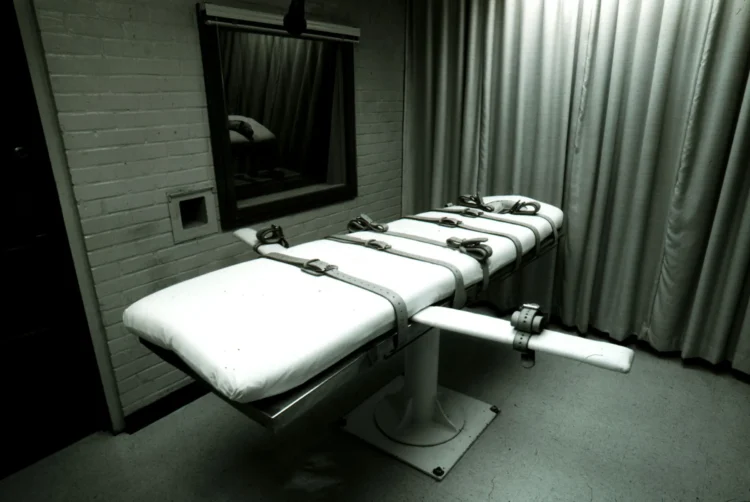
The length of time spent on death row has therefore become one of the defining features of the modern American death penalty. According to the U.S. Bureau of Justice Statistics, prisoners executed during 2023 had spent an average of 279 months under a sentence of death—more than 23 years. At the end of that year, 2,192 prisoners remained under death sentence in the United States. The figures raise an obvious question: if a court has already imposed a death sentence, why can it take another two or three decades before that sentence is carried out?

AD: Capeesh Restaurant
The answer lies in the unusually demanding legal process attached to capital punishment. Because execution is irreversible, the justice system provides multiple opportunities to examine whether a conviction was obtained lawfully, whether the death sentence was constitutionally imposed, and whether subsequent developments provide grounds for reconsidering the case.
In an ordinary criminal case, a conviction may be followed by an appeal, but capital cases receive extensive scrutiny because the potential punishment is final. After a death sentence has been imposed, the defendant can challenge the conviction and sentence through a series of proceedings that may extend from state courts into the federal system. The initial appeal can address alleged legal errors made during the trial. Subsequent post-conviction proceedings may raise different issues, including claims that defence lawyers provided inadequate representation, that prosecutors failed to disclose relevant evidence, that witnesses gave unreliable testimony or that newly discovered evidence casts doubt on the conviction.
Federal habeas corpus proceedings can provide another avenue of review, although federal law places significant restrictions on the circumstances in which federal courts may reconsider state convictions. The Antiterrorism and Effective Death Penalty Act of 1996, for example, introduced tighter limits and deadlines governing federal review of state convictions and death sentences. Each stage can require substantial legal work. Capital cases often generate extensive trial records, expert testimony, forensic evidence and constitutional arguments, all of which may have to be reviewed before a court reaches a decision. The result is a process in which a case can remain legally active long after the original trial has ended.

AD: Oysterian Sea Food Restaurant And Bar
The fundamental reason for the extensive review is the nature of the punishment itself. In the event of a person serving a prison sentence later being found to have been wrongly convicted, the conviction can potentially be overturned and the prisoner released. An execution presents a different problem because once it has taken place, no court can reverse the physical consequences of the decision. That difference has shaped decades of American capital-punishment jurisprudence. The courts have consequently developed procedures intended to identify constitutional violations and other serious errors before an execution is carried out. The process can involve questions about the evidence presented at trial, the conduct of prosecutors, the quality of defence representation, the defendant’s personal circumstances and the legality of the death sentence under prevailing constitutional standards.
This does not mean that every appeal succeeds, nor that every delay is caused by a court finding a serious error. Many appeals are rejected and some cases proceed through the courts for years without changing the original conviction or sentence. The important point is that the legal system must allow those claims to be considered before an irreversible punishment is carried out. Another factor contributing to lengthy death-row stays is that evidence does not necessarily become settled when a jury reaches its verdict. Scientific techniques can change. Previously unavailable testing may become possible. Witnesses can change their accounts. Lawyers can discover evidence that was not disclosed during the original trial. Allegations of prosecutorial misconduct or ineffective assistance of counsel can emerge during later investigations.
DNA testing has also been particularly significant in demonstrating how evidence can acquire new importance years after a conviction. The Death Penalty Information Center reports that more than 200 people sentenced to death in the United States have been exonerated since 1973. Its records also show that many of those exonerations occurred only after prisoners had spent lengthy periods on death row. These cases are an important part of the explanation for why capital litigation is so extensive. A system designed to prevent wrongful executions must leave room for information discovered after trial to be examined.
There is also the potential shifting position of legal standards. Death-row prisoners are not necessarily judged against an unchanging legal framework. The constitutional rules governing capital punishment have evolved considerably over the past several decades. The Supreme Court has restricted the circumstances in which the death penalty may be imposed and has excluded certain categories of defendants from execution. Among the major developments have been decisions concerning people with intellectual disabilities, juveniles and defendants whose individual circumstances may make the death penalty constitutionally disproportionate. As the law changes, prisoners sentenced under an earlier legal framework can seek to have their cases reconsidered. This contributes to the length of capital litigation because courts may have to determine whether a later legal decision applies to an existing death sentence and, if so, what consequences follow.
Execution dates do not necessarily mean the case is over
Even after the appeals process has advanced substantially, an execution date can generate another round of litigation. Defence lawyers may seek a stay of execution while a court considers a new claim. The challenge may concern evidence, constitutional issues, the prisoner’s eligibility for execution or the proposed method of execution. Courts can grant or deny those requests, sometimes on an emergency basis shortly before an execution is scheduled. This means that an announced execution date is not necessarily the final stage of the case. In some circumstances, the legal process continues until the last possible avenues of judicial review have been exhausted. The statistics demonstrate how long this process can become.
The Bureau of Justice Statistics reported that prisoners executed in 2023 had spent an average of more than 23 years under sentence of death. The period varied considerably from one prisoner to another, but the overall figure illustrates how different the practical operation of the death penalty is from the moment a jury announces a sentence. The Death Penalty Information Center has similarly documented extensive periods between sentencing and execution, as well as cases in which prisoners spent decades on death row before being exonerated or having their death sentences overturned.
Those figures also complicate the idea that a death sentence is simply a decision followed by an execution. In practice, it is the beginning of a prolonged legal process in which the original judgment can remain subject to review for many years. The question of whether capital appeals should be accelerated has been debated for decades. Supporters of faster procedures argue that excessive delays undermine the purpose of a death sentence, impose substantial costs and prolong uncertainty for victims’ families. They have supported measures intended to streamline capital appeals and impose stricter deadlines on litigation.
Opponents of accelerated review argue that reducing the time available for investigation and judicial scrutiny could increase the risk of executing someone whose conviction or sentence is defective. They point to cases in which new evidence emerged many years after the original trial as evidence of the importance of continued review. The disagreement reflects a fundamental tension within the death-penalty system the desire for finality must be balanced against the possibility of irreversible error.
There is no procedural solution that eliminates both concerns. A system that provides extensive review will generally take longer; a system that prioritises speed will provide less time for lawyers and courts to investigate potential errors. The prolonged legal process also has consequences beyond the courtroom. Death-row prisoners can spend many years under restrictive prison conditions while their cases move through the courts. Conditions differ substantially between jurisdictions, but death-row prisoners have historically been housed separately from the general prison population and, in some institutions, subjected to extended periods of isolation. The Death Penalty Information Center has documented the variation in death-row conditions and the continuing debate over their psychological and constitutional implications.
The prolonged process can also mean repeated court hearings, appeals and uncertainty over whether an execution will ultimately occur. An execution date may be set and then postponed; a conviction may be upheld and later challenged again; a sentence may survive one appeal only to face another. The result is a legal process that can extend across an entire generation. In the case of Christa Pike, multiple organisations have appealed to Governor Lee to review her case, and consider overturning the decision to execute her. A submission was made by one of the writers of this publication for The Eye of Media to make a representation to the governor of Tennessee , Governor Lee, to urgently intervene. During a long five way whassap call on Monday, I was one of those who objected to the idea
The central paradox of the death penalty
The long wait on death row is therefore not caused by a single procedural obstacle. It is the product of several factors operating together: mandatory and discretionary appeals, post-conviction litigation, federal review, claims involving newly discovered evidence, allegations of ineffective legal representation or prosecutorial misconduct, changes in constitutional law, challenges to execution methods and requests for stays of execution. Some delays are initiated by prisoners seeking to overturn their convictions or sentences. Others arise from judicial review, changes in law or newly discovered information. In some cases, courts ultimately conclude that the death sentence cannot lawfully be carried out.
The system’s defining paradox is that the punishment is intended to be final, while the process preceding it is deliberately designed to remain open to correction. That is why a death sentence can take decades to reach its conclusion. The length of time is not simply a measure of administrative delay. It reflects the extraordinary legal burden created when the state seeks to impose a punishment that cannot be reversed. The result for condemned prisoners can be decades between the pronouncement of a sentence and its final resolution. The prolonged process for the courts represents an attempt to answer a question with consequences that permit no correction afterward:-whether the conviction is reliable, whether the sentence is lawful and whether the state is entitled to carry it out. The death penalty may be designed as a final judgment. The decades spent on death row demonstrate how much legal scrutiny can stand between a sentence being imposed and a life being taken.

AD: Heritage And Restaurant Lounge Bar