
By Ben Kerrigan-
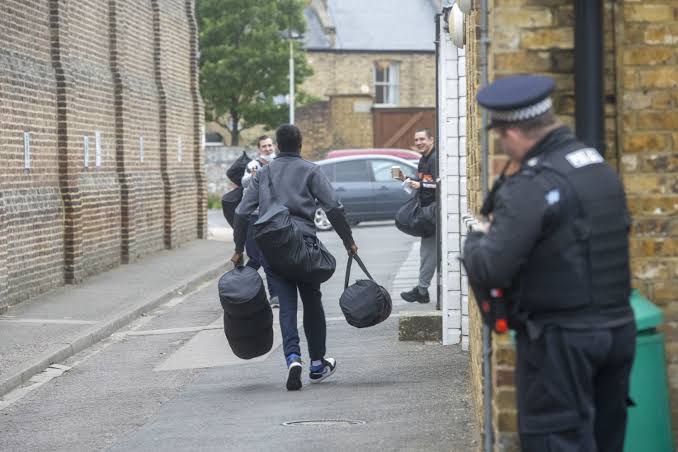
Hundreds of prisoners are being released early across England and Wales today as a new sentencing regime comes into force, marking the latest and most significant stage in a prison-capacity crisis that has driven repeated changes to the way offenders serve custodial sentences.
Around 700 prisoners are expected to be released in the first wave, with the Government anticipating roughly 4,500 additional releases over the coming months as the new rules are introduced in stages.

AD: Capeesh Restaurant
The first group consists principally of prisoners serving sentences of less than 575 days, with longer-sentenced prisoners brought into the scheme progressively through to June 2027.
The changes take effect under the Sentencing Act 2026, which alters the point at which many prisoners serving standard determinate sentences can leave custody. For eligible offenders previously subject to release after 40% or 50% of their sentence, the relevant custodial period is being reduced to one-third.
For another category previously released after two-thirds, it is reduced to one-half. The remainder of the sentence is served in the community on licence and subject to conditions.

AD: Oysterian Sea Food Restaurant And Bar
The Government says the measures are necessary because the prison estate is close to capacity. Ministry of Justice figures put the prison population at 87,499, while operational capacity is about 89,055. But the releases have immediately exposed another pressure point: what happens to offenders once they leave the prison gates.
Probation officers are warning of a shortage of accommodation, with about 2,000 prisoners expected to be released during the next month and concerns that some people may have nowhere to live.
The Government has responded by introducing new restrictions on offenders released on licence. Ministers say offenders can be subjected to measures including geographical restriction zones, exclusion from pubs, clubs and major public events, and increased electronic monitoring. The Ministry of Justice has described the changes as the toughest supervision regime it has introduced ever before.
A crisis years in the making
Today’s releases did not emerge in isolation. The prison system has been under sustained pressure for years. In September 2024, the previous government introduced Standard Determinate Sentence 40 (SDS40), reducing the custodial portion of certain eligible sentences from 50% to 40%.
The Ministry of Justice said at the time that prisons were almost full and that the measure was needed to create additional capacity. That measure itself represented a significant change to sentencing practice, but it did not resolve the underlying capacity problem.
Official statistics show that the prison population remained exceptionally high. At the end of March 2026, 87,342 people were in prisons in England and Wales, according to Ministry of Justice statistics. Earlier official figures also recorded a remand population at historically high levels.
The Government then moved to legislate for a broader restructuring of sentencing.The Sentencing Act 2026 was designed to change not simply individual release dates but the balance between time spent in prison and time spent under supervision in the community.
The Institute for Government said the changes were intended to address a prison system that was approaching the point at which it could run out of space, while replacing a succession of emergency measures.
The legislation was subsequently narrowed. Rape, serious child sexual offences and grooming offences were excluded, while later amendments also excluded offences including manslaughter, death by dangerous driving and causing or allowing the death of a child
That means today’s scheme does not amount to a blanket release of prisoners. Eligibility depends on the offence, sentence and the particular statutory provisions applying to the prisoner.
Nevertheless, the first releases have generated renewed concern from victims’ groups, opposition politicians, police representatives and probation professionals.Critics have focused particularly on cases involving domestic abuse and other offences where an offender’s release can directly affect a former partner or family member.
ITV reported today that the Conservative opposition has criticised the policy, while the Government maintains that excluded offences and enhanced licence conditions provide safeguards. The debate therefore goes beyond the question of whether prisoners should be released earlier.
At its heart is a much longer-running problem:.England and Wales has repeatedly changed release rules because the number of prisoners has grown faster than the available capacity of the prison estate.
Today’s 700 releases are consequently only the beginning of the latest phase. As further groups become eligible over the coming months, the Government will face two competing tests.
That is whether the measures create sufficient room inside prisons, and whether the probation, housing and monitoring systems outside prison can cope with the additional people being supervised in the community.

AD: Heritage And Restaurant Lounge Bar