
By Isabelle Wilson-
The National Transportation Safety Board has urged sweeping new safety reforms that would require alcohol detection systems on all newly manufactured school buses, following a high-profile crash that exposed the risks of impaired driving among those responsible for transporting children.
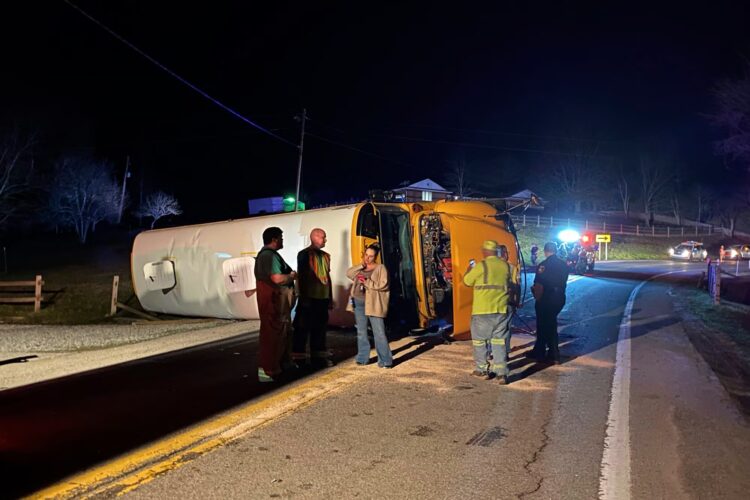
The recommendation, issued this week, marks a significant escalation in federal safety guidance and reflects growing concern that existing safeguards are insufficient to eliminate the possibility of intoxicated drivers operating school buses. It comes after investigators found that alcohol impairment played a decisive role in a rollover crash in West Virginia that left multiple children seriously injured.

AD: Capeesh Restaurant
Officials say the proposed systems would function similarly to ignition interlock devices, preventing a vehicle from starting if alcohol is detected on a driver’s breath or through integrated monitoring systems. While such technology is already used for convicted drink-driving offenders, the NTSB is now advocating for its universal adoption in school transportation as a preventative measure.
The recommendation stems from a detailed investigation into a 2024 crash near Millstone, West Virginia, in which a school bus carrying 19 students veered off the road and overturned. Three children suffered serious injuries, while others sustained minor harm. Investigators later confirmed the driver had a blood alcohol level well above the legal limit, highlighting a critical failure in safety oversight.
While the incident itself was alarming, what followed raised even greater concern among safety officials. During the course of the investigation, the National Transportation Safety Board said it had identified a broader pattern of impaired driving cases involving school bus operators rather than a single isolated failure.

AD: Oysterian Sea Food Restaurant And Bar
According to reporting that drew on NTSB findings and underlying data analysis, at least 118 school bus drivers across the United States were accused of driving under the influence over a five-year period, highlighting what investigators described as a recurring safety gap in oversight rather than an anomaly.
This figure has been cited in coverage of the NTSB recommendation and stems from compiled national reporting on impaired school transport drivers.
Safety analysts point to earlier datasets tracking arrests and charges involving school and commercial transport drivers, which documented incidents across multiple states and school districts and formed the basis for the broader concern now being raised.
Taken together, these findings have strengthened the argument from federal safety investigators that existing screening and monitoring systems may not be sufficient to fully prevent impaired individuals from operating vehicles carrying children, reinforcing the NTSB’s push for mandatory onboard alcohol detection technology.
Despite these findings, officials acknowledged that the true scale of the issue may be difficult to quantify. Federal agencies do not consistently track school bus driver intoxication separately from broader commercial vehicle data, meaning cases may go underreported unless they involve serious crashes or legal proceedings.
The NTSB has long maintained that school buses are among the safest modes of transport, carrying millions of children daily with relatively few fatalities. However, investigators argue that even isolated failures can have devastating consequences, particularly given the vulnerability of young passengers.
The board’s position reflects a broader philosophy that preventable risks especially those involving human error should be addressed through technological solutions wherever possible. Alcohol detection systems, already in use in parts of Europe, are seen as a practical step toward eliminating one such risk.
Despite strong backing from safety advocates, the proposal faces a complex path to implementation. The National Transportation Safety Board has no regulatory authority and cannot mandate changes itself; instead, it issues safety recommendations that must be adopted by federal regulators or lawmakers.
These recommendations are typically directed to agencies such as the National Highway Traffic Safety Administration, which is responsible for setting and enforcing vehicle safety standards.
Implementation can therefore take years, as proposals must move through federal rule-making or legislative processes before becoming mandatory.
One of the primary challenges is cost. Although individual ignition interlock systems are relatively inexpensive to install, scaling the technology across the United States’ vast fleet of school buses estimated at around half a million vehicles could require significant investment.
Industry groups have historically resisted certain safety mandates, including seat belt requirements, often citing financial constraints and operational concerns. Similar arguments are expected to emerge in response to the alcohol detection proposal, particularly from school districts already facing budget pressures.
However, supporters insist that the financial burden must be weighed against the potential cost of inaction. They point out that alcohol-related crashes account for a substantial proportion of traffic fatalities nationwide, and that the presence of children raises the stakes considerably.
Legal experts suggest the recommendation is unlikely to encounter significant opposition on privacy grounds, as school bus drivers are already subject to strict regulations, including routine drug and alcohol testing. Instead, the debate is likely to centre on funding, logistics, and the timeline for implementation.
The proposal also intersects with broader trends in transportation safety, where technology is increasingly being used to reduce reliance on human judgment. Collision avoidance systems to driver monitoring technologies, the integration of automated safeguards is becoming a defining feature of modern vehicle design.
The NTSB’s recommendation highlights a fundamental tension between maintaining high safety standards and managing the practical realities of large-scale implementation. With parents and communities, the expectation that children will be transported safely is non-negotiable, and incidents involving impaired drivers can quickly erode public trust.
The board’s call for alcohol detection systems reflects a shift toward a more precautionary approach, in which even low-probability risks are addressed proactively. Through targeting impaired driving specifically, the NTSB is focusing on a factor that is both measurable and preventable through existing technology.
Legislative processes can be slow, and competing priorities may delay action, but the visibility of the issue combined with the severity of cases like the West Virginia crash is likely to keep pressure on policymakers. In the meantime, some school districts may choose to act independently, adopting alcohol detection systems voluntarily as part of broader safety initiatives. Such moves could help build momentum for wider adoption and demonstrate the effectiveness of the technology in real-world settings.

AD: Heritage And Restaurant Lounge Bar