

By Aaron Miller-
US scientist James Watson, the towering figure who fundamentally redefined biology by co-discovering the iconic double-helix shape of DNA, died at the age of 97.
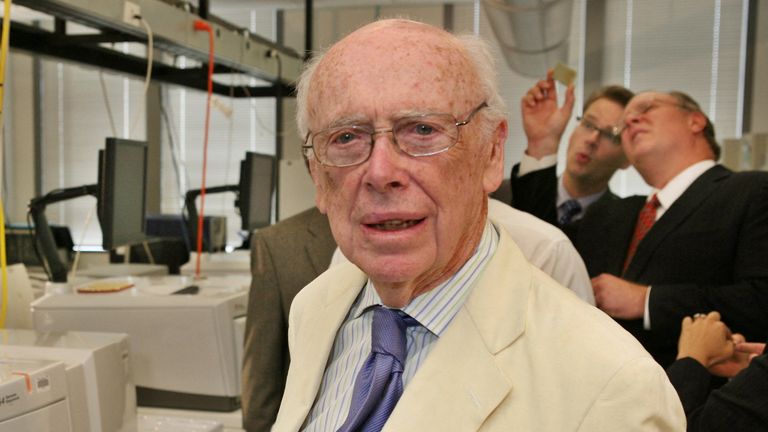
James Watson. Pic: Reuters
The Chicago-born DNA pioneer made the breakthrough discovery at only 24 years old, immediately cementing his position as a distinguished scientific figure for decades. This essential discovery revealed how genetic information is precisely stored and how genetic information transmits, providing the fundamental blueprint for all life on Earth.

AD: Capeesh Restaurant
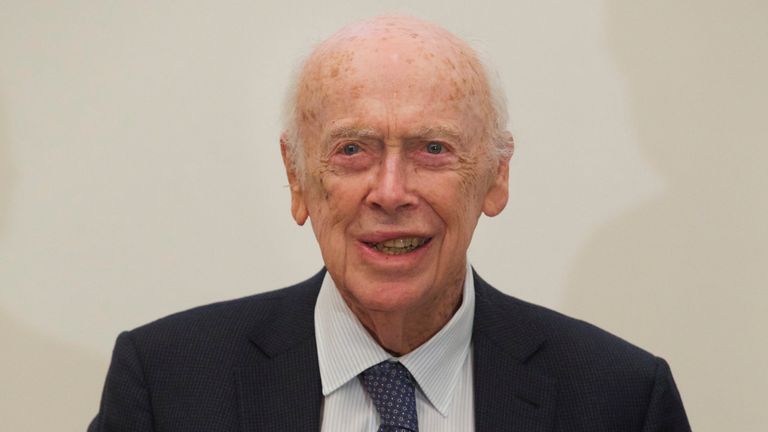
James Watson. Pic: AP
In 1962, Watson shared the prestigious Nobel Prize in Physiology or Medicine with colleagues Francis Crick and Maurice Wilkins for their model of deoxyribonucleic acid, or DNA. Their research showed that DNA is a double helix, consisting of two strands that expertly coil around each other to create what resembles a long, gently twisting ladder.
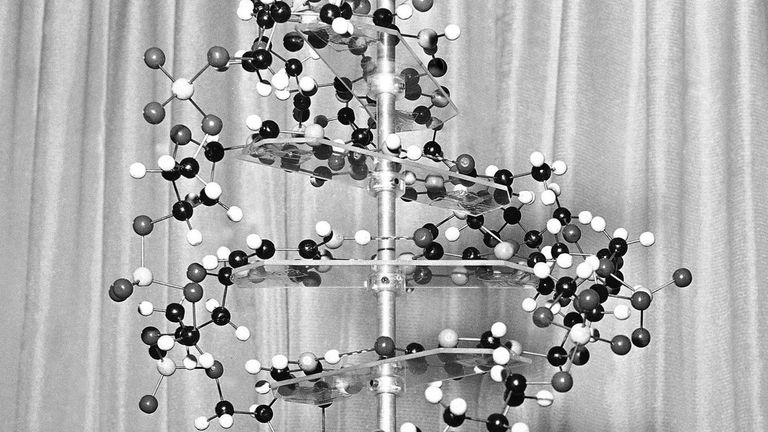
A model of a DNA molecule. Pic: AP
The revelation of the double helix proved more than a mere scientific finding; it became a global cultural moment. Outside the scientific community, the double helix became an instantly recognizable emblem of modern science, appearing in works by renowned artists like Salvador Dali and featuring prominently even on a British postage stamp.
The mechanism they uncovered demonstrated exactly how cells replicate their DNA during division, beginning with the two strands efficiently separating like a zipper. These insights laid the critical groundwork for virtually all modern biological and medical advancements. Regrettably, the latter decades of his life saw this extraordinary scientific reputation eroded by a series of offensive public remarks, severely damaging his standing. These racist outbursts ultimately defined the latter part of the James Watson Controversial Legacy.

AD: Oysterian Sea Food Restaurant And Bar
After securing his Nobel-winning breakthrough, James Watson capably channeled his enormous reputation and extensive connections into shaping science policy and influencing the next generation of researchers. He authored widely influential textbooks and published a best-selling memoir, while actively mentoring numerous promising young scientists throughout his career.
Crucially, he helped guide the enormous international collaboration to map the entire human genome, a feat considered one of the most significant biological undertakings since the initial discovery of DNA itself. The work accomplished by Watson and his colleagues paved the way for monumental modern advances, including precise genetic engineering, innovative gene therapy designed to treat complex diseases, accurate identification of individuals through forensic DNA analysis, and comprehensive mapping of family histories.
These practical applications underscore the enduring, revolutionary nature of the scientific element within the James Watson Controversial Legacy. Yet, profound control over the body’s fundamental blueprint inevitably sparked intense, ongoing ethical debates across the globe. Scientists and policymakers continue grappling with the critical question of whether it is appropriate to intentionally alter the body’s genetic code, especially for purely cosmetic purposes or in ways that could potentially be inherited by future generations.

Queen Elizabeth II meets Sir Paul Nurse and James Watson. Pic: AP
These complex moral and societal questions accompany every step of progress built upon the double helix structure. Even Watson acknowledged the power unlocked by the discovery, writing, “There was no way we could have foreseen the explosive impact of the double helix on science and society.”
He never achieved another laboratory breakthrough of comparable magnitude, but his institutional influence profoundly accelerated the biotech revolution. Readers can explore the global guidelines for responsible genetic editing through the World Health Organization’s reports on human genome editing.
While the world universally honors Watson’s singular scientific brilliance, the end of his career was fundamentally overshadowed by his deeply damaging and offensive public comments, severely complicating the James Watson Controversial Legacy. The scientist first faced widespread, intense condemnation in 2007 when The Sunday Times Magazine quoted him expressing shocking, discriminatory views.
He stated he felt “inherently gloomy about the prospect of Africa,” specifically because he believed, “all our social policies are based on the fact that their intelligence is the same as ours – where all the testing says not really.” He further insisted that while he hoped everyone was equal, people who manage Black employees “find this is not true.”
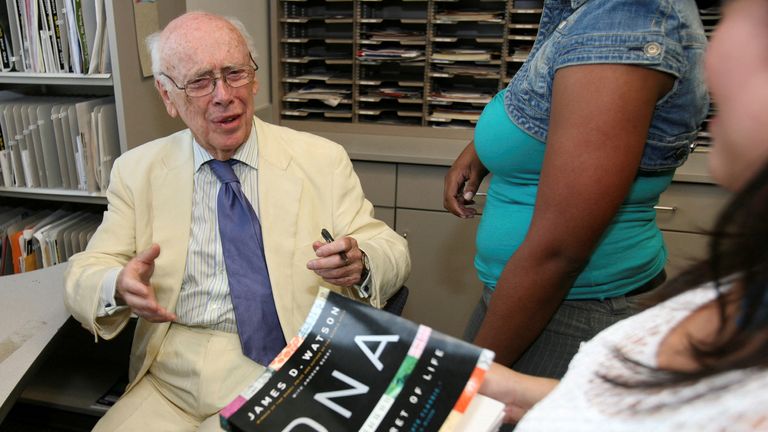
Pic: Reuters
Watson later offered a vague public apology, but the damage was irreversible. He was swiftly suspended from his job as chancellor of the prestigious Cold Spring Harbor Laboratory in New York. The scientist ultimately stepped down a week later, concluding a tenure that spanned nearly 40 years in various high-level leadership roles at the renowned institution. More than a decade after the initial controversy, the cloud over the James Watson Controversial Legacy darkened further.
In a 2019 television documentary, Watson brazenly reaffirmed that his deeply problematic views on race had not changed since the 2007 suspension. Dr. Francis Collins, who served as director of the National Institutes of Health, acknowledged Watson’s scientific gifts but noted the scientist had demonstrated “a regrettable tendency toward inflammatory and offensive remarks, especially late in his career.” He added that Watson’s “outbursts, particularly when they reflected on race, were both profoundly misguided and deeply hurtful.” This persistent, unrepentant racism fundamentally stained the James Watson Controversial Legacy.
The final assessment forces the difficult separation between his immense contribution to our understanding of life and his deeply divisive personal philosophy. For further context on institutional responses to ethical misconduct in scientific leadership, please review our previous reporting on Ethical Missteps and Accountability in Research Institutions.

AD: Heritage And Restaurant Lounge Bar