

By Theodore Brown-
Nearly three decades after Tupac Shakur was gunned down in Las Vegas, the long-running mystery surrounding the hip-hop icon’s death has finally reached a courtroom, with prosecutors portraying the killing as a carefully orchestrated act of revenge and the man accused of masterminding it insisting the case is built on too little fact.
Opening statements began Monday in the trial of Duane “Keffe D” Davis, 63, who is charged with one count of murder with a deadly weapon in connection with Shakur’s September 1996 killing. Davis has pleaded not guilty. Prosecutors do not allege that Davis pulled the trigger. Instead, they say he organised the attack and supplied the weapon as part of a retaliation plot after Shakur and members of his entourage assaulted Davis’ nephew, Orlando Anderson, earlier that night.

AD: Capeesh Restaurant
For prosecutors, the case begins with a night that has become one of the most enduring chapters in hip-hop history. On September 7, 1996, Shakur travelled to Las Vegas with Death Row Records boss Marion “Suge” Knight to watch Mike Tyson fight Bruce Seldon for the WBA heavyweight title at the MGM Grand. Tyson won by first-round knockout in just 1 minute and 49 seconds, bringing the packed boxing spectacle to a rapid end.
What followed inside the MGM Grand would become central to the prosecution’s theory of the murder. Shakur and members of his entourage encountered Anderson, a member of the South Side Compton Crips, in the hotel. A violent confrontation followed, with security cameras capturing members of Shakur’s group attacking Anderson. Prosecutors now argue that the assault supplied the motive for what happened later that night.
Hours after the Tyson fight, Shakur and Knight were travelling through Las Vegas in a black BMW when a white Cadillac pulled alongside their vehicle and opened fire. Shakur, sitting in the passenger seat, was struck multiple times, while Knight was grazed by a bullet fragment. The attackers sped away, leaving Shakur critically wounded.

AD: Oysterian Sea Food Restaurant And Bar
Shakur was rushed to hospital and underwent emergency treatment, but his condition deteriorated. Six days later, on September 13, 1996, the 25-year-old rapper died from his injuries. His death stunned the music world and cemented his killing as one of the defining unsolved crimes of the 1990s.
For years, no one was charged in the case. The investigation became surrounded by competing theories, rumours and speculation, while Shakur’s death remained intertwined with the bitter East Coast-West Coast tensions that had consumed hip-hop at the time. Now prosecutors are asking a Las Vegas jury to accept their account that Davis played a central role in turning the confrontation at the MGM Grand into a deadly act of retaliation.
Act Of Revenge
Prosecutor Binu Palal described the killing as “an act of revenge” and told jurors that Davis had displayed what prosecutors characterised as “visceral anger” toward Shakur. Their case rests in significant part on statements . Davis made publicly and in interviews over the years, including accounts in which he discussed being in the vehicle connected to the shooting and described events surrounding Shakur’s death. Reuters reported that prosecutors are presenting Davis as the alleged “on-site commander” of the operation rather than the gunman himself.
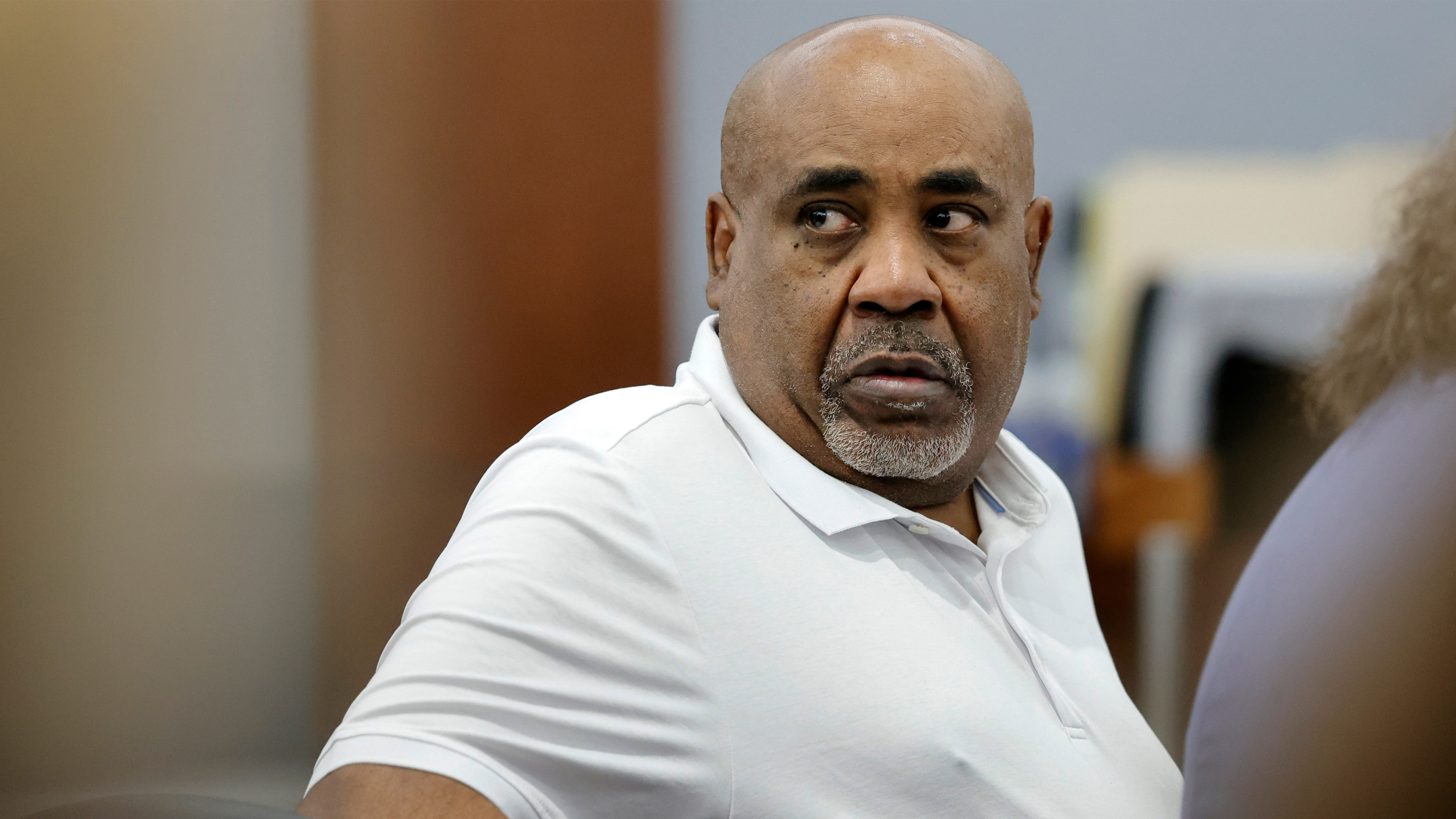
That distinction is crucial. Authorities have never identified the person who fired the fatal shots, and Davis is not accused of being the shooter. Prosecutors nevertheless argue that he can be held responsible because of his alleged role in planning and facilitating the attack. They contend that Davis helped organise the retaliation, obtained the firearm and was part of the group involved in the shooting.
The defence has presented a starkly different picture, telling jurors that the prosecution’s case lacks the concrete evidence necessary to establish Davis’ guilt. His lawyers have challenged the reliability and consistency of statements attributed to Davis and argued that the state is attempting to turn years of speculation into proof. They have also pointed to weaknesses in the original investigation and the fact that several people who could have provided direct evidence are now dead.
The jury on Monday heard from four witnesses, including a police officer who stopped the BMW carrying Knight and Shakur on the night of the shooting and a woman who was travelling in a vehicle ahead of them when the attack occurred. Their testimony offered jurors an opportunity to reconstruct the final hours of Shakur’s life, and the moments surrounding the gunfire.
Several members of Shakur’s family were also in court, including his sister, as the proceedings finally began three decades after the rapper’s death. The presence of his family underscored the extraordinary length of the wait for a criminal case to reach this point.
Davis’ prosecution itself is the product of a dramatic revival of a case that had remained dormant for years. His public comments about the killing helped draw renewed attention to his alleged involvement, eventually leading to his arrest and the filing of the murder charge. Prosecutors now face the task of persuading jurors that those statements, combined with other evidence, establish Davis’ role beyond a reasonable doubt.
Tupac Shukar was gunned down in 1996 after Mike Tyson knocked out Bruce Seldon
The trial is also forcing a renewed examination of the chain of events that transformed a night of celebrity, boxing and music into one of the most notorious murders in American popular culture. Shakur had gone to the MGM Grand to watch Tyson, one of boxing’s biggest stars at the time, deliver another spectacular knockout. Within hours, the rapper himself would be fighting for his life after a drive-by attack on the Las Vegas Strip.
Shakur’s death six days later reverberated far beyond Las Vegas. Six months after his killing, fellow rap superstar The Notorious B.I.G. was murdered in a separate drive-by shooting in Los Angeles, further deepening the mythology surrounding the violence that had engulfed hip-hop during the 1990s.
Now, 30 years after the bullets were fired, the question before the Las Vegas jury is narrower but potentially historic. Whether Duane Davis was responsible for orchestrating the attack that ended Tupac Shakur’s life. The prosecution says the answer lies in revenge, Davis’ own words and the events that unfolded after the Tyson-Seldon fight. The defence says those pieces do not amount to proof. For the first time in nearly three decades, those competing versions of one of music history’s most famous murders will be tested under oath in a courtroom.

AD: Heritage And Restaurant Lounge Bar