
By Aaron Miller-
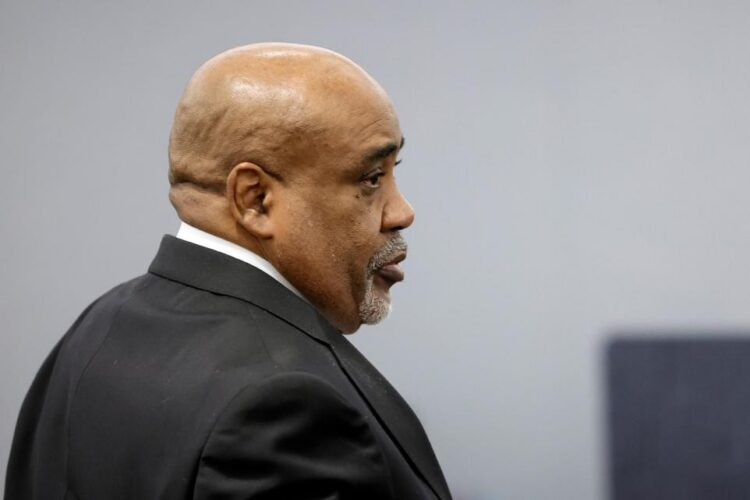
Nearly three decades after Tupac Shakur was gunned down in Las Vegas, former gang leader Duane ‘Keffe D’ Davis has been sentenced to 40 years to life in prison for orchestrating the killing. His conviction followed years of public admissions, a controversial memoir, recorded police interviews and questions over why the investigation took so long to produce a prosecution.
Former South Side Compton Crips gang leader Duane “Keffe D” Davis has been sentenced to 40 years to life in prison for his role in the 1996 murder of rap superstar Tupac Shakur, bringing a dramatic development to one of America’s most notorious unsolved celebrity killings.

AD: Capeesh Restaurant
The sentence was handed down in Las Vegas on Tuesday, 13 October 2026, following Davis’s conviction for first-degree murder with a deadly weapon in August. He has indicated that he intends to appeal the verdict. The sentencing is a major milestone in a case that remained unresolved for almost 30 years.
Davis, 63, was accused of organising the drive-by shooting that killed Shakur, one of hip-hop’s most influential artists, who was just 25 when he was shot on the Las Vegas Strip on 7 September 1996. The rapper died in hospital six days later.
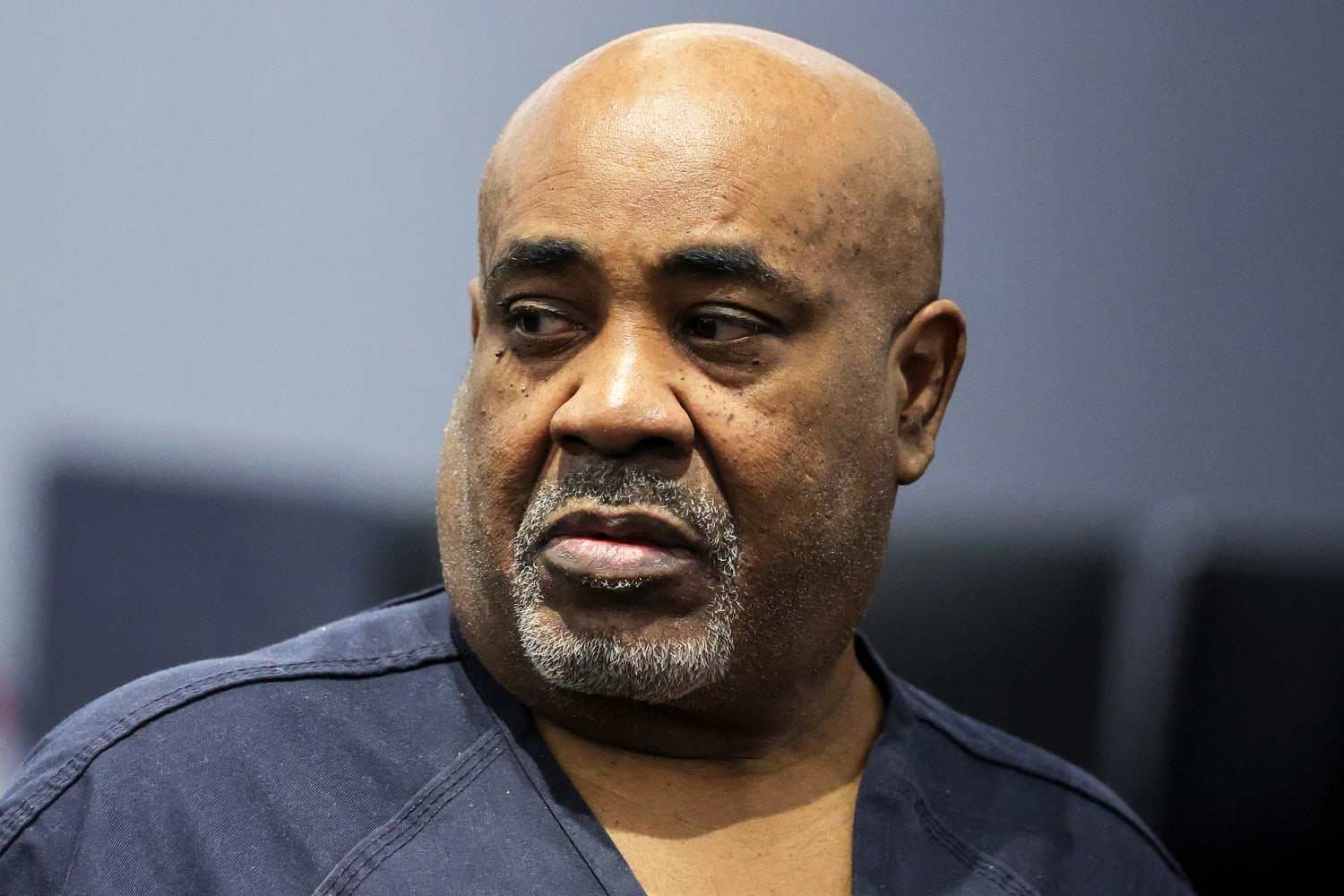
Image: Duane “Keffe D” Davi

AD: Oysterian Sea Food Restaurant And Bar
Prosecutors argued that Davis was the organiser behind the attack, though did not allege that he personally fired the fatal shots. Their case relied heavily on his own accounts of the killing, including statements made to investigators, interviews given to the media and revelations in his 2019 memoir, Compton Street Legend.
Davis became the only person charged in connection with Shakur’s murder. His prosecution also revived difficult questions about how an investigation that attracted international attention could remain without a criminal conviction for so long.
The confrontation that preceded Tupac’s murder
The events leading to Shakur’s death began hours before the shooting, at the MGM Grand hotel in Las Vegas, where a boxing match involving Mike Tyson had drawn celebrities, music industry figures and members of rival street gangs. THe former undisputed world heavyweight champion had just knocked out Mike Tyson in one round.
Shakur was associated with Death Row Records, whose founder, Marion “Suge” Knight, was linked to the Mob Piru gang. Davis was a prominent member of the South Side Compton Crips, a rival group.
The prosecutors cited a confrontatio whichn erupted inside the MGM Grand involving Shakur’s entourage and Orlando “Baby Lane” Anderson, Davis’s nephew and a fellow gang member. Shakur was among those who attacked Anderson during the altercation, which was captured on hotel surveillance footage.
Prosecutors argued that the assault provided the motive for a retaliatory shooting later that evening. Shakur subsequently travelled in a black BMW driven by Knight. A white Cadillac carrying Davis and three other men pulled alongside the BMW at a red light near the Las Vegas Strip..
Gunfire erupted from the Cadillac. Shakur was struck multiple times, while Knight was also injured but survived. Anderson was alleged to have been the gunman. Davis later described passing a firearm towards the back of the Cadillac, where Anderson was sitting, before the shooting.
A cold case solved through the suspect’s own words
The case against Davis was built around an unusual feature: material he had helped place in the public domain became central to the prosecution.
His 2008 police interview, his subsequent account to Las Vegas investigators, his 2019 memoir and his media appearances gave authorities a body of statements to examine against the circumstances of the crime. For years, those accounts did not lead to a conviction. The legal issues surrounding the earliercooperation agreement, the challenges of corroborating the statements and the passage of time all complicated the investigation.
Ultimately, the jury accepted the prosecution’s argument that Davis had played a criminal role in the killing, despite the defence’s insistence that his public accounts were unreliable. His sentence of 40 years to life in prison marks a dramatic outcome in one of the most closely watched murder cases in music history.
Yet the case also leaves a difficult question for investigators and the public: how much earlier could justice have been achieved if the evidence and admissions eventually used in court had been assembled into a prosecutable case sooner?
Murdered: Tupac Shakur was killed in 1996 after a Mike Tyson fight
The sentencing is a moment of legal reckoning for Tupac and the music world. After nearly 30 years. For law enforcement, it is also a reminder of the importance of preserving evidence, properly assessing witness accounts and ensuring that potentially significant admissions are examined before the passage of time makes a difficult case even harder to solve.
Anderson denied involvement in Shakur’s killing and died in an unrelated shooting in 1998. The other alleged occupants of the Cadillac have also since died, leaving Davis as the sole person prosecuted in the case.
The differecne between the alleged gunman and the person accused of organising the attack was central to the prosecution. Prosecutors maintained that Davis could be held responsible for murder because he helped arrange the killing and supplied the weapon, even if he did not pull the trigger himself.
The evidence that turned the case against Davis
Investigators struggled to transform suspicions about Shakur’s killing into a prosecutable case. The breakthrough came largely through statements Davis made about his own alleged involvement.
The prosecution presented a series of accounts in which Davis placed himself inside the white Cadillac and described events surrounding the shooting. One of the most important pieces of evidence was a recorded interview from December 2008, when Davis spoke to investigators working on a task force examining the murder of Christopher Wallace, better known as the Notorious B.I.G., who was killed in Los Angeles in March 1997.
Wallace’s murder, which followed Shakur’s death by several months, became another enduring mystery associated with the violent East Coast–West Coast hip-hop rivalry of the 1990s.
During the 2008 interview, Davis described his involvement in Shakur’s killing and identified Anderson as the person who opened fire. He recounted how the men in the Cadillac approached Shakur’s vehicle and how a gun was passed towards the back seat.
The interview was conducted under an arrangement intended to protect Davis from prosecution based on information disclosed during the cooperation process. Investigators were initially examining matters connected to Wallace’s murder, rather than conducting a straightforward interrogation about Shakur’s death.
That agreement later became a major legal issue. Davis’s lawyers argued that his protected statements should not be used against him. Prosecutors maintained that he forfeited the protection by subsequently making public statements about the crime. A judge eventually permitted the recorded interview to be used at trial. Jurors heard the recording i
In August 2026, allowing them to assess Davis’s own description of the events. The prosecution also relied on an interview Davis gave to Las Vegas police in 2009, in which he againplaced himself at the scene and described the shooting.
His statements to investigators provided a detailed account that prosecutors could compare with his subsequent public comments. The importance of the recordings lay not simply in Davis’s alleged admissions, but in the opportunity they gave jurors to examine how he described the incident at different times.
ABC News’s examination of the investigation previously reported that Las Vegas authorities had considered arresting Davis after his 2009 account but decided they needed stronger evidence to proceed.
The memoir that became a prosecution weapon
Perhaps the most striking aspect of the case was that Davis’s own book became part of the evidence against him. Published in 2019, Compton Street Legend recounts Davis’s experiences as a gang member and his knowledge of events surrounding the killings of Shakur and Wallace.
In the book, Davis described himself as someone with direct knowledge of Shakur’s murder. Prosecutors pointed to passages in which he placed himself in the Cadillac and described providing a gun that was subsequently used in the shooting. The memoir was particularly significant because it was published years after the original police interviews, when Davis was speaking publicly about events that had remained unresolved.
His account offered investigators an opportunity to revisit a case that had long been burdened by competing theories, conflicting statements and a lack of evidence sufficient to secure a conviction. Davis’s defence team sought to prevent the memoir from being admitted at trial. His lawyers argued that the book and his media appearances were intended to attract attention and generate income, rather than provide a reliable, sworn account of a murder.
The argument raised a central question for the jury, wich was could Davis’s public statements be trusted as admissions of involvement, or were they embellished stories intended to sell a book and cultivate his reputation? The court ultimately allowed the memoir to be used as evidence.
In June 2026, Clark County District Court Judge Carly Kierny ruled that prosecutors could introduce relevant passages from the book. The decision was reported by the Las Vegas Review-Journal.
The memoir did not stand alone. Its significance came from its relationship with Davis’s recorded statements and media interviews, which prosecutors used to build a case around his repeated accounts of the killing. The book was a crucul source of evidence for investigators. For the defence, it was an example of why Davis’s words needed to be treated cautiously.
Davis’s willingness to discuss Shakur’s death publicly helped transform a decades-old mystery into a case that authorities could pursue. Over the years, he gave interviews and appeared in filmed discussions in which he described his alleged role and the events surrounding the shooting. He also discussed the case in connection with the 2019 memoir.
The interviews brought renewed attention to the possibility that Davis had knowledge of the crime that investigators had previously been unable to use in court. His public accounts were not always identical in every detail. Differences in the descriptions of the shooting became part of the wider debate over his credibility, while the prosecution argued that the repeated core elements supported its case.
Davis’s account also appeared in the wider media discussion surrounding the deaths of Shakur and Wallace. Both murders became subjects of documentaries, television investigations and years of public speculation, with numerous theories circulating about gang rivalries, music-industry tensions and possible conspiracies.
However, the existence of those theories did not establish that they were true. The prosecution of Davis ultimately focused on the evidence relating to Shakur’s murder, particularly the defendant’s own recorded and published statements.
The defence maintained that Davis had exaggerated or invented aspects of his story. His lawyers argued that accounts offered for entertainment or commercial gain should not automatically be treated as reliable confessions.
The jury nevertheless found him guilty after hearing the evidence presented during the trial. The case illustrates how statements initially made outside a courtroom can acquire a very different significance when they are later examined in a criminal proceeding. Comments made to promote a book or establish a public reputation can become evidence if investigators can establish their relevance and the court determines that they are admissible.

AD: Heritage And Restaurant Lounge Bar