
By Gabriel Princewill-

AD: Heritage And Restaurant Lounge Bar
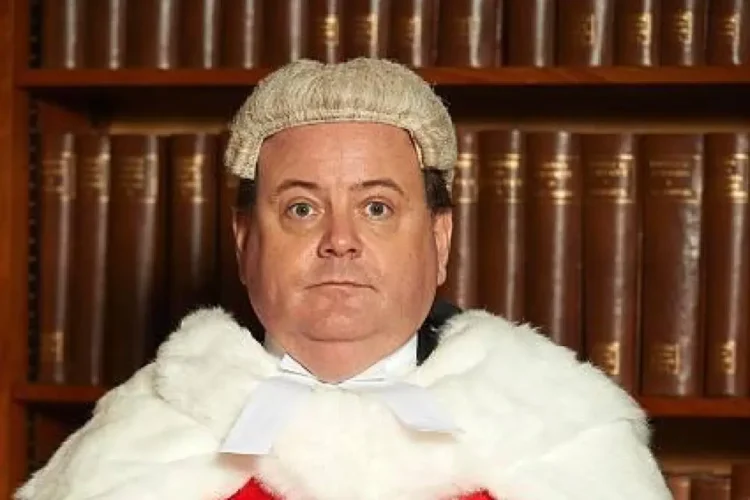
A High Court judge in London faces a difficult balancing act between protecting an individual’s life and reputation, safeguarding potential victims, and preserving the media’s right to publish investigations of legitimate public interest.
Mr Justice Nicklin has the difficult but important task of addressing the a legal challenge presented by a high-profile celebrity whose identity remains anonymised, and who wants the High Court in London to prevent two news organisations from identifying him in damaging publications they plan to make.
The allegations are that he exploited his celebrity status over many years to engage, or attempt to engage, in inappropriate sexual activities with numerous girls and young women.
The case, heard over two days beginning on Tuesday, 27 October 2026, pits the claimant’s concerns for his life and wellbeing against the media’s right to report matters of public interest.
The claimant, identified in court as “PPT”, denies abusing his power and position to contact young women and teenagers in attempts to have sex with them.
His legal team is seeking an injunction against ITN and Guardian News & Media (GNM), arguing that publication would be highly likely to trigger another suicide attempt and could prove fatal.
The defendants maintain that the public interest in their investigation provides a strong justification for publication. The proceedings raise important questions about freedom of expression, privacy, defamation and the circumstances in which the courts can prevent the press from publishing allegations before their truth has been established.
On the first day of the hearing, the claimant’s barrister, Sara Mansoori KC, told the court that publication could have a potentially fatal impact on her client.
Defence barrister: Sarah Masoouri Image: Matrix Chambers
She said her client had attempted suicide twice following events connected withthe allegations, had spent months in hospital and had been examined by more than ten doctors.
According to his legal team, the threat to his life is genuine and supported by substantial medical evidence. A report prepared for the court indicated that inpatient treatment could significantly, although not completely, mitigate the risk.
Treatment lasting several months was said to have a realistic prospect of reducing the danger. The claimant’s lawyers argue that he is not raising mental health concerns simply to avoid embarrassing publicity.
They contend that he fears a public trial by media and has no intention of returning to public life. ITN and GNM take a different position. Their barrister, Gavin Millar KC, said the allegations had emerged from a wide-ranging investigation involving conversations with more than 100 people.

Barrister Gavin MIller KC Image: Matrix Chambers
The resulting accounts, he argued, indicated a pattern of behaviour that warranted public scrutiny. The media organisations also contend that the alleged victims have suffered serious trauma and mental health difficulties as a result of the claimant’s alleged conduct.
In their submission, the claimant’s suicide risk can be mitigated and does not justify preventing lawful journalism. Mr Justice Nicklin described the case as difficult and important, recognising the significant public interest in the proceedings.
He emphasised that the court must decide the matter fairly on the evidence and legal submissions. Crucially, the judge is not being asked at this stage to decide whether the allegations are true. The immediate question is whether publication should be permitted or restrained by an injunction. But the judge’s perception of the allegations could still influence his eventual ruling, depending on the grounds presented for his judgement.
The judge has also warned against speculation about the claimant’s identity, stressing that widespread repetition of online rumours does not turn speculation into established fact.
Allegations of sexual misconduct, particularly involving teenagers or young women, are capable of causing substantial reputational damage if published and believed. Such damage cannot easily be rectified, if the allegations turn out to be false.
A competent High Court judge would be expected to test the evidence in terms of probability, and bakance this with the crebility of the suicide risk to the defendant; also having regard of the hallowed principle of precedent in law.
If the news organisations publish allegations that the claimant abused his celebrity status to pursue sexual relationships with young women, the claimant could potentially argue that the reports are defamatory. The precise wording, context, identification of the claimant and impact of the publication would all matter.
However, the fact that an allegation is damaging does not automatically make its publication unlawful. Defamation law recognises several important defences. Truth is a defence under section 2 of the Defamation Act 2013.
A defendant must establish that the imputation conveyed by the statement is substantially true. Publication on a matter of public interest, under section 4 of the Act, may provide a defence where the statement complained of concerns a matter of public interest and the defendant reasonably believed that publishing it was in the public interest.
A rigorous investigation involving numerous sources could be relevant to this defence, but it would not automatically guarantee success. The journalists’ conduct, verification process, the information available to them and the nature of the allegations would all be relevant.
The media may also rely on other recognised defences where appropriate, depending on the precise publication and circumstances.
The central difficulty is that the court is being asked to intervene before the proposed reports are published. It therefore cannot simply assume that the allegations are false or that the journalists will be unable to defend their reporting.
The Bonnard v Perryman principle
A particularly important rule comes from Bonnard v Perryman (1891), a historic case concerning attempts to restrain allegedly defamatory publications.
The principle is that the courts will generally not grant an interim injunction to prevent publication of an allegedly defamatory statement where the defendant has a credible basis for arguing that a defence, particularly truth, may succeed at trial.
Such an injunction could suppress material that might ultimately prove lawful to publish, according to the principle of that case. This approach reflects a longstanding concern that prior restraint could prevent the public from receiving information before a court has had an opportunity to establish the facts.
In another case , Cream Holdings Ltd v Banerjee [2004] UKHL 44, the House of Lords considered the threshold for interim relief in cases involving publication and confidentiality, including the requirements imposed by section 12 of the Human Rights Act 1998.
The House unanimously allowed the newspaper’s appeal and lifted the injunction insofar as it prevented publication of information already supplied by a former employee The decision illustrates the need to balance the protection of legal rights against freedom of expression, and the practical consequences of allowing publication before a full trial.
If the celebrity’s application is principally based on privacy, confidentiality or the risk to his life, the court will be expected to assess those interests under the relevant legal framework.
If he seeks to restrain publication on the basis that the allegations are defamatory, the stringent rule against prior restraint in defamation cases becomes particularly important.
The dispute has similarities with several earlier cases in which prominent individuals asked the courts to prevent the publication of sensitive information.
Those cases demonstrate that injunctions depend on the nature of the information, the legal rights engaged and the strength of the public interest in disclosure.
One of the closest comparisons is PJS v News Group Newspapers Ltd [2016] UKSC 26. PJS, an anonymous celebrity, sought to prevent a newspaper from publishing details of extramarital sexual encounters. The application centred on privacy rather than a determination that the proposed allegations were defamatory.
The High Court initially refused an interim injunction. The Court of Appeal subsequently granted protection, and in May 2016 the Supreme Court restored the injunction, by a majority, pending trial.
The Supreme Court emphasised that a public appetite for celebrity sexual stories does not necessarily amount to a legally recognised public interest.
Public figures retain privacy rights, and the media must demonstrate a genuine public interest in disclosure rather than rely simply on public curiosity.
The above case is somewhat relevant to the present dispute because both involve attempts to prevent publication of intimate or sensitive allegations about a celebrity.
However, there is an important distinction because the proposed reports in the present proceedings concern alleged patterns of sexual conduct involving girls and young women, potentially raising questions of public accountability and the misuse of celebrity status.
If an investigation credibly reveals conduct that bears on public safety, the exercise of influence or the protection of potentially vulnerable people, the public interest may be stronger than in a story concerning consensual private relationships. This is why secific facts matetr considerably.
If ITN and GNM have credible evidence and can argue that their reporting is true or otherwise legally defensible, the court would have to take that into account, and make a highly value based judgement in allowing publication of the allegations.
The rule does not mean that journalists have unrestricted freedom to publish anything they wish. Nor does it decide whether the allegations in this case are true. It instead reflects the strong legal presumption against stopping potentially lawful speech before trial.
The celebrity’s application is unusual because it also places a substantial medical risk before the court. That factor may be highly relevant to the proportionality of the proposed publication and the consequences of refusing relief, but it does not automatically establish that the reporting is unlawful.
Freedom of Expression versus the right to life
The claimant’s medical evidence presents the court with a serious and sensitive question. If publication carries a credible risk of suicide, the judge must consider the evidence carefully rather than dismissing the risk as an attempt to avoid scrutiny.
At the same time, the media organisations argue that preventing publication would interfere with lawful journalism and deny the public access to the findings of an extensive investigation.
Article 10 of the European Convention on Human Rights protects freedom of expression, including the press’s role in investigating and reporting matters of public concern.
Article 8 on the othe rhand, protects private and family life. The right to life under Article 2 may also be relevant to the state’s obligations where a real and immediate risk to life is established.
These rights do not operate as automatic trump cards. The court must examine the evidence and determine what weight each right deserves in the particular circumstances. The medical report’s conclusion that treatment could significantly reduce, but not eliminate, the risk may be important to the judge’s assessment.
The court may need to consider whether the danger can be addressed through treatment or other safeguards without imposing a blanket restriction on publication.
If I were a betting man, and the media’s investigation is credible, his identity will be allowed by the judge. The suicide risk will be a discretionary matter for the judge.