
By Lucy Caulkett-
Serena Williams, one of the most iconic figures in tennis history, has once again ignited global speculation about a possible return to professional competition after refusing to rule out a comeback during a high‑profile television interview this week.
The 23‑time Grand Slam singles champion, now 44 and enjoying life off the court, stopped short of dismissing the idea when asked if she had plans to resume her storied career a response that has sent shockwaves through the tennis world. Williams has not competed in a professional match since her third‑round defeat at the 2022 US Open, where she was widely celebrated for a farewell that emphasised evolution over retirement.

AD: Capeesh Restaurant
Serena Williams addressed speculation about a possible return during a television interview on NBC’s The Today Show with anchor Savannah Guthrie, where she was repeatedly asked whether she planned to resume her tennis career. Williams laughed off the questions before saying “that’s not a yes or no” when pressed on a comeback, keeping the door open without committing.
Williams has previously tried to curb rumours. In December, she posted on social media, “Omg yall I’m NOT coming back. This wildfire is crazy‑,” after reports surfaced that she had re‑entered the International Tennis Integrity Agency’s (ITIA) anti‑doping testing pool a requirement for any player who wishes to compete on the professional circuit.

AD: Oysterian Sea Food Restaurant And Bar
Rejoining the testing pool doesn’t guarantee a return to competition, but it does satisfy one of the procedural steps necessary for a comeback.
Players must be available for random drug testing and provide whereabouts information something few athletes would do without at least considering a return to sanctioned events. That peculiar combination of denial and obligation has only fuelled further discussion about Serena’s true intentions.
The ambiguity of her responses has sparked particularly intense analysis across social media and sports punditry. Some observers say Williams is genuinely content with her post‑tennis life and simply dealing with relentless speculation; others believe her comments may signal that she’s keeping her options open perhaps for doubles or mixed doubles appearances, or even a limited singles schedule at certain events.
Adding to the intrigue is the fact that Serena’s older sister, Venus Williams, recently competed at the 2026 Australian Open at age 45, after receiving a wildcard into the draw. Venus’s participation has highlighted that age isn’t necessarily an immediate barrier to elite competition for the Williams legacy, further stoking interest in what Serena might do next.
What a Return Would Mean for Tennis and the GOAT Conversation
Speculation about Williams’s return is about more than just nostalgia. If Serena were to compete again, even selectively, it would have a seismic impact on the tennis landscape, both commercially and competitively.
She is already regarded as one of the greatest players in the history of the sport, her 23 major singles titles trailing only Margaret Court’s all‑time record.
A competitive comeback even in doubles would capture global headlines and reshape discussions about durability, legacy, and the evolving careers of elite athletes.
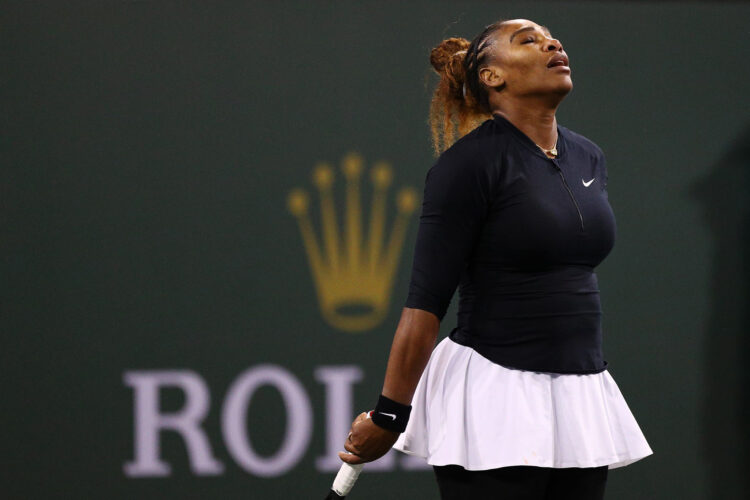
 Serena’s last game after losing to Ajla Tomljanovic in the 2022 US Open Third Round
Serena’s earlier decision to describe her departure from the tour as “evolving away from tennis” rather than outright retiring has itself been widely dissected.
Experts suggest that the language choice may have been strategic intentionally ambiguous, leaving room for future possibilities without ever committing to a specific path. That ambiguity now appears to be bearing fruit as media narratives swirl around her refusal to categorically shut down a return.
Tennis insiders note that a comeback wouldn’t only be symbolic but also logistically feasible if Williams chooses to pursue it. A player’s listing in the ITIA testing pool requires six months of availability before they can formally enter sanctioned tournaments meaning that, if Serena wanted to compete this season, the technical groundwork would have begun last year.
That has led to speculation that the re‑entry into the pool was not accidental, but rather a deliberate step toward keeping the door open on competitive play.
Several commentators have noted that a doubles appearance with Venus Williams at a major such as the US Open where wildcards are often granted to fan favourites and legends would be a historic moment.
It has been suggested that Serena could reunite with her sister in doubles if she chooses to return, a proposal that would unite two of the all‑time greats in what could be a final chapter of the Williams sisters’ remarkable partnership.
While Serena Williams has refused to rule out a return, commentators have underscored the practical hurdles she would face in competing at the highest level after a multi‑year hiatus at age 44, particularly against a generation of younger, relentless competitors.
Her re‑entry into the International Tennis Integrity Agency’s testing pool required before any sanctioned comeback highlights the logistical and physical questions that remain unanswered even amid speculation about her fitness and form.
At the same time, Williams’s enduring marketability, built over decades of record‑breaking achievement and lucrative partnerships, means that even the possibility of her name in tournament draws would be a major boon for viewership and sponsorship.”
Off the court, the implications of a comeback extend into broader cultural discussions. Serena Williams’s legacy transcends tennis; she is a symbol of resilience, empowerment and sporting excellence whose impact has been felt far beyond the baseline.
A return would reinforce narratives about longevity in sport, female athleticism beyond traditional age curves, and the evolving identities of retired champions who step back into the spotlight.
When Serena Williams’s name re‑emerged in tennis circles first through her anti‑doping pool listing fans and analysts took to social media and sports forums to debate a wide range of comeback scenarios.
Some suggested ceremonial one‑off appearances at major events like Wimbledon, while others speculated on mixed‑doubles or doubles entries at the US Open, or even another singles run. Observers argued that a return, in whatever form, would capture global attention and dominate tennis discourse.
Yet despite all this speculation, Serena Williams herself has kept her response rooted in the present moment. Her comments suggest comfort with her current life priorities family, personal projects and time away from the relentless grind of the tour while leaving the question mark dangling over one of the biggest headline stories in sport.
Fans who grew up watching her dominate the game and those who admire her for transcending it will be hoping that she clarifies her intentions in the months ahead. Until then, speculation will continue to build, and the legend of Serena Williams will keep reshaping itself, perhaps toward one final chapter on the court.

AD: Heritage And Restaurant Lounge Bar