
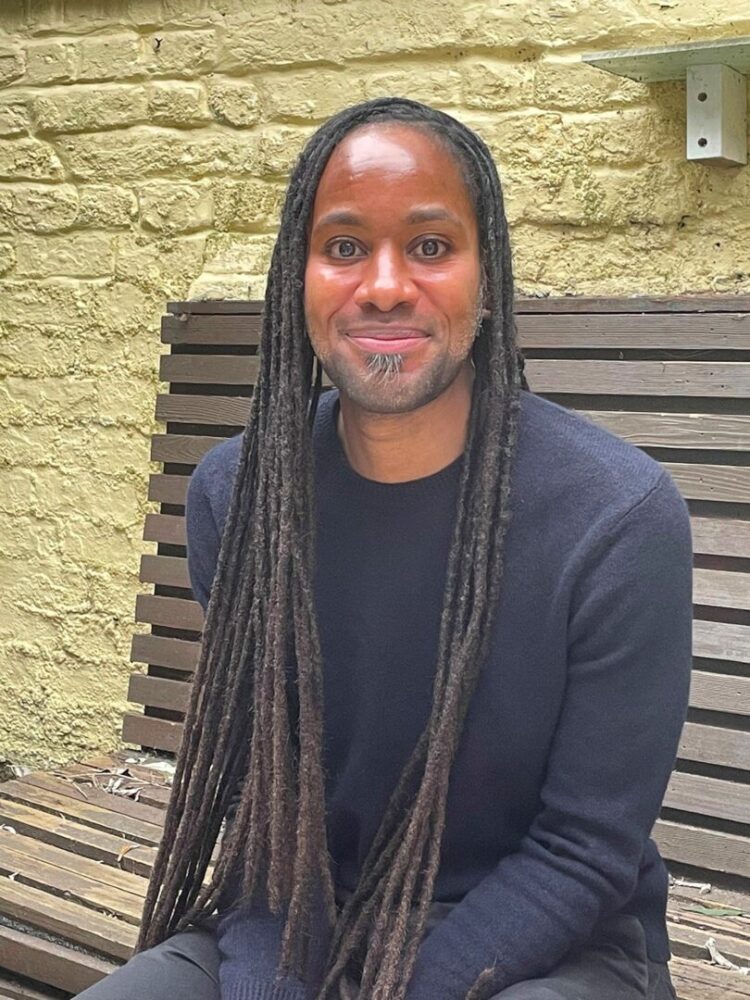
By Gabriel Princewill-
Queen’s University Belfast has moved to distance itself from media reports suggesting that it had cleared academic Jason Arday, clarifying that its review was limited to examining a jointly authored academic publication and the involvement of a Queen’s academic named on the paper.
The university today stressed that it did not conduct a process to clear Arday, refutinguuuu the interpretation of its original statement and the conclusions subsequently presented in media headlines.

AD: Capeesh Restaurant
In a clarification addressing the reporting, Queen’s said that its review was a preliminary examination of the publication in relation to the involvement of its own academic.
It concluded that the peer-reviewed paper met the institution’s academic standards and that it had no concerns about its publication.
However, the university was explicit that this finding should not be interpreted as a personal clearance of Arday, despite some headlines suggesting so in the past 24 hours

AD: Oysterian Sea Food Restaurant And Bar
The statement that the peer reviewed paper met its academic standard is not equivalent to a formal determination about the academic conduct or actions of an individual associated with the work. The benefit of factual precision cannot be underestimated, particularly in serious issues of public interest about which investigations are ongoing.
Yet, the wording if the statement could give that impression, and mitigate the headline error.
Queen’ University Belfast has made clear that its assessment concerned the publication itself and the involvement of a member of its academic staff, rather than a wider investigation into Arday, or an exoneration of the late professor in relation to the allegation of plagiarism that dogged his reputation before his untimely death.
In its initial statement to the BBC, the university said: “Having reviewed the matter, we are satisfied that the paper co-authored between Queen’s academics and Jason Arday meets the appropriate academic standards and have no concerns regarding its publication.”
The statement appeared to establish the university’s position on the academic quality and acceptability of the paper It confirmed that a review had taken place and that the institution had identified no concerns regarding the publication.
However, the statement did not expressly state that Arday had been cleared of any allegations, nor did it suggest that the university had undertaken a comprehensive examination of his personal conduct
.Following the erroneous interpretation of its statement in media reports, Queen’s provided further clarification, explicitly rejecting the suggestion that it had cleared the academic after The Eye Of Media contacted the university to elaborate on the grounds for clearing him,
in order to assist more detailed news, and establish whether the statement adequately resolved the controversy surrounding the former Oxford Professor’s thesis.
A fuller statement sent to The Eye Of Media by Queen Univrsity Belfast’s press team read: ”we have not ‘cleared Arday’ as reporting headlines suggest,” the university stated.
”Having reviewed the matter, we are satisfied that the paper co-authored between Queen’s academics and Jason Arday meets the appropriate academic standards and have no concerns regarding its publication.”
“”<<<==<=<<<<==<=< we have not ‘cleared Arday’ as reporting headlines suggest,” the university stated.
It continued by explaining that it had undertaken a preliminary review of the publication as it related to the involvement of a Queen’s academic named on the paper.
The independent internal review found that the peer-reviewed paper met the university’s academic standards and, on that basis, the institution had no concerns about its publication. The clarification establishes an important boundary around what the university actually examined and what its findings can reasonably be understood to mean.
Queen’s was not announcing a general finding about Arday, nor was it claiming to have resolved every question that might be associated with him or the wider circumstances surrounding the publication.
The university’s reference to a preliminary review indicates that the exercise had a defined scope and should not automatically be treated as equivalent to a comprehensive investigation into every aspect of the circumstances surrounding the publication.
The institution has not suggested that its review amounted to a wider assessment of Arday’s academic career, professsional conduct or other work.
But it still short of addressing plagiarism and sats they havent cleared.him..The clarification also highlights the importance of precision when reporting institutional reviews and academic matters.
Describing such an exercise as a personal clearance can create an impression that a much broader investigation has taken place and that conclusions have been reached beyond the actual remit of the review.
Headlines frequently become the principal way in which developments are understood and remembered. A headline stating that an individual has been cleared may lead audiences to believe that allegations or concerns relating to that person have been formally investigated and dismissed.
Its a different propositiom staring an academic has been cleared.if plagiarism from .one in which an institution confirming that a particular paper meets its academic standards.
In this case, Queen’s has taken the unusual step of directly addressing the language used in media coverage, making clear that it does not accept the characterisation that it cleared Arday.
Its clarification is a direct correction of the impression created by reporting headlines. The university’s position also reinforces the need to distinguish between institutional reassurance about academic work and a formal finding concerning an individual.
An academic publication can satisfy the relevant standards without that determination necessarily resolving every question about its contributors or the wider circumstances in which it was produced.
Equally, the absence of concerns about a paper’s publication should not be transformed into a conclusion that the university has investigated and exonerated every person associated with it.
The matter for Queen uappears to centre on the findings of its preliminary internal review and its responsibilities concerning the academic named on the publication.
Its statement leaves little room for ambiguity about the conclusion it wishes to communicate: the paper met the appropriate academic standards, the university has no concerns about its publication, but it has not cleared Jason Arday.
The clarification is particularly important in an environment where academic controversies can attract considerable public attention and where institutional statements are often used to support competing interpretations.
Universities have a responsibility to communicate the findings and limitations of their reviews clearly, while news organisations have an equally important responsibility to ensure that their reporting does not extend beyond what those findings establish.
Arday was accused of plagiarising material in over 100 passages similar to that of a former student. A media storm which scrutinised many of his other claims followed, culminating in his death.
The BBC was contacted for comment about their headline.uuuu

AD: Heritage And Restaurant Lounge Bar