
By Gabriel Princewill–
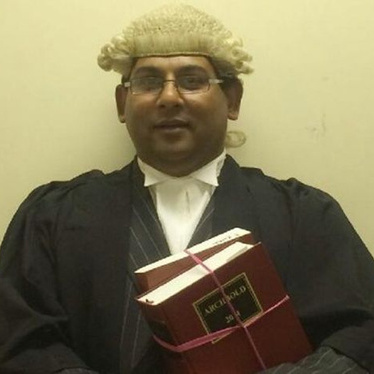
The Bar Standards Board (BSB) is considering whether to take further action following mounting criticism of a disciplinary tribunal’s decision to suspend barrister Forz Khan(pictured) for just four months over a series of antisemitic and seriously offensive social media posts. The regulator has acknowledged concerns about the apparent leniency of the sanction and indicated that it will examine the tribunal’s decision once its full written reasons have been published.
The disciplinary outcome has attracted strong criticism from senior Conservative politicians, including shadow justice secretary Nick Timothy and shadow attorney general Lord Wolfson of Tredegar KC. In a joint letter to the BSB last week, the two politicians described the suspension as “shockingly lenient”, arguing that the penalty was difficult to reconcile with the seriousness of the misconduct established against Khan.
Responding to their concerns, BSB chair Professor Chris Bones said he could “understand entirely” the objections raised. However, he stressed that the regulator needed to examine the tribunal’s full written judgment before determining whether any further steps would be appropriate. He explained that the reasons for the sanction, including any mitigating circumstances considered by the tribunal, had not yet been made available. Bones assured the politicians that the BSB would address the matter “swiftly and appropriately” once it had received the complete ruling. He also acknowledged that both he and the regulator’s director general were keen to understand why what appeared to be a lenient penalty had been imposed in a case involving such serious professional misconduct.
The comments by a barrister was most appalling, and very much like;ly met the threshhold of a hate crime. Hate crimes of this nature are prosecutable, but the legal profession generally prefers to deal with serious matters of this nature within the profession’s internal mechanism structure, especially as it minimises the potential damage to the profession. Disgraced Mr Khan, who practises from his own chambers in the South-West London posted: “There is only one solution to the evil that is zionism. Unless there is a complete global cleansing this pernicious cult will continue to spread its hate, genocide and evil.” A second post read: “The best recruitment tool for Hamas in Israel is Israel, it’s policies of evil and The idf. There is only 1 final solution to that problem that is Israel.” Thirdly, he messaged: “Israel is a colonial land thieving apartheid war criminal entity governed by war criminals committing genocide war crimes and breaking international law. The world needs to eradicate zios globally.” The following month, he posted a similar message and separately wrote that “Scum like this should be in a gas chamber”
Comments of this mature would have sparked serious public uproar had it been presented to a court of law, due to the public interest and media coverage that would have attended it . At the time of his suspension, only The Daily Telegraph amonst the UK tabloids covered the news, either because many news outlets had not seen the story, or considered it not hot enough news to report, after already being covered by the Telegraph. News outlets generally only repeat news in othe rpublications where they feel the public interest is so strong that their own audiences must have a taste. Furthermore, editors apply discretion in deciding which stories they want to repeat, after already being reported on another news outlet. Khan’s story undiubtedly deserved attention, but the lenient disciplinary period as well as the potential offence that could be caused, would have understandably led some editors to leave the story out.
Publications like Legal Futures and The Law Gazette covered the news, of the suspension, but any reputational damage remained limited since large swathes of the British public may never even have heard of those publications, if they are not in the legal field. News like this still deserves to be told because it reminds us if the type of waywardly minde dindividuals that can belong to a prestigious profession, no matter how highly regarded.
Today’s story reported by The Law Society’s Gazette feautured the Bar Standard’s Chair response. Professor Bones said: “You will not be surprised that both the director general of the BSB and myself are also keen to understand more about why such an apparently lenient sanction was applied in this case,” Bones said. He added that the tribunal’s reasoning had to be understood before the regulator could decide what further action to pursue. Timothy subsequently took to social media platform X to argue that the BSB should intervene and appeal the suspension, increasing pressure on the regulator to challenge the tribunal’s decision. Section 19 of the Public Order Act 1986 – publishing or distributing written material intended or likely to stir up racial hatred. Section 17 of the same Act defines racial hatred as hatred against a group of persons in Great Britain defined by reference to colour, race, nationality, or ethnic or national origins.

Appalled: BSB chair Professor Chris Bone
AD: Heritage And Restaurant Lounge Bar
This is particularly relevant because Jewish people are recognised in law as an ethnic as well as a religious group. Consequently, antisemitic hostility can fall within the statutory definition of racial hatred, even where the perpetrator describes the target as a political or ideological group. Section 19 provides that a person commits an offence if they publish or distribute written material which is threatening, abusive or insulting, where ”they intend to stir up racial hatred through publication; or ‘ having regard to all the circumstances, racial hatred is likely to be stirred up by the publication. The fact that the statements were published on LinkedInis particularly relevant because section 19 expressly covers publication to the public or a section of the public.
Khan, a self-employed barrister who was called to the Bar in 1988, was found guilty of two charges of professional misconduct arising from posts published on his LinkedIn account in March and April 2025. The charges were brought by the BSB, which characterised the statements as antisemitic and seriously offensive. Among the posts examined by the tribunal were statements declaring that there was “only one solution to the evil that is zionism” and that “the world needs to eradicate zios globally”. Khan also described Israel as a “colonial land thieving apartheid war criminal entity” and called for what he termed a “complete global cleansing” of what he portrayed as a pernicious movement.
In another particularly disturbing post, Khan wrote that “scum like this should be in a gas chamber”, and again referred to a “final solution”, to the problem of Israel. The language drew particular scrutiny because of its references to the Holocaust and the historical persecution and extermination of Jewish people.The tribunal concluded that Khan’s conduct was likely to diminish the trust and confidence that the public places in him and in the legal profession. In addition to the four-month suspension, he was ordered to pay £2,880 in costs.
The controversy now centres on whether the BSB will consider the punishment sufficiently serious in light of the findings or whether it will seek to challenge the outcome through an appeal or other appropriate regulatory action. The publication of the tribunal’s written reasons is expected to be central to that decision, particularly in clarifying how the panel arrived at the sanction and whether mitigating factors influenced its assessment. The case has revived scrutiny of the Bar’s disciplinary framework, and the standards expected of practising barristers when expressing views publicly, including on social media. With senior political figures openly questioning the proportionality of the punishment, the BSB faces growing pressure to demonstrate that professional misconduct involving antisemitic expression is addressed with appropriate seriousness.
The regulator has stopped short of committing to an appeal. Its next steps will depend on the tribunal’s full reasoning and whether, after reviewing the judgment, it identifies grounds for further action. There is no doubt that a suspension is far too lenient for Mr Khan. In reality, he should be fired and presented before a sititng judge for hate crime. One can be sure this won’t happen because the appetite for it from the legal professional is likely absent, for reasons one can perhaprs understand.