
By Theodore Brown-
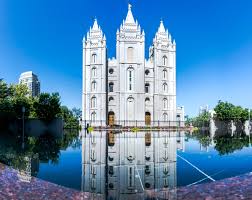
A recent Pentagon overhaul of its religious affiliation system has reignited one of the longest-running theological and cultural debates in American religious life: whether The Church of Jesus Christ of Latter-day Saints, commonly known as the Mormon Church, should be classified as a Christian denomination.
The controversy emerged after the U.S. Department of Defense dramatically reduced its list of recognised religious affiliations for service members, shrinking a database of more than 200 categories to just 31. The move was described by Pentagon officials as an administrative effort intended to simplify chaplain support and improve resource allocation across the military.

AD: Capeesh Restaurant
The restructuring quickly sparked criticism when Latter-day Saints were not included under the Christian designation used for several other faith traditions.
The issue drew immediate attention from lawmakers in Utah, home to the largest concentration of members of The Church of Jesus Christ of Latter-day Saints. Republican Senators Mike Lee and John Curtis, both members of the faith, argued that the omission effectively denied the church’s self-identification as Christian and risked reinforcing longstanding misconceptions about Mormon beliefs.
According to reports , the senators urged Defence Department officials to revise the classification system and recognise how members of the church define their own faith.

AD: Oysterian Sea Food Restaurant And Bar
The Pentagon subsequently altered its approach. Rather than labelling some groups as Christian while excluding others, officials removed the Christian designation from multiple traditions, including Catholic, Lutheran and Pentecostal affiliations.
Defense Department representatives emphasised that the changes were not intended to make theological judgments but instead to provide chaplains with a streamlined framework for serving military personnel of diverse backgrounds. The controversy has once again placed the Christian identity of the Latter-day Saint faith under national scrutiny, reviving questions that have shaped religious and political discourse in the United States for nearly two centuries.
A Debate Older Than the Pentagon
Members of The Church of Jesus Christ of Latter-day Saints consider the answer to be straightforward. The church teaches that Jesus Christ is the Son of God, the Saviour of humanity and the central figure in its theology. The name of Jesus Christ is prominently featured in the church’s official title, and church leaders routinely describe their faith as a restoration of the original Christian church established by Christ. With nearly 18 million members worldwide, the church considers belief in Jesus fundamental to its identity.
However, many theologians and leaders from other Christian traditions have historically disagreed. The primary source of disagreement lies in doctrine rather than devotion.
Traditional Catholic, Orthodox and Protestant churches generally adhere to the Nicene Creed, a statement of faith developed in the fourth century that defines God as a Trinity consisting of the Father, Son and Holy Spirit. Latter-day Saints reject the Nicene formulation and instead teach that the Father, Son and Holy Ghost are distinct beings united in purpose.
Another point of contention involves scripture. While Latter-day Saints regard the Bible as sacred, they also accept additional texts, including the Book of Mormon, as scripture.
Critics from other Christian traditions have argued that the acceptance of extra-biblical texts places Mormonism outside historic Christianity. Church leaders, meanwhile, contend that these scriptures complement rather than replace biblical teachings.
The debate gained national visibility during the 2012 presidential campaign of former Massachusetts Governor Mitt Romney, the first major-party presidential nominee who was a member of the church. Questions about whether Romney’s faith qualified as Christian surfaced repeatedly throughout the campaign, exposing divisions among religious conservatives despite broad political alignment on social issues.
The Pentagon dispute demonstrates that those questions remain unresolved. Religious scholars note that definitions of Christianity often vary depending on whether the emphasis is placed on self-identification, belief in Jesus Christ, historical doctrine or institutional tradition. The classification of the Latter-day Saint faith continues to generate debate among clergy, academics and believers.
Military Policy Meets Religious Identity
The Pentagon’s latest controversy highlights how bureaucratic decisions can quickly become symbolic battles over identity and recognition. Defense officials have repeatedly emphasised that the revised religious affiliation system was designed for administrative efficiency rather than theological judgment, describing it as an effort to streamline how chaplains access and interpret service members’ religious information.
According to reporting on the Pentagon’s correction to its updated religion list, officials clarified that the overhaul was intended to simplify internal classification codes and remove unnecessary labelling, not to make determinations about the legitimacy or status of any faith tradition.
The Defense Department stressed that its approach was focused on improving data management and ensuring chaplains can more effectively support the diverse spiritual needs of personnel, rather than engaging in debates over doctrinal boundaries or religious identity.
Pentagon representatives stressed that chaplains serve military personnel across a broad spectrum of faiths and that the streamlined categories were intended to make support services more efficient. Nevertheless, critics argue that religious labels carry significant meaning, particularly within the military, where service members often rely on chaplains during deployments, family crises and periods of emotional stress.
Some former military chaplains have recalled occasions when Latter-day Saint chaplains encountered scepticism from colleagues who questioned whether they belonged within the broader Christian chaplaincy community. Those experiences, they say, illustrate why official classifications can have consequences beyond paperwork.
The debate also arrives during a period of heightened attention to religion within the Department of Defense. Recent discussions surrounding religious expression, chaplain corps reforms and faith representation in the armed forces have intensified scrutiny of how the military balances religious freedom with institutional neutrality.
Critics from across the religious spectrum have closely monitored policy changes under Defense Secretary Pete Hegseth, arguing that even administrative decisions can influence perceptions of inclusion and representation.
Following public backlash, Pentagon officials adjusted the religious coding system and reiterated that the department was not attempting to determine which faiths qualify as Christian. Reports indicate that military leaders sought to avoid appearing to endorse any particular theological position while maintaining a manageable classification structure.
The episode underscores how questions of faith remain deeply intertwined with American public life. For many Latter-day Saints, the dispute was not merely about administrative categories but about recognition of beliefs they consider central to their religious identity. For others, it reopened longstanding theological debates about the boundaries of Christianity itself.
Dispute highlights a longstanding tension between theological definitions and self-identification. While many Christian denominations rely on historic creeds and established doctrines to determine the boundaries of the faith, others argue that belief in Jesus Christ should remain the primary measure of Christian identity.
That divide has become increasingly visible in an era when religious affiliation is shaped as much by personal conviction as by institutional tradition. The Pentagon episode also illustrates how government agencies can become entangled in sensitive religious debates even when policy changes are intended to be administrative rather than ideological. What began as a bureaucratic effort to streamline religious categories quickly evolved into a national conversation about faith, inclusion and recognition.
Members of The Church of Jesus Christ of Latter-day Saints, the controversy served as a reminder that questions about their place within the broader Christian community remain unresolved. For many Americans, meanwhile, the debate underscores the enduring complexity of defining religious identity in an increasingly diverse nation.

AD: Heritage And Restaurant Lounge Bar