
By Aaron Miller-
A long-running New York City SantaCon charity fundraiser that draws tens of thousands of revelers in Santa suits each December has been exposed as a far more elaborate fraud scheme than previously understood, according to federal authorities who now say its organizer used the event to siphon millions in donations for personal use while marketing it as a charitable tradition.
Stefan Pildes, 50, of Hewitt, New Jersey, was arrested Wednesday and charged with wire fraud in Manhattan federal court after prosecutors unsealed an indictment alleging he diverted more than half of the roughly $2.7 million raised through SantaCon events between 2019 and 2024.

AD: Capeesh Restaurant
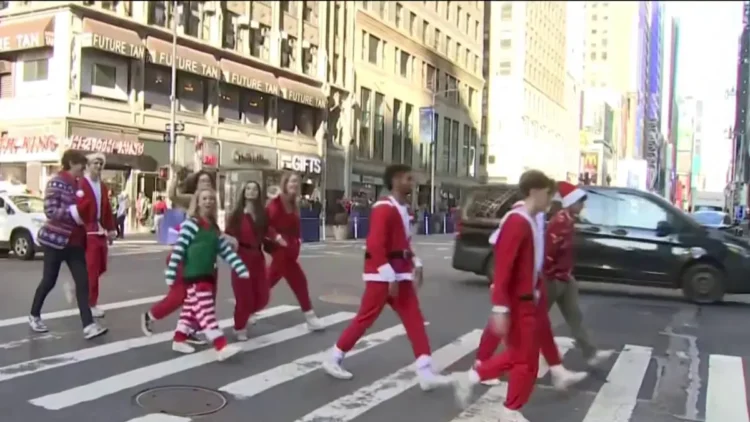
The annual bar crawl, which typically attracts more than 25,000 participants dressed as Santa Claus and other holiday characters, has long been promoted as a festive charity fundraiser supporting arts and hunger relief programs in New York City.
Instead, prosecutors say, only a small portion of the funds ever reached legitimate nonprofit organisations. The rest was allegedly routed through entities controlled by Pildes and spent on personal luxuries, including vacations, concert tickets, high-end dining, property-related expenses, and luxury travel.
Federal prosecutors describe the operation as a sustained deception that exploited public generosity and the holiday spirit of participants and venue partners.

AD: Oysterian Sea Food Restaurant And Bar
U.S. Attorney Jay Clayton said in a statement that Pildes “ran his own con game,” adding that the case reflects a broader effort to protect donors from individuals who use charitable branding as a cover for personal enrichment. FBI officials also accused him of “stealing Christmas from tens of thousands of victims,” emphasising the scale of the alleged misappropriation.
SantaCon itself has long occupied an unusual space in New York City culture. Originating in the 1990s as a countercultural performance art protest against consumerism, it gradually evolved into a sprawling pub crawl spanning Midtown Manhattan, the East Village, and surrounding neighbourhoods.
While its organisers have consistently marketed it as a charitable, nonprofit-driven event, critics and local officials have repeatedly questioned how much money actually reaches charities and whether its public messaging matches its financial reality.
Earlier investigative reporting had already raised concerns about SantaCon’s financial transparency. A Gothamist investigation found that in prior years, less than 20% of some reported proceeds were distributed to registered nonprofits, with the rest going toward operational costs and affiliated projects rather than direct charitable giving. Those findings now appear to foreshadow the criminal allegations at the center of the federal case.
The indictment states that SantaCon generated revenue not only through ticket sales but also through venue partnerships, commissions, and promotional agreements with bars participating in the event. Yet prosecutors say the charitable component was significantly overstated in marketing materials used to attract both attendees and business partners.
Public reaction to the arrest has been swift, with city residents expressing a mixture of skepticism and frustration. SantaCon has long been controversial in New York, with critics describing it as disruptive to neighborhoods and largely disconnected from its claimed philanthropic mission.
Some local officials have previously attempted to distance themselves from the event, citing public disorder, heavy drinking, and minimal visible community benefit.
The latest allegations, however, go far beyond questions of public nuisance. Federal authorities now say the event’s charitable framing was central to a years-long scheme to mislead donors and venues alike. The case has been described by prosecutors as a “charitable façade” masking systematic financial diversion.
Investigators say alleged fraud Exposes Wider Gaps
Beyond the criminal charges against its organiser, the SantaCon case has sparked broader scrutiny of how large-scale, entertainment-driven charity events are regulated in major U.S. cities, particularly when they operate outside traditional nonprofit oversight frameworks.
Authorities say the case highlights a growing vulnerability in hybrid fundraising models that combine nightlife, entertainment marketing, and charitable messaging without strict auditing or transparency requirements. In such environments, participants often assume that ticket prices or donations are being properly distributed, while actual financial flows remain largely internal and opaque.
The arrest also comes amid increased national attention on nonprofit accountability and donor protection. Regulators and legal analysts have warned that loosely structured fundraising campaigns tied to cultural or seasonal events can blur the line between legitimate charity work and commercial branding exercises.
In SantaCon’s case, prosecutors allege that funds were routed through multiple entities controlled by Pildes, including corporate and nonprofit structures that made it difficult for donors or partners to track how money was being used. Investigators say this structure enabled the alleged diversion of funds over several years without meaningful external detection.
Federal authorities have framed the case as part of a broader crackdown on financial misconduct involving public-facing charitable campaigns. The Southern District of New York has recently pursued multiple fraud cases involving misuse of donor funds, reflecting increased scrutiny of high-volume fundraising operations that rely heavily on public trust and seasonal goodwill.
The SantaCon case also intersects with longstanding public criticism of the event itself. Residents and advocacy groups have frequently pointed to disorderly conduct, overcrowding, and strained public services during the annual SantaCon gatherings, particularly in Midtown Manhattan and the East Village, where large crowds have repeatedly led to complaints about public intoxication and disruptive street behaviour.
It has documented repeated concerns from law enforcement and city officials about crowd control challenges, arrests, and disorderly conduct incidents tied to the event, underscoring its ongoing public safety impact.
Its also highlighted residents’ frustrations over drunkenness, street congestion, and sanitation issues during SantaCon, reinforcing perceptions that the event often overwhelms neighbourhoods despite its charitable branding.
While some versions of the event have attempted to emphasise community giving and charitable fundraising, critics argue that its philanthropic messaging has long been secondary to its identity as a large-scale mass bar crawl with recurring impacts on public order and local quality of life
SantaCon continues to operate in multiple cities across the United States and internationally, often generating significant participation and media attention. Despite repeated controversies, the New York iteration has remained the largest and most influential version of the event.
Reporting in outlets has highlighted that SantaCon’s transformation from a countercultural art protest into a commercialised nightlife event has long been accompanied by questions about governance and accountability.
It emphasises the scale of the alleged fraud, noting that Pildes is accused of using SantaCon’s popularity and branding to generate millions in revenue while misleading participants about its charitable impact.
With federal investigators, the case represents not only a criminal matter but also a cautionary example of how widely trusted seasonal traditions can be leveraged for personal gain when oversight is limited. Authorities have urged greater transparency in fundraising events that rely heavily on public participation and charitable messaging.
Pildes is expected to appear in Manhattan federal court, where he faces a wire fraud charge that could carry significant prison time if he is convicted. Prosecutors say the investigation is ongoing, and additional financial records are being reviewed to determine the full scope of the alleged scheme.
What was once widely seen as a chaotic but festive holiday tradition has now become the subject of a federal criminal case one that authorities say reveals how easily public goodwill can be transformed into a vehicle for deception when oversight fails to keep pace with popularity.

AD: Heritage And Restaurant Lounge Bar