
By Theodore Brown-
A tense and rapidly evolving security crisis at a rural North Carolina detention centre ended on Monday after authorities regained full control of the facility hours after inmates overpowered correctional staff and briefly took command of parts of the jail.
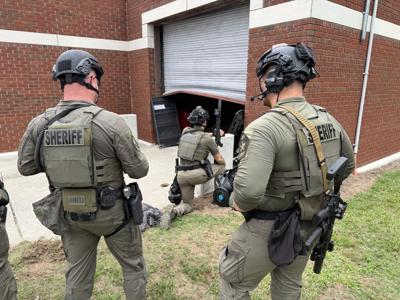
Officials confirmed that all inmates and staff are now accounted for, the facility has been secured, and injured individuals have received medical treatment as investigators begin examining how the breach occurred. The incident took place at the Bertie-Martin Regional Detention Center in Windsor, where 88 inmates and only three guards were on duty when the disturbance began early in the morning. Inmates allegedly assaulted staff, took two officers hostage, and forced a partial collapse of internal control before one guard managed to escape and alert authorities. A multi-agency emergency response was launched involving local sheriff’s deputies, the North Carolina State Bureau of Investigation, and federal partners, who quickly established a secure perimeter around the facility.

AD: Capeesh Restaurant
According to officials and early reporting, the takeover began around 5 a.m. local time when inmates managed to overpower staff during routine operations inside the detention centre. The rapid escalation forced an immediate lockdown and triggered urgent calls for backup as officers on the outside attempted to assess conditions inside a facility that quickly became partially inaccessible.
Within hours, negotiations were underway to stabilise the situation. Authorities confirmed that the two hostage guards were eventually released along with a large group of inmates as part of de-escalation efforts aimed at reducing risk inside the building.
The phased release of individuals helped narrow the scope of the standoff, leaving only a small number of inmates still requiring direct intervention by tactical teams. Surrounding roads were closed and the area was placed under heavy security, with armed units, emergency vehicles, and aerial support deployed as law enforcement attempted to regain control without further escalation.

AD: Oysterian Sea Food Restaurant And Bar
Residents nearby described an unusually large emergency presence for the rural community, with sirens and helicopters visible throughout the morning. Inside the facility, communication remained limited at various points during the incident, complicating coordination between internal staff and outside responders.
Officials have not yet confirmed whether weapons were involved or how inmates were able to gain control of multiple sections of the jail, but early statements suggest the breach was swift and concentrated rather than a prolonged buildup.
Corrections experts often note that detention environments can become vulnerable when staffing levels are stretched or when coordinated inmate action exploits temporary gaps in supervision. In this case, authorities have not yet explained why only three guards were assigned at the time of the incident, a detail now expected to be a central focus of the investigation.
Within the afternoon, law enforcement officials confirmed that the facility had been fully cleared and returned to state control after tactical units entered and secured remaining areas of the jail. All inmates and staff were accounted for, and those requiring medical care were transported for treatment as investigators began documenting the scene.
The North Carolina State Bureau of Investigation, working alongside federal partners including the FBI, has launched an inquiry into the incident following the takeover at the detention facility. The investigation will examine how inmates were able to overpower staff and how internal control broke down so quickly during the event.
Attention is expected to focus on staffing levels, surveillance systems, emergency response protocols, and the physical layout of the facility, all of which are standard areas of review in correctional security investigations. These factors are widely recognised as critical to maintaining order and safety in high-density detention environments.
Authorities have also begun interviewing staff and inmates while forensic teams examine damaged areas of the jail. Surveillance footage, communication logs, and incident reports will form a key part of the investigation as officials attempt to reconstruct the timeline minute by minute. In similar cases across the United States, such reviews can take weeks or even months before conclusions are reached or policy recommendations are made.
Despite the severity of the takeover, officials emphasised that the incident ended without a prolonged siege and that coordinated response efforts helped prevent a worse outcome. Crisis counselling and support services are expected to be made available for staff involved in the incident, as is standard procedure following traumatic security breaches.
The jail has returned to controlled operations, but the investigation continues into how a routine morning inside a rural detention centre escalated into an hours-long takeover that exposed vulnerabilities inside the system designed to prevent exactly such events. What began as an apparently ordinary shift has now become a case study in how quickly order can break down in a correctional environment when multiple safeguards fail or are overwhelmed at once.
Authorities are now working through the sequence of events in detail, relying on surveillance footage, radio communications, incident logs, and witness statements to reconstruct how control was lost and then gradually restored. At the centre of the inquiry is not only how inmates were able to overpower staff, but also how staffing arrangements, supervision levels, and internal response protocols interacted in real time.
Rural detention centres in particular often operate under resource constraints, and officials are expected to examine whether personnel levels and deployment patterns played a role in creating conditions where control became vulnerable.
The physical layout of the facility, including access points, segregation areas, and surveillance coverage, is also expected to be reviewed as investigators map the movement of both staff and inmates during the incident. While officials have confirmed that order has been re-established, the psychological and institutional impact of the takeover is still unfolding.
Correctional staff who were present during the incident are undergoing debriefings, and crisis support services are typically made available following events of this nature. Even after physical security is restored, the experience of a breach inside a controlled environment can leave lasting effects on personnel confidence and operational routines.
The incident has also raised questions about transparency and preparedness. Detention centres are expected to maintain strict protocols precisely to prevent rapid escalations, yet this event has highlighted how quickly those systems can be tested under pressure.
Local authorities are now under scrutiny to explain not only what happened in the immediate timeline, but also what preventative measures were in place and whether they were sufficient for the conditions on the ground. It is likely to extend beyond individual actions and focus on structural factors that influence day-to-day security inside the facility. These include communication systems between shifts, emergency escalation procedures, and coordination with external law enforcement agencies during critical incidents.
The findings for many reviews can take weeks or even months before final conclusions are drawn, particularly when multiple agencies are involved and evidence must be carefully corroborated.The jail continues to operate under heightened oversight, but the broader questions raised by the takeover remain unresolved.
What authorities are left confronting is not just a single incident of disruption, but a broader challenge of ensuring that systems designed for control can withstand the very real and often unpredictable pressures that define modern correctional environments.

AD: Heritage And Restaurant Lounge Bar