

By Gabriel Princewill-
The proposal to allow judges to sit without juries in certain criminal cases—particularly those carrying sentences of up to three years—has ignited a renewed and unusually broad debate across the legal community.
What might once have been framed as a technical reform aimed at efficiency is now being treated as a constitutional question, touching the very foundations of public trust in the justice system.

AD: Capeesh Restaurant
In response, a newly convened independent framework panel by The Eye Of Media.Com— Justice Procedure Review Panel- bringing together barristers, academic lecturers, and social workers—has begun work on a comprehensive review that could shape the future of criminal adjudication in England and Wales.
The newly announced panel—comprising experienced criminal barristers, university lecturers specialising in law and criminology, and frontline social workers—has been tasked with examining not just the legal implications, but also the social and ethical consequences of the proposed shift.
Their task is deliberately wide, and includes assessing the impact on defendants’ rights, public confidence in verdicts, and the broader legitimacy of the criminal justice system. Early indications suggest that the panel is approaching its work with a degree of scepticism about the reform’s underlying assumptions.

AD: Oysterian Sea Food Restaurant And Bar
At the centre of the controversy is a simple but powerful idea that removing juries from lower-level criminal cases risks undermining a system that has, for centuries, been grounded in the participation of ordinary citizens.
Proponents of reform argue that the courts are under immense pressure, with case backlogs stretching resources and delaying justice. Led by Joseph Kotrie Monson of Mary Monson Solicitors, other participants in the panel include Dr Gregory Aloke, a lecturer of law at Kent university, and a few social workers, who have declined to be named for this article.
The veteran barrister told The Eye Of Media.Com: ”“Any assessment considering the removal of jury trials has to look beyond any immediate attraction of clearing the backlog, and examine what might be lost in the process.
‘A jury is not simply an additional layer of procedure; it brings twelve members of the public into the determination of guilt, providing a collective safeguard against individual error, unconscious bias and the risk of an important decision resting entirely with one judge.
”If defendants are increasingly tried without juries because the system has failed to provide sufficient resources, there is a danger that we are treating an administrative failure as a justification for changing a fundamental protection.
‘Any thorough review of the risks involved i removing jury trials should properly consider very carefully whether greater efficiency can genuinely be achieved without weakening public participation, confidence and the protection afforded to defendants.”
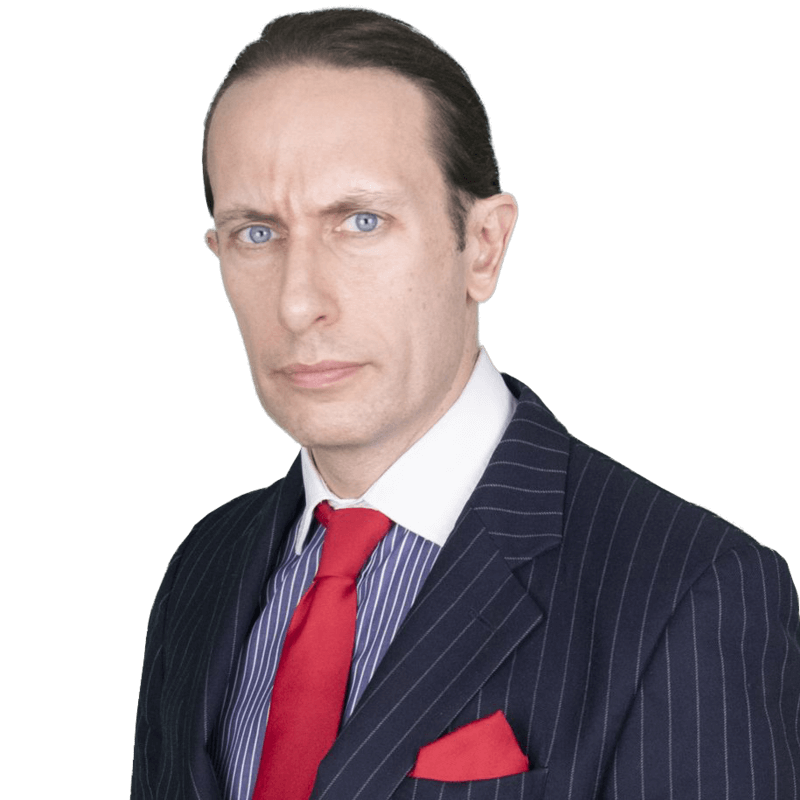
Veteran barrister, Joseph Kotrie Monson is a proactive barrister and legal commentator Image: Mary Monson Solicitors
The UK government”s current stance is that judge-only trials for less serious offences could streamline proceedings, reduce costs, and deliver faster outcomes. Yet critics counter that such efficiency gains may come at too high a price.
Their mandate is deliberately wide. It includes assessing the impact on defendants’ rights, public confidence in verdicts, and the broader legitimacy of the criminal justice system. Early indications suggest that the panel is approaching its work with a degree of scepticism about the reform’s underlying assumptions.
One of the central concerns is the erosion of the jury as a democratic institution. Juries are often described as the “conscience of the community,” a mechanism through which ordinary citizens participate directly in the administration of justice. Removing them from a category of cases—however limited—raises questions about whether justice is becoming more technocratic and less accountable.
Barristers on the panel have pointed out that even cases carrying sentences of up to three years can have profound consequences for defendants, including loss of employment, family disruption, and long-term reputational damage. C;assifying such cases as suitable for judge-only trials risks underestimating their gravity.
Academic members of the panel have drawn attention to comparative evidence from other jurisdictions. While some countries operate without juries in most criminal cases, the cultural and institutional contexts differ significantly.
In England and Wales, the jury system is deeply embedded in legal tradition and public expectation. Sudden or piecemeal changes, they argue, could produce unintended consequences, including a perception that justice is being administered behind closed doors.
Transparency, in this sense, is not just about open courtrooms, but about visible participation. Social workers involved in the panel bring a different but equally important perspective.
They highlight the lived realities of many defendants, particularly those from disadvantaged backgrounds. The presence of a jury for those individuals can serve as a counterbalance to perceived institutional bias.
Removing that layer of community oversight may deepen mistrust, especially among groups that already feel marginalised by the legal system. The panel is expected to explore whether judge-only trials could disproportionately affect certain demographics, thereby exacerbating existing inequalities.
Overlaying these concerns is a growing unease about judicial conduct itself. Recent cautions issued by the Judicial Conduct Investigations Office have brought renewed scrutiny to the behaviour of some members of the bench.
While the vast majority of judges are widely respected for their professionalism and integrity, the fact that disciplinary actions have been necessary in a number of cases has not gone unnoticed.
.Critics of the proposed reform argue that concentrating more decision-making power in the hands of judges—without the moderating influence of juries—could amplify the impact of any lapses in judgement or conduct.
These cautions, though relatively rare, serve as a reminder that judges are human and fallible. In a jury trial, responsibility for the verdict is distributed among twelve individuals, reducing the risk that a single perspective will dominate
. In a judge-only trial, by contrast, the entire burden of decision-making rests with one person. The panel is expected to examine whether existing safeguards—such as appeals and judicial training—are sufficient to mitigate this concentration of power, or whether the presence of a jury provides an irreplaceable layer of protection.
Another issue under consideration is the psychological dynamic of decision-making. Research in behavioural science suggests that group deliberation can lead to more balanced outcomes, as individuals challenge each other’s assumptions and biases. While juries are not immune to error, their collective nature introduces a form of internal scrutiny that is absent in solitary judgements.
Lecturers on the panel have indicated that they will be reviewing empirical studies on jury behaviour, including rates of conviction and acquittal, to determine whether judge-only trials would produce materially different outcomes.
The government’s argument for reform is rooted in the notion of pragmatism. Court backlogs have become a persistent problem, exacerbated by years of underfunding and the disruptions caused by the COVID-19 pandemic. Allowing judges to hear certain cases alone is seen as a way to increase throughput and reduce waiting times.
However, the panel’s preliminary view is that efficiency should not be pursued in isolation. Justice, they argue, is not merely a process to be optimised but a public good that must be seen to be done.
Barristers involved in the review have also raised practical concerns about how cases would be allocated. Determining which offences qualify for judge-only trials could prove contentious, particularly if the criteria are based solely on potential sentence length.
Social workers on the panel have emphasised that for many communities, particularly those with historical grievances against state institutions, the jury represents one of the few points of direct participation.
Its removal, even in limited circumstances, could have symbolic as well as practical repercussions, they say. Reference has also been made to the question of precedent. Once the principle of judge-only trials is established for certain offences, it may be difficult to resist calls for further similar frameworks.
Many legal experts fear that what begins as a narrowly defined reform could постеmentally expand, reshaping the landscape of criminal justice in ways that are difficult to reverse. Precisely what the risks are to the interest of justice is what the panel would examine.

AD: Heritage And Restaurant Lounge Bar