
By Tony O’Reilly-
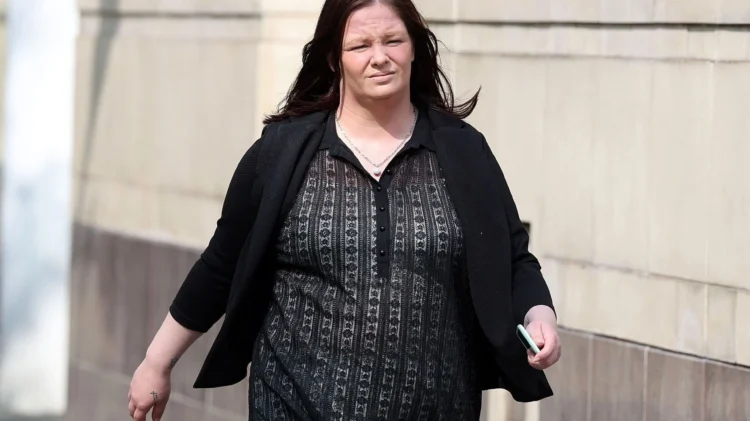
Former Belfast City councillor Jolene Bunting(pictured) has won a significant legal victory, after Northern Ireland’s Court of Appeal rejected a challenge to the quashing of a three-year ban that had prevented her from standing for elected office,.
The court found that the process which led to her disqualification had failed to give proper consideration to her request for an adjournment ,and her concerns about facing her principal accuser without legal representation.

AD: Capeesh Restaurant
The dispute dates back to 2018, when Bunting, who served as an independent unionist councillor on Belfast City Council between 2015 and 2019, became the subject of a complaint to the Northern Ireland Local Government Commissioner for Standards. The complaint was brought by Paul Golding, leader and co-founder of Britain First.

Paul Goulding brought failed claim against Ms Bunting
After money was transferred to Bunting in connection with a disputed £545 deduction from her council pay. The Commissioner subsequently found that Bunting had altered a copy of her payslip and represented the deduction as a fine connected to a Britain First publicity stunt at Belfast City Hall, rather than a charge arising from her mobile-phone data allowance.

AD: Oysterian Sea Food Restaurant And Bar
The Commissioner concluded that Bunting had improperly used her position to secure a financial advantage, and had brought her office into disrepute, imposing a three-year disqualification in March 2023.
Bunting denied the allegations and challenged the process, arguing in particular that she had been placed in an unfair position when she lost legal representation shortly before the adjudication hearing and was expected to face Golding, whom she said she feared, without a lawyer.
The procedural issue ultimately became decisive. Bunting had sought an adjournment so that she could obtain new legal representation, but the request was refused, and she did not attend the February 2023 hearing.
In correspondence sent shortly before the hearing, she said Golding had caused her “great consternation and anxiety” and that she was “genuinely in fear” of facing hi
Her lawyers later argued that those fears were not merely a tactical objection, pointing to Golding’s previous convictions and other material placed before the court.
A High Court judge ruled in February this year that the adjudication had been unfair, quashed the disqualification decision and sent the case back for reconsideration by a different panel. The court identified, among other things, an inadequate consideration of Bunting’s position when she found herself without legal representation and an absence of proper reasoning addressing her stated fear of Golding.
The Local Government Commissioner for Standards appealed, arguing that the High Court had erred in overturning the decision. But the Court of Appeal has now rejected that challenge.
Lady Chief Justice Dame Siobhan Keegan, sitting with Lady Justice McBride and Mr Justice McLaughlin, agreed that the Assistant Commissioner had not sufficiently engaged with Bunting’s application for an adjournment or provided intelligible and clear reasons for refusing it. The court concluded that there was “no basis for the appeal in substance”.
The ruling does not amount to a judicial finding that the original allegations against Bunting were false. Nor does it determine the underlying dispute over the payslip. Instead, it establishes that the process by which the three-year disqualification was imposed was legally flawed because Bunting was not afforded a sufficiently fair hearing.
Observers believe the matter is capable of returning to the Commissioner for Standards for reconsideration rather than ending with a final determination on the original allegations. The ruling illustrates the importance of procedural fairness in disciplinary proceedings involving elected representatives.
However serious the allegation, the courts have made clear that the integrity of the decision-making process itself matters, particularly where a person faces the loss of the right to stand for public office and says they are unable, at the last moment, to participate effectively without legal representation.
The Court of Appeal’s decision represents the latest stage in litigation that has continued for more than three years.
The former councillor’s original disqualification prevented her from contesting the 2023 local elections. The latest judgement now leaves the watchdog’s original decision quashed and requires the matter to be reconsidered rather than treating the 2023 finding as the final word.

AD: Heritage And Restaurant Lounge Bar