
By Lucy Caulkett-
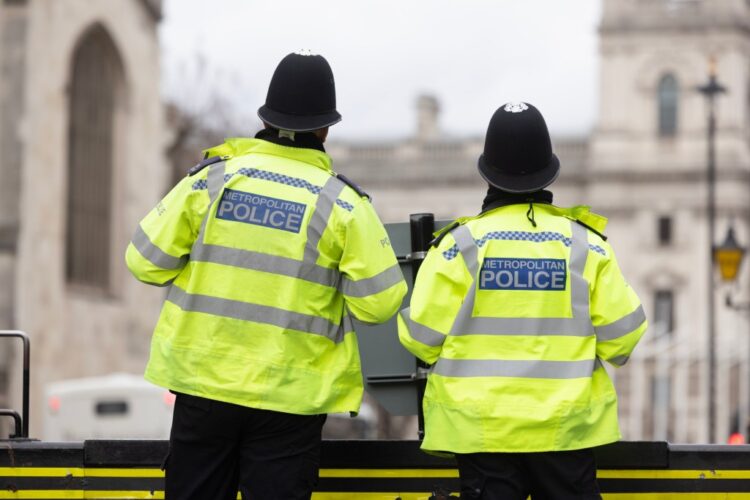
A Metropolitan Police sergeant has been charged with perverting the course of justice following an investigation into alleged conduct at Charing Cross Police Station, adding another serious development to scrutiny of policing practices at the London station.
Sergeant Sadiq Al-Hasani, 37, who is attached to the Metropolitan Police’s Central West Command Unit, was charged on Thursday, 13 August. He is due to appear before Westminster Magistrates’ Court on Wednesday, 30 September.

AD: Capeesh Restaurant
The charge follows an investigation by the Independent Office for Police Conduct (IOPC) into an alleged incident at Charing Cross Police Station on 2 October 2025. Sgt Al-Hasani was arrested that day on suspicion of perverting the course of justice and has remained suspended from duty.
The allegation centres on whether the officer deliberately attempted to discourage another police officer from providing a statement to the IOPC. If proved, such conduct would raise serious questions about the integrity of an investigation and the ability of police officers to report concerns involving colleagues without interference.

AD: Oysterian Sea Food Restaurant And Bar
The case emerged in the aftermath of the BBC Panorama programme Undercover in the Police, which was broadcast in October 2025. The programme prompted the IOPC to begin an investigation into alleged conduct at Charing Cross Police Station. The watchdog subsequently investigated Sgt Al-Hasani’s conduct separately before referring the case to the Crown Prosecution Service.
The Crown Prosecution Service agreed that the officer should be charged, leading to the present criminal proceedings.
The allegation is particularly significant because perverting the course of justice is a serious criminal offence involving conduct intended to interfere with the administration of justice.
In a policing context, allegations of this nature can carry wider implications because the credibility of criminal investigations depends heavily on the accuracy and integrity of evidence supplied by officers and witnesses.
The Metropolitan Police has confirmed that Sgt Al-Hasani remains suspended while the legal process continues. The charge is an allegation and does not constitute a finding of guilt. The evidence will ultimately be tested through the criminal justice process.
The case also comes against a backdrop of continuing disciplinary and criminal scrutiny of police officers across England and Wales. However, there is an important statistical limitation when assessing claims about the number of officers charged specifically with perverting the course of justice.
There is no readily available national public statistic that isolates every police officer charged with this particular offence during the previous 12 months or five-year period.
Official police misconduct statistics generally categorise cases according to broader misconduct allegations, while criminal prosecutions can be recorded through the courts and prosecution authorities without necessarily providing a single national series identifying the defendant’s occupation and the precise offence.
Consequently, it would be misleading to present an unverified figure as the number of police officers charged with perverting the course of justice nationally over the past year or five years. What can be established from the present case is that the alleged conduct relates directly to the integrity of an independent police watchdog investigation.
The IOPC’s involvement is important because the organisation is responsible for independently investigating the most serious incidents and complaints involving the police in England and Wales.
The Charing Cross investigation therefore extends beyond the actions alleged against one officer. It raises broader questions about how police forces respond when allegations concern their own personnel and how effectively officers can provide information to external investigators without fear of pressure or obstruction.
The IOPC was created in its current form in 2018, replacing the Independent Police Complaints Commission. Its role is intended to provide greater independence in the investigation of serious matters involving the police.
Cases involving alleged interference with such investigations are especially significant because the independence of the oversight process depends upon witnesses and officers being able to give evidence freely.
The Metropolitan Police has faced sustained scrutiny over conduct, culture and public confidence in recent years, with a number of high-profile investigations and reports examining the force’s handling of misconduct and allegations involving officers.
The case is likely to attract further attention because it sits at the intersection of two critical principles: the accountability of police officers and the independence of investigations into police conduct.

AD: Heritage And Restaurant Lounge Bar