
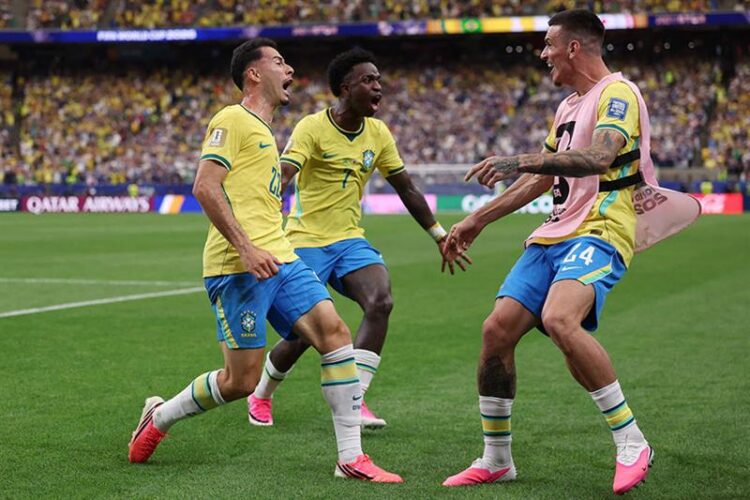
By Tim Parsons-
Gabriel Martinelli scored a late winner to secure a 2–1 victory for Brazil’s national football team over Japan national football team in a tightly contested World Cup encounter at the FIFA World Cup.
The decisive goal arrived deep into injury time, turning a night of frustration into relief for Brazil and heartbreak for Japan, whose disciplined performance was undone at the final moment.

AD: Capeesh Restaurant
Japan’s approach from the outset was clear- to compress space, deny rhythm, and force Brazil into wide areas where their creativity could be contained. The strategy worked for long stretches, with Japan’s compact midfield shape repeatedly cutting off passing lanes into central attacking zones. Brazil attempted to respond through width and rotation, pushing full-backs high and encouraging midfielders to drift between the lines to break Japan’s compact shape, a pattern consistent with modern Brazilian attacking structures that rely heavily on wide overloads and advanced full-back positioning.
However, Japan’s defensive organisation remained disciplined throughout, maintaining a compact block that repeatedly forced Brazil into wide and crowded areas rather than allowing central penetration, a key feature of their structured defensive identity highlighted in match analysis across major outlets.
As a result, the game developed less into sustained Brazilian dominance and more into a pattern of controlled frustration, with Brazil enjoying long spells of possession but struggling to convert territorial control into high-quality chances, a scenario reflected in statistical and post-match reporting showing Japan’s effectiveness in limiting central attacking output despite pressure.

AD: Oysterian Sea Food Restaurant And Bar
Japan’s ability to maintain shape under pressure was central to their first-half success, as Brazil were forced into low-percentage shots and crowded attacking situations. Japan were not passive, either. Quick transitions offered glimpses of danger, particularly when Brazil committed numbers forward. On several occasions, counterattacks forced last-ditch defensive interventions, prompting concern among Brazilian supporters and adding tension to an already finely balanced contest.
During halftime, reports described the match as “evenly poised,” with neither side able to assert decisive control. The atmosphere reflected that balance, with Brazilian fans growing restless while Japanese supporters sensed an opportunity for a famous result.
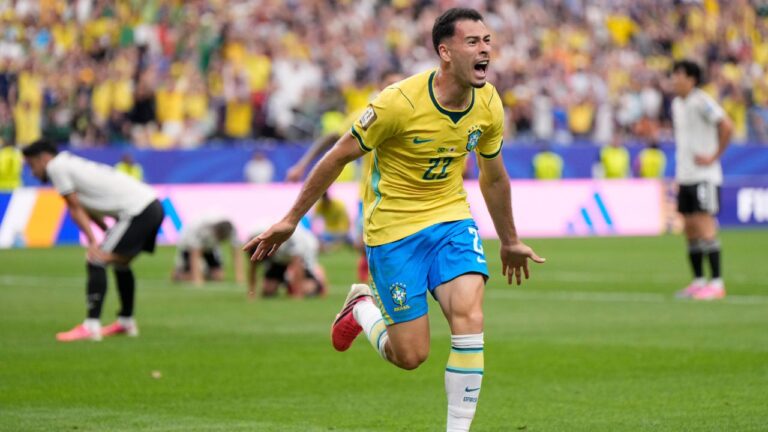
Brazil’s Gabriel Martinelli rejoices after netting his team’s second goal in the World Cup game between Brazil and Japan in Houston (Credit: Ashley Landis)
The second half wore on, Brazil increased urgency. The tempo rose, passes became more direct, and the penalty area began to feel increasingly congested. Japan, however, maintained discipline, clearing crosses and blocking central channels with remarkable consistency.
Substitutions from Brazil added fresh energy and attacking intent, a shift noted in post-match commentary, which highlighted Brazil’s growing willingness to gamble in search of a breakthrough. Japan, meanwhile, continued to threaten on the counter, refusing to retreat into full defensive collapse.
A fast-moving attacking sequence created a loose ball inside Japan’s defensive area. In the scramble that followed, Martinelli reacted first, adjusting his position and finishing clinically to send the ball past the goalkeeper. The strike immediately shifted the emotional balance of the match, triggering celebration among Brazilian players and stunned silence from Japan’s defenders.
The match between Brazil and Japan was decided in dramatic fashion, with Japan’s defensive organisation holding firm for long stretches before being breached in stoppage time, when Gabriel Martinelli scored the decisive goal.
The report highlights Japan’s disciplined defensive performance throughout much of the contest, noting that Brazil struggled to break them down despite sustained pressure before the late winner arrived. The goal reinforced a recurring theme in tournament football: persistence and individual quality can override tactical deadlock in an instant.
With Japan, it was a reminder of how narrow the margins are at the highest level, where a singlelapse in stoppage time can undo 90 minutes of control. Post-match analysis across outlets including, and focused on Brazil’s late pressure and Japan’s near-flawless defensive organisation, with many noting that the match could easily have ended in a draw had concentration held for just a few moments longer.
The final whistle blew, and Brazil celebrated a hard-fought victory that felt as much about patience as it did about brilliance. Brazil national football team had been forced to work through long spells of frustration, probing and recalibrating against a Japan side that refused to collapse under pressure.
When the decisive moment finally arrived, it came not as a gradual shift in dominance but as a sudden break in resistance, the kind of instant that defines knockout football at the FIFA World Cup. Japan walked away with disappointment, but also recognition for a performance that had pushed one of football’s most storied nations to the edge. Japan national football team had shown structure, discipline, and resilience for much of the contest, forcing Brazil into wide areas and limiting clear central openings.
Their defensive shape held firm, absorbing pressure without panic and responding with organised transitions that occasionally hinted at danger on the break. In the end, it was decided in seconds after an hour and a half of balance. And in World Cup football, that is often all it takes. The margin between survival and defeat can be as narrow as a single misjudged pass, a half-step of lost concentration, or a moment of hesitation in a crowded penalty area.
Brazil’s winner arrived in precisely that kind of chaos, where structure dissolves and instinct takes over, rewarding the side that reacts first rather than the one that dominates most of the match. The match added another chapter to the evolving identity of both teams on the world stage. With Brazil, it reinforced a recurring truth: even when rhythm is disrupted and chances are scarce, persistence and individual quality can still decide outcomes at the highest level.
Their ability to maintain pressure until the final moments reflected not only technical ability but also mental endurance, a trait often required in tightly contested knockout matches.The performance will likely be remembered less for the outcome and more for the standard it set for Japan. Matches like this often linger in analysis rooms and coaching meetings, where the focus shifts from disappointment to detail.
Small structural breaks, late defensive positioning, and transitional decisions will likely be reviewed carefully, not as failures of effort, but as fine margins that separate survival from elimination. Players from both sides left the pitch, the contrast was immediate. One team moved through celebration and relief, aware that progression had been secured in the most dramatic fashion possible. The other carried the weight of what might have been, knowing that control of the match had existed for long stretches without being converted into reward.
In tournaments like the World Cup, that imbalance is not unusual. Control does not guarantee safety, and resilience does not always guarantee reward. What endures instead is the reminder that matches at this level are rarely decided over ninety minutes in equal measure, but often in fragments of seconds that arrive when exhaustion is highest and concentration is most fragile.And so, Brazil advanced, Japan reflected, and the match settled into its final truth: not a story of dominance, but of timing, endurance, and the unforgiving precision of elite football.

AD: Heritage And Restaurant Lounge Bar