
By Gabriel Princewill-
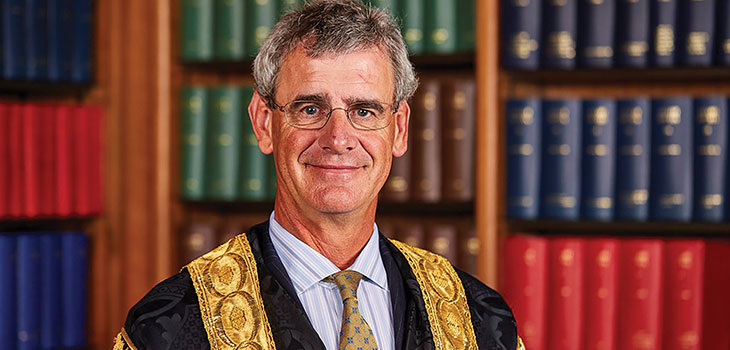
Lord Briggs of Westbourne has been appointed the fifth president of the Supreme Court of the United Kingdom, bringing a distinguished career in civil justice and court reform to the most senior judicial leadership position in the country.
The 71-year-old Supreme Court justice, formally Michael Townley Featherstone Briggs, will take up the presidency in January 2027 when the current president, Lord Reed of Allermuir, retires. His appointment places one of the judiciary’s leading figures in civil justice and court modernisation at the head of the UK’s highest court at a time when the legal system is grappling with questions over accessibility, technology, court backlogs and the future shape of justice.

AD: Capeesh Restaurant
Briggs described the appointment as a “great privilege”, saying he looked forward to working with colleagues at the Supreme Court and the Judicial Committee of the Privy Council to deliver justice of the highest quality while improving transparency and accessibility.
His appointment is particularly notable because his career has been closely associated with the modernisation of the civil courts. Long before artificial intelligence and online hearings became central issues for the justice system, Briggs was involved in examining how technology and procedural reform could make litigation more efficient and accessible.

AD: Oysterian Sea Food Restaurant And Bar
What does the president of the Supreme Court do?
The president of the Supreme Court occupies one of the most senior positions in the British judiciary. The Supreme Court is the final court of appeal for civil cases throughout the United Kingdom and for criminal cases in England, Wales and Northern Ireland. In Scotland, criminal appeals generally end in the High Court of Justiciary, which is separate from the Supreme Court’s criminal jurisdiction.
The president is therefore responsible for providing judicial leadership to the country’s highest appellate court. The role includes overseeing the court’s judicial work and administration, representing the Supreme Court nationally and internationally, and working with other senior figures to ensure that the court operates effectively.
The president also has responsibilities connected with the Judicial Committee of the Privy Council, which hears appeals from a number of Commonwealth countries and other jurisdictions.
Importantly, the president is also a judge. The position is not simply an administrative or ceremonial office. The president is a serving Supreme Court justice and ordinarily sits on cases, participates in judgments and contributes to decisions on some of the most significant legal questions reaching the court.
That means Briggs will have two intertwined responsibilities: leading the institution while continuing to perform the demanding judicial function for which he was appointed. The presidency carries particular constitutional importance because Supreme Court judgements can determine the meaning and application of major areas of law and can settle disputes involving government powers, civil liberties, commercial disputes, taxation, constitutional questions and the limits of executive authority.
The court does not, however, operate as a political body. Its constitutional role is to interpret and apply the law independently of government and Parliament, reinforcing the principle that public authorities and individuals alike are subject to the rule of law.
The Supreme Court sits at the top of the UK court structure for the appeals within its jurisdiction.A case normally begins in a lower court or tribunal. In civil litigation in England and Wales, for example, cases can progress through the County Court or High Court and, where appropriate, to the Court of Appeal before potentially reaching the Supreme Court.
The Supreme Court does not function as another trial court where witnesses and evidence are normally heard for the first time. Its principal function is to determine important questions of law and hear appeals from lower appellate courts where permission to appeal has been granted.
In England and Wales, the broad hierarchy therefore runs from lower courts through the High Court and other superior courts, to the Court of Appeal and ultimately the Supreme Court. The position is somewhat different across the UK’s separate legal jurisdictions. Scotland and Northern Ireland retain their own court structures and legal traditions.
The Supreme Court nevertheless provides the final appellate forum for civil matters across the whole United Kingdom and for criminal cases from England, Wales and Northern Ireland.
Its creation in 2009 was itself constitutionally significant. Before then, the highest court of appeal was the Appellate Committee of the House of Lords, where senior judges known as Law Lords sat as the country’s highest appellate judges.
The creation of the Supreme Court separated the country’s highest court from Parliament and established a distinct institutional home for Britain’s final court of appeal.
A career built around civil justice
Briggs brings substantial experience to the presidency of the Supreme Court.
Raised around Portsmouth and Plymouth as his naval-officer father moved between postings, he later spent his childhood in Emsworth, Hampshire. He studied history at Magdalen College, Oxford, before entering the legal profession and becoming the first lawyer in his family.
He practised from chambers in Lincoln’s Inn, initially at the chambers of Charles Sparrow QC, which later became Serle Court. His practice focused principally on business and property litigation. He became a King’s Counsel in 1994 and subsequently took on senior roles within the legal profession, including chairing the Bar Council’s law reform committee.
In 2001 he became attorney general to the Duchy of Lancaster, a position he held until 2006, when he was appointed to the High Court.
His judicial career coincided with some of the most significant upheavals in modern commercial litigation. From 2009 to 2013, Briggs was the judge in charge of litigation arising from the collapse of Lehman Brothers, one of the most complex and consequential financial disputes to reach the English courts following the 2008 financial crisis.
He was appointed to the Court of Appeal in 2013. But it was his work on reforming the civil justice system that helped establish his reputation beyond the courtroom. Briggs chaired the Chancery Modernisation Review in 2013 and subsequently led the Civil Courts Structure Review between 2015 and 2016. That review recommended the creation of an online civil court, anticipating the transformation of court processes that has accelerated in the years since.
In January 2016 he became deputy head of civil justice and, in that capacity, served as the de facto head of the Civil Procedure Rules Committee, and was appointed to the Supreme Court in 2017.
His interest in modernisation has continued from the bench. The announcement of his Supreme Court appointment highlighted his interest in improving court procedures, increasing transparency and exploring the careful adoption of artificial intelligence in administrative aspects of the courts.
Briggs succeeds Lord Reed of Allermuir, who has served as president since January 2020 and will retire in January 2027. Reed’s presidency has encompassed an extraordinary period for the Supreme Court, including the constitutional consequences of Brexit, major disputes concerning the powers of government and Parliament, the COVID-19 pandemic and continuing scrutiny of the relationship between the courts and the executive.
Briggs will therefore inherit an institution whose judgements frequently attract national attention and whose constitutional importance has grown considerably since the Supreme Court was established.
His own background suggests that civil justice reform will be an important feature of his presidency. The challenge will be to modernise without compromising the fundamental characteristics of the judicial system: independence, fairness, due process and the authority of the law.
Briggs’s personal interests — including classic wooden yacht racing, cruising and choral singing — may appear distant from the constitutional responsibilities of the Supreme Court.But his professional record points towards a judge who has spent much of his career asking how the justice system can function better.

AD: Heritage And Restaurant Lounge Bar
-
Share On
- Categories
- Date