
By Ben Kerrigan-
A tense and uncertain calm appeared to settle over the Middle East on Monday after Israel and Iran signalled a pause in military operations following their first direct exchange of fire since an April ceasefire that had temporarily halted months of regional conflict.
The latest flare-up raised fears of a broader war, rattled global energy markets, prompted diplomatic intervention from regional powers, and tested the durability of a ceasefire that many observers had already viewed as fragile.

AD: Capeesh Restaurant
Although both sides have indicated that they are not seeking an immediate escalation, officials in Tehran and Jerusalem have warned that further attacks remain possible if new provocations occur.
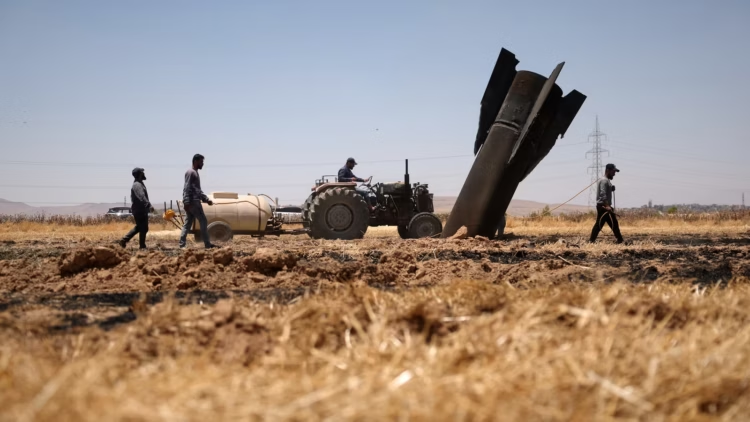
The confrontation began after Iran launched missiles toward Israel, marking its first direct attack since the April truce. Israeli authorities reported that air defence systems were activated to intercept the incoming projectiles, while military officials vowed a response.
Israel subsequently carried out strikes against targets inside Iran, including infrastructure that Israeli officials described as linked to missile production and military operations.

AD: Oysterian Sea Food Restaurant And Bar
Explosions were reported in several Iranian cities, including Tehran, Isfahan, Karaj, and Tabriz. Iranian media also reported strikes on a petrochemical facility in the southwestern city of Mahshahr. Israeli military officials later confirmed attacks on missile-related targets and mobile launch systems, describing the operation as retaliation for Iran’s missile barrage.
The exchange represented the most serious direct confrontation between the two longtime adversaries since the ceasefire brokered in April. Analysts warned that even a brief escalation carried the potential to ignite a wider regional conflict involving allied armed groups, neighbouring states, and major international powers.
Financial markets reacted swiftly. Oil prices surged as traders assessed the possibility of disruptions to energy supplies and shipping routes across the region. Although prices later retreated after signs emerged that both countries were stepping back from further strikes, the episode highlighted the continuing vulnerability of global markets to geopolitical shocks in the Middle East.
Residents across Israel and Iran, the renewed hostilities brought back memories of the intense fighting that preceded the April ceasefire. Air raid alerts sounded in parts of Israel, while authorities in Iran imposed temporary restrictions and heightened security measures around key infrastructure. Schools, businesses, and transportation networks faced disruptions as governments sought to assess the evolving threat environment.
Diplomacy Intensifies as World Leaders Push for Restraint
The military exchange unfolded, diplomatic efforts accelerated behind the scenes. Regional governments including Egypt, Saudi Arabia, Turkey, Qatar, and Pakistan reportedly engaged in urgent discussions aimed at preventing a wider conflict and preserving ongoing negotiations involving Iran, Israel, and the United States.
U.S. President Donald Trump publicly urged both countries to halt military operations, calling on Israel and Iran to “stop shooting” and avoid actions that could derail diplomatic efforts. His administration has been attempting to advance broader negotiations with Tehran, and officials expressed concern that renewed violence could undermine months of diplomatic progress.
According to reports, both Israel and Iran subsequently signaled a willingness to pause their military actions. Iranian officials stated that the first phase of their response had concluded, while warning that additional attacks could follow if Israel continued military operations linked to Hezbollah in Lebanon.
Israeli officials likewise indicated that they had completed their immediate response but maintained readiness for further action if necessary.
The role of Lebanon remains a central point of contention. Tehran has repeatedly argued that Israeli military operations in Lebanon are connected to the broader regional conflict and should be included within any ceasefire framework.
Israel, meanwhile, has maintained that its actions against Hezbollah are separate from negotiations involving Iran. This disagreement has complicated efforts to establish a lasting peace arrangement.
The latest exchange also highlighted growing differences between Washington and Israeli leadership regarding the path forward. While the United States has prioritised diplomatic engagement and ceasefire negotiations, Israeli officials have continued emphasising military pressure as a means of countering threats from Iran and its regional allies. Analysts say these differing approaches could shape future negotiations and influence the stability of any long-term agreement.
Despite the apparent pause in hostilities, security experts caution that the situation remains highly volatile. Both governments have issued statements emphasizing their willingness to retaliate if attacked again, and neither side has formally committed to a new ceasefire agreement. Military forces across the region remain on heightened alert, while international observers continue monitoring developments closely.
The broader geopolitical stakes extend well beyond Israel and Iran. Continued instability could affect global energy supplies, international shipping routes, and diplomatic relationships throughout the Middle East.
Concerns also persist regarding the potential involvement of non-state actors and allied groups operating across Lebanon, Syria, Iraq, and Yemen, all of which could complicate efforts to prevent another round of violence.
The guns have largely fallen silent. Flights have resumed in some affected areas, schools have reopened in parts of Israel, and Iranian authorities have eased certain restrictions that were imposed during the exchange. Yet beneath the temporary calm lies an uneasy reality: the underlying disputes that fuelled the latest confrontation remain unresolved.
Diplomats hope the pause will provide an opportunity to revive negotiations and prevent a return to open conflict. Whether the current lull develops into a more durable period of stability or proves to be merely a brief interruption in a longer struggle may depend on decisions made in the coming days by leaders in Tehran, Jerusalem, Washington, and other regional capitals.
With the Middle East watching and waiting, the events of the past 24 hours have served as a stark reminder of how quickly a fragile ceasefire can unravel and how difficult it remains to secure a lasting peace in one of the world’s most volatile regions.
Although the immediate exchange of fire appears to have subsided, the underlying tensions that fueled the confrontation remain unresolved. Deep disagreements over regional security, military activities, and the influence of allied armed groups continue to shape relations between Israel and Iran, leaving little margin for error as diplomatic efforts move forward.
Even a single miscalculation or isolated incident has the potential to trigger another round of hostilities, raising concerns among international observers and regional governments alike.
The latest escalation has also highlighted the delicate balance facing world leaders attempting to prevent a broader conflict. Diplomatic channels remain active, but negotiators face the challenge of rebuilding trust between adversaries that have spent years exchanging threats, accusations, and indirect attacks across the region.
Civilians living in areas affected by the tensions, the uncertainty remains particularly acute. Families, businesses, and communities continue to monitor developments closely, aware that periods of calm have often proven temporary in the past. While the current pause has offered a brief respite from fears of a wider conflict, few observers are prepared to declare the crisis over.
Whether this moment becomes a turning point toward renewed diplomacy or merely a pause before another escalation will depend on the actions taken by leaders in the days and weeks ahead.

AD: Heritage And Restaurant Lounge Bar