
By Tony O’Reilly
The Independent Office for Police Conduct (IOPC) is investigating following an incident in Liverpool in which a man died after being stopped by police.
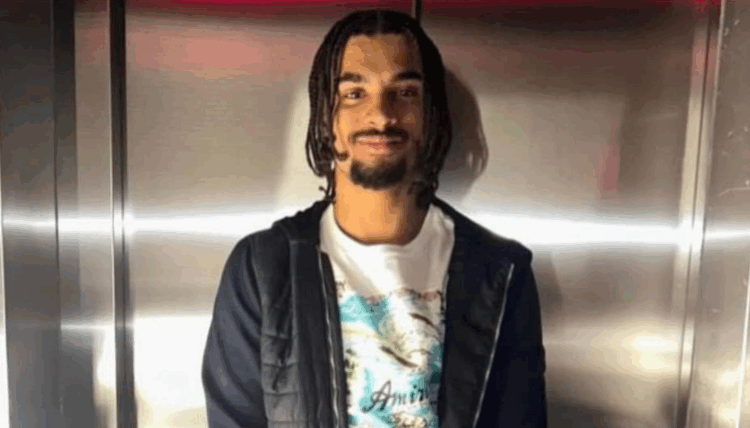
Lain Estridge, 23, was taken to hospital where he sadly died following the incident on Back Faulkner Street South on Friday afternoon.

AD: Capeesh Restaurant
He was one of two men approached by police, in the area as part of a proactive operation, but did not stop for officers.
The cause of death remains unknown at this time.
Mr Estridge was approached by police as part of a proactive operation last Friday afternoon. Officers spoke to one man in the street, while Mr Estridge did not stop when instructed and was followed by officers on an electric bike. He fell from the bike and collided with a stationary police van.

AD: Oysterian Sea Food Restaurant And Bar
He received first aid at the scene and was taken to hospital, where he later died.
The cause of death remains unknown pending the results of a post-mortem examination. IOPC investigators are reviewing extensive footage of the incident as part of their independent inquiry and have been in contact with Mr Estridge’s family.
IOPC Director Amanda Rowe said that the investigation will be independent of the police, with findings shared with the family, Merseyside Police and the Coroner once complete. The watchdog has urged the public and media to respect the family’s privacy while enquiries continue.
The IOPC typically examines several key elements in matters like this.
First, they look at the decisions and actions of the Officers involved, and the investigation will focus closely on how police approached and attempted to stop Mr Estridge.
The justification for the initial stop and whether procedures were followed will also be considered, as well as how officers engaged with him before and during the pursuit.
The decisions made by officers leading up to the collision with the police van.
If restraint was applied after the collision, the IOPC will scrutinise whether it was lawful, necessary and proportionate, and whether any force contributed to his injuries.e
The watchdog will assess how quickly and appropriately medical care was provided — both at the scene and after hospital admission — and whether officers recognised and responded to signs of medical distress.
The IOPC has already begun reviewing available footage of the incident. Body-worn camera and CCTV evidence will be critical in establishing the sequence of events.
Investigators will evaluate compliance with national and force-level guidelines on pursuit, engagement and interaction with individuals who do not immediately stop.
How Common Are Deaths During or Following Police Contact
The IOPC publishes annual statistics on deaths that occur during or following contact with police in England and Wales. Deaths in the Uk following stops by police are neither common nor rare.
Deaths During or Following Police Contact during the 2024/25 period were:
17 deaths in or following police custody — slightly below the ten-year average.
26 fatalities in police-related road traffic incidents, of which 18 were pursuit-related.
60 apparent suicides following police custody.
50 other deaths following police contact that were independently investigated.
Characteristics across these categories vary, but mental health concerns and drug or alcohol intoxication were frequently reported factors in many deaths.
Comparison with 2023/24 Figures
The previous year’s data showed an uptick in deaths in police custody — reaching the highest level in 17 years at 24 deaths in or following custody — with many individuals having known mental health concerns.
While police-related fatalities remain relatively rare in the UK, watchdog statistics highlight recurring factors in deaths following police contact:
Mental health issues are frequently reported among those who die in custody or contact.
Use of force does not necessarily contribute directly to death, but is examined thoroughly in investigations.
Police pursuit-related road incidents account for a significant proportion of deaths in the broader category of contact-associated fatalities
IOPC Director Amanda Rowe yesterday said:
“Our thoughts are with Mr Estridge’s family and loved ones, as well as all those affected by his death. We have been in contact with the family and will keep them updated as our investigation progresses.
“It is important in cases like this that there is a thorough investigation to understand events surrounding the death, including the actions of police. This will be carried out independently of police and our findings will be shared with Mr Estridge’s family, Merseyside Police and the Coroner in due course.
“While our investigation is at an early stage, we have gathered and begun reviewing various pieces of footage covering the entire incident as we work to establish exactly what has happened.
“We would ask that people respect the family’s privacy at this unimaginably difficult time and refrain from any speculation.”
IOPC investigators attended the scene and police post-incident procedures on Friday to begin the process of gathering evidence. At this stage we have established police were positioned at either end of Back Faulkner Street South when they approached two men. Officers spoke to one, while others followed Mr Estridge, who travelled away from them on an e-bike.
Three officers on foot, and a police van were positioned at the junction of Back Faulkner Street South and Grove Street. As Mr Estridge approached, at around 3.10pm, the van moved forward and was positioned partly across the junction, while the three officers approached the e-bike.
Mr Estridge came off the e-bike and continued travelling forward, colliding with the van, which was not moving at the time of impact.
Officers initially restrained Mr Estridge on the ground before identifying he was in need of medical attention and providing first aid. Paramedics attended the scene and found a package in Mr Estridge’s mouth, which was removed.
A post mortem examination took place on Saturday and we await the results. At this stage, no cause of death has been identified, with further testing due to take place.
Our investigation will look at the decision-making and actions of officers involved throughout the incident, including the efforts to stop Mr Estridge, his restraint and subsequent medical care provided.

AD: Heritage And Restaurant Lounge Bar