
By Chris Williamson-
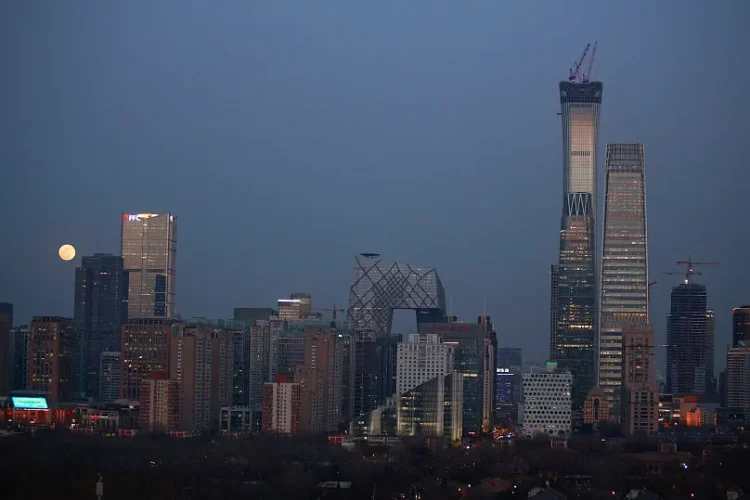
A striking new analysis has revealed that half of the world’s 100 largest cities are now situated in regions suffering from high or extremely high water stress, exposing a growing global crisis that stretches from Beijing to New York, Delhi to Rio de Janeiro.
The data, which comes from a collaboration of satellite monitoring and global water resource mapping, shows that urban water demand is now pushing the limits of what nature and infrastructure can sustainably supply, with profound implications for billions of people, economies and the future of cities themselves.

AD: Capeesh Restaurant
In many places, water demand is approaching or exceeding supply a situation that scientists, policymakers and community advocates are warning could reshape human settlement patterns in a warming world.
While climate change compounds the problem, experts are emphasising that poor water management not just shifting rain patterns is a major driver of the crisis.
Cities on the Edge
According to a detailed mapping analysis that overlays watershed stress data with city boundaries, 39 of the largest 100 cities on Earth are now classified as experiencing “extremely high” water stress, meaning their annual water withdrawals for public supply, agriculture and industry are close to or exceeding the total available water in their regions.

AD: Oysterian Sea Food Restaurant And Bar
The list of affected urban giants reads like a global atlas of human ambition: Beijing, New York, Los Angeles, Rio de Janeiro and Delhi are among the metropolises where demand is pushing systems to their limits. Meanwhile, London, Bangkok and Jakarta are labelled as highly stressed, far above the sustainability threshold that scientists consider safe for long‑term water security.
Behind the headline figures are stark human stories. In parts of South Asia, long‑term drying trends detected by NASA satellite data, as compiled by researchers at University College London, show cities like Chennai, Tehran and Zhengzhou gradually losing water resources over decades, reflecting deeper problems of over‑extraction and climate‑linked drought cycles.
In contrast, some cities in sub‑Saharan Africa such as Lagos and Kampala show wetter trends but many still lack strong infrastructure to capture and distribute that water equitably.
About 1.1 billion people live in major metropolitan areas experiencing long‑term drying, compared with just 96 million in regions showing increased water availability, underscoring a stark geographic imbalance in water futures.
Experts are particularly worried about the spectre of “day zero” the tipping point at which cities literally run out of usable water. Today, cities such as Tehran are already living dangerously close to that threshold after years of drought and over‑pumping of aquifers, and officials have discussed emergency evacuation plans should conditions worsen.
Other cities like Cape Town and Chennai have previously faced similar crises, temporarily bringing taps to a trickle as reservoirs shrank to historic lows.
Scientists conducting the global analysis are careful to stress that water stress does not always mean a city will “run out” of water imminently, but rather that the balance between what nature supplies and what cities withdraw is dangerously tight and getting tighter. This imbalance makes urban regions extremely vulnerable to even modest fluctuations in rainfall, groundwater recharge or demand increases associated with population growth.
Why Water Stress Matters and What It Means for the Future
Water stress is not only an environmental concern but also a social, economic and political one. When cities cannot reliably meet the water needs of their residents, a cascade of impacts follows. Households may face rationing, industrial supply chains can be disrupted, food systems can falter, and tensions over allocation between sectors can escalate into public discontent or even conflict.
The United Nations has sounded the alarm about “water bankruptcy” a state in which deterioration of water resources becomes effectively permanent and irreversible driven more by mismanagement and unsustainable use than by climate change alone. Poor planning, lack of infrastructure investment and weak governance are frequently cited as core causes of this breakdown.
This crisis intersects with ordinary human needs. The World Health Organization has estimated that over 2 billion people currently live in countries facing water scarcity, a situation that is expected to intensify in many urban centres as populations grow and climate pressures mount.
Cities that once assumed plentiful water now confront stark choices. In places like Los Angeles, aging infrastructure, prolonged drought and surging population growth have strained supplies that were once taken for granted. In deltas and megacities across South and Southeast Asia, rapid urbanisation has outpaced water infrastructure investment, forcing governments to tap distant or deep aquifers, often at unsustainable rates.
Economists warn that water insecurity could hamper economic growth, especially in cities that act as engines of regional or national GDP. If businesses cannot rely on consistent water supply, investment may shift to less risky locations, while local industries dependent on water from manufacturing to food processing could see increased operational costs.
Beyond economic costs, there are profound implications for public health. In water‑stressed regions, residents may be forced to rely on unsafe or compromised sources during dry seasons, increasing exposures to contaminants and pathogens.
Yet it is not only the driest cities that face threats. Even those in “wetting” regions, where long‑term data show increasing water availability, remain vulnerable because infrastructure may not exist to capture and store excess water efficiently, or governance systems may lack the capacity to manage sudden changes in supply.
Experts say that addressing urban water stress requires both immediate action and long‑term planning. At the municipal level, cities must invest in resilient water infrastructure: modernising aging pipes to reduce leakage, building systems that can store water during wet periods for use in drought, and expanding wastewater recycling to relieve pressure on freshwater sources.
Policymakers are also encouraged to rethink pricing and allocation systems to ensure that water use reflects scarcity including mechanisms that discourage waste and incentivise conservation. For example, cities that have implemented tiered pricing structures often see a reduction in non‑essential consumption while safeguarding essential human needs.
Equally important is governance reform. Poor management is repeatedly cited as a fundamental driver of water stress, even in regions where physical water supplies are not inherently scarce.
Transparent, accountable institutions that coordinate across sectors urban planning, agriculture, industry and environmental protection can better balance competing demands and make strategic investments in infrastructure.
At the international level, cooperation on transboundary basins and shared resources is vital. Rivers, aquifers and watersheds rarely conform to political borders, and disputes over water access have historically sparked tensions.
Global frameworks for sharing data, allocating water equitably, and supporting infrastructure development can help mitigate worst‑case scenarios, particularly for cities in developing nations lacking financial capacity for large‑scale projects.
Climate change adaptation must also be a central pillar of any sustainable strategy. Though mismanagement is often the proximal cause of stress, climate models suggest that many regions will experience more variable rainfall, increased heatwaves, and shifting seasonality all of which amplify the challenges of maintaining reliable water supplies.
Integrating climate resilience into urban planning can prepare cities to anticipate and respond to future water shocks, rather than reacting after crises emerge.
Some advocates also highlight the role of nature‑based solutions in easing pressure on urban water systems. Restoring wetlands, protecting upstream forests and improving soil moisture retention can enhance natural water storage, reducing the severity of both floods and droughts.
These ecosystem‑centric approaches can complement engineered infrastructure while delivering co‑benefits for biodiversity and carbon sequestration.
Ultimately, many analysts argue that the global water stress challenge cannot be solved by any single city or nation alone. Water knows no borders, and the pressures that drive scarcity population growth, climate change, economic inequality, and ecosystem degradation are shared challenges that require collaborative responses.
The stark revelation that half of the globe’s largest cities are in high water stress zones should serve as a clarion call for leaders and citizens alike. These urban centres are not just population hubs but cultural, economic and political heartlands whose stability influences entire nations.
The recent analysis demonstrates that water scarcity is no longer an abstract concern confined to arid regions; it is a systemic issue threatening some of the planet’s most dynamic and important cities.
What happens in Beijing affects Delhi. What happens in New York affects Rio. Water stress is a global challenge because the flow of water like the flow of people, goods and ideas connects us all. The choices cities make today about how they manage, conserve and share their water resources will shape the resilience of urban life for decades to come.

AD: Heritage And Restaurant Lounge Bar