
By Tony O’Reilly-
Calls for a halt to executions across the United States are intensifying after Tennessee’s failed attempt to execute death-row prisoner Christa Pike left her alive and in critical condition, prompting renewed questions over the reliability and humanity of capital punishment.
The Guardian reported on Friday that leading death-penalty lawyers, doctors and members of the faith community are urging authorities to suspend executions following the extraordinary events at Tennessee’s Riverbend Maximum Security Institution.

AD: Capeesh Restaurant
Amnesty International has also called for Christa Pike’s execution to be commuted(changed to a lesser sentence ) and for the death penalty to be abolished across the United States because of its cruelty.
Pike, 50, was administered two doses of pentobarbital during the attempted execution on Wednesday. Witnesses later reported that she was still breathing and making snoring sounds, while her lawyers sought emergency intervention to stop the procedure and secure medical treatment.
She was subsequently taken to hospital, where she remained in critical condition and was receiving life-saving care. The extent of any possible brain injury caused by oxygen deprivation was not immediately known, according to reports.

AD: Oysterian Sea Food Restaurant And Bar
The episode has become a focal point for opponents of the death penalty, who argue that the problems surrounding Pike’s execution go beyond a single failed procedure.
Sandra Babcock, a Cornell Law School death-penalty scholar who advises Pike’s legal team, described what happened as “unimaginably barbaric” and said it demanded accountability. She also called for Pike’s death sentence to be commuted to life imprisonment.
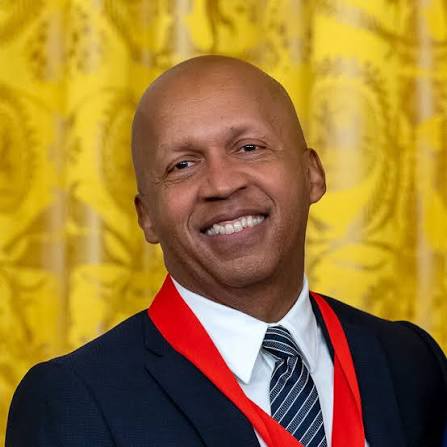
Bryan Stevenson, a prominent US death-penalty lawyer and founder of the Equal Justice Initiative, told The Guardian that repeated problems with executions should already have prompted a suspension.
He argued that the issue should not simply be whether an individual prisoner deserves the ultimate punishment, but whether governments operating systems marked by inequality, unreliability and alleged bias should retain the authority to carry it out.
The calls come as Tennessee faces renewed scrutiny over its execution procedures. Pike’s failed execution was the second such incident in the state in just five months. In May, officials abandoned the lethal injection of Tony Carruthers after they were unable to establish an intravenous line.
Other states have also experienced serious difficulties with execution methods. Alabama, for example, abandoned lethal-injection attempts involving death-row prisoners Alan Miller and Kenneth Smith after problems accessing veins before subsequently using nitrogen gas.
The growing difficulties have intensified the debate over whether there is any consistently reliable method of carrying out executions. Critics of lethal injection have argued that attempts to present the procedure as clinical or medical can obscure the physical risks involved.
Dr Joel Zivot, a professor of anesthesiology who has examined hundreds of autopsies of executed prisoners, told The Guardian that lethal injection should not be regarded as a medical procedure. He had previously warned authorities that Pike’s medical circumstances could make intravenous access particularly difficult.
The controversy is also reaching beyond legal and medical circles. Helen Prejean, the Catholic nun and long-time death-penalty abolitionist whose book Dead Man Walking brought the issue to a global audience, described Pike’s experience as an extreme example of the psychological and physical suffering associated with executions.
The renewed calls for a moratorium come at a significant moment for capital punishment in America. The United States carried out 47 executions across 12 states last year, the highest annual total in 16 years, according to figures cited by The Guardian.
At the same time, public support for the death penalty has declined substantially over the longer term. Gallup polling cited by The Guardian found that support stood at about 80% in the early 1990s, compared with 52% last year.
The current debate therefore reflects two opposing developments: a renewed push by some political leaders to accelerate executions, alongside growing concern among lawyers, medical professionals, religious figures and campaigners about whether the practice can be carried out without unacceptable suffering or error.
The last nationwide US moratorium came in 1972, when the Supreme Court ruled in Furman v Georgia that the death penalty was being applied in an arbitrary and capricious manner. Executions resumed after the Court’s 1976 decisions allowed revised capital-punishment laws to proceed.
In Tennessee, Governor Bill Lee has already suspended the state’s remaining execution scheduled for this year and ordered an independent review of what happened to Pike.
But the fallout from the failed execution is now extending well beyond Tennessee. For opponents of capital punishment, the central question is no longer simply how executions should be carried out, but whether governments should continue carrying them out at all.

AD: Heritage And Restaurant Lounge Bar