
By Samantha Jones-
Greater Manchester hospitals are bracing for another round of strikes — but beneath the dispute over overtime payments lies a much bigger question How long can an already-stretched NHS rely on goodwill to keep its services running?
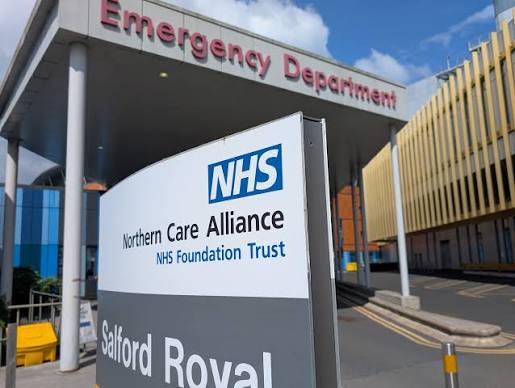
More than 350 operating-theatre staff announced on Thursday that they are preparing to walk out at four Greater Manchester hospitals next week, turning a dispute over overtime pay into the latest warning sign of growing pressure inside the NHS. Staff at Salford Royal Hospital, Royal Oldham Hospital, Rochdale Infirmary and Fairfield Hospital in Bury are due to take industrial action on Monday 24 August, Wednesday 26 August and Friday 28 August. The workers include nurses, clinical support workers and housekeepers.

AD: Capeesh Restaurant
At the centre of the dispute is overtime administered through NHS Professionals. UNISON says workers who are entitled to time-and-a-half when covering shortages have sometimes received less than the value of a normal shift, with some reportedly losing more than £80 per shift. On the surface, this may appear to be another argument about pay. But the deeper story is about what happens when a health service becomes dependent on staff repeatedly working beyond their normal hours to compensate for shortages.
Hospitals cannot function without operating-theatre staff. When vacancies and pressure increase, overtime becomes more than an occasional extra shift — it can become part of the machinery keeping services moving. That makes disputes over overtime particularly significant. If staff feel that the additional work they are being asked to undertake is not being properly recognised, the willingness to keep filling those gaps can quickly disappear.
UNISON says an offer intended to resolve the dispute was withdrawn before staff had the opportunity to discuss it. The union has accused Northern Care Alliance bosses of failing to show leadership, while the organisation now faces another three days of industrial action. The consequences extend beyond the employees standing on picket lines.

AD: Oysterian Sea Food Restaurant And Bar
Every hospital strike creates a difficult balancing act. Staff have a right to challenge pay and working conditions, but patients can become caught between a workforce demanding change and a healthcare system trying to protect services. That tension is particularly uncomfortable in hospitals, where delays are not simply inconveniences and where the people affected may already be anxious, unwell or waiting for treatment. Yet it would be too easy to portray the dispute as staff choosing strikes over patients.
The more uncomfortable interpretation is that repeated industrial disputes can be symptoms of an NHS struggling to maintain a stable workforce. Earlier this year, resident doctors were also involved in prolonged disputes over pay and jobs before a deal was reached, illustrating how questions about recruitment, retention and working conditions have become increasingly difficult for the health service to escape.
Greater Manchester’s hospitals are therefore facing a problem that cannot be solved simply by getting through three days of disruption. A settlement may end the immediate dispute. It will not, by itself, remove the pressures that produced it.
The hope will be that negotiations restart quickly and that appointments and operations can continue with as little disruption as possible. For staff, the hope is that management recognises that a workforce cannot indefinitely be expected to absorb shortages through extra hours. The real test for hospital leaders is not simply whether they can keep theatres open next week. It is whether they can build a system in which staff feel they can keep those theatres open without having to fight to be properly rewarded for doing so.

AD: Heritage And Restaurant Lounge Bar