
By James Simons-
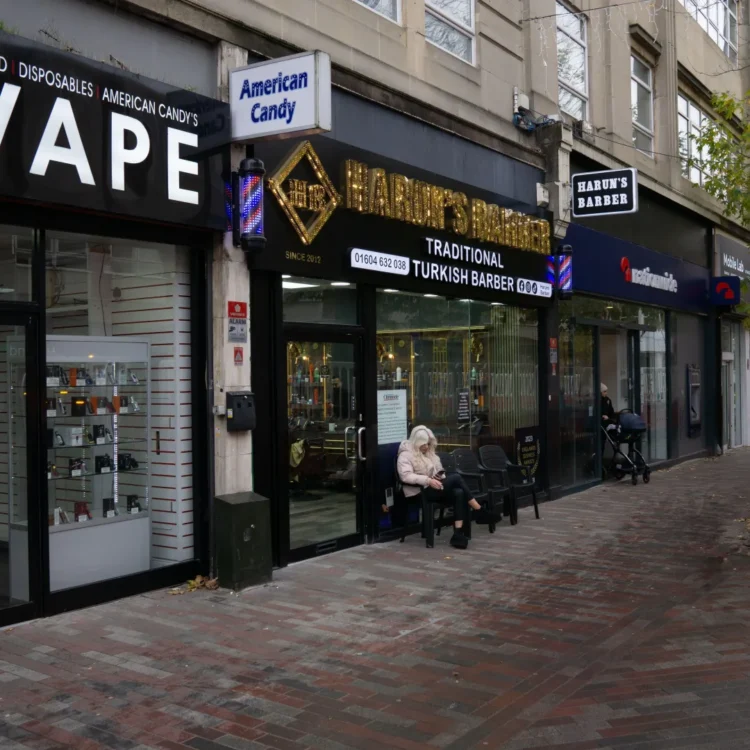
In England’s most economically disadvantaged communities, the face of the local high street is changing in ways that researchers say are both symptomatic of deeper inequalities and potentially harmful to the health and well-being of residents.
A new analysis reveals that England’s poorest neighbourhoods have about 70 % more vape shops and bookmakers than wealthier districts, while essential services and community amenities have dwindled.

AD: Capeesh Restaurant
This trend is not just a statistic it is a stark visual and economic reality for many towns and cities whose once-bustling town centers now feel more like commercial deserts punctuated by outlets that sell addictive products or offer little in the way of community value.
The result, experts warn, may be a reinforcement of social exclusion and poorer health outcomes across generations.
The findings come from a report by the Independent Commission on Neighbourhoods (Icon) and supported by wider research from groups like Health Equity North.

AD: Oysterian Sea Food Restaurant And Bar
These organisations analysed commercial data across England’s local high streets and neighbourhood shopping precincts over the past decade and found a clear pattern: deprived areas are significantly more likely to host outlets such as vape shops, bookmakers, off-licences and takeaway food outlets and far less likely to have banks, pharmacies, community spaces and diverse retail options that contribute to thriving local economies.
According to the study, England’s poorest communities have around 70 % more vape retailers and betting shops than more affluent areas, a ratio that highlights how certain types of retail outlets cluster where incomes are lowest and economic opportunities are most limited.
Researchers point out that these numbers paint a worrying picture of local retail ecology one in which unhealthy or high-risk industries are filling commercial gaps left by the decline of essential services.
This shift on the high street has been dramatic. Data going back to 2014 show that the number of vape shops in England increased by nearly 1,200 % by 2024, with deprived areas reporting more than three times the number of vape retailers compared to the least deprived areas.
Bookmakers and pawnbrokers also proliferated disproportionately, with deprived communities seeing up to 25 times the number of pawnbrokers and more than three times as many betting outlets than affluent high streets.
Meanwhile, services that traditionally knit communities together like banks, supermarkets, public toilets, libraries and pharmacies have been disappearing. Retail diversity has shrunk, creating what some researchers describe as “retail deserts” or “high street ghost towns”.
One consequence of this landscape is the creation of so-called “addictive environments,” where residents are surrounded by shops selling products that can contribute to health problems or financial stress.
A complementary study conducted found that deprived areas were more than twice as likely to gain a bookmaker or vape shop, and were also at greater risk of losing supermarkets and basic public services like toilets.
Experts say this clustering of certain businesses isn’t random: rather, it is shaped by economic forces, planning policies, and patterns of investment that favour low-cost, high-turnover retail models in areas with weakened economic prospects.
In more affluent towns and cities, a broader mix of businesses including cafés, gyms, independent shops and service industries has largely survived, bolstered by stronger consumer spending and higher property values.
This divergence in high street composition reflects a broader economic divide in England, where wealth and opportunity remain unevenly distributed between regions, between urban and rural areas, and between rich and poor neighbourhoods.
Public health academics and community campaigners argue that this skewed retail environment has real consequences beyond the aesthetics of a high street. More outlets selling addictive products especially in communities already struggling with deprivation, poor health outcomes and limited access to services can exacerbate social and health inequalities.
From a policy perspective, the clustering of vape shops and betting houses underscores the challenge of regulating retail environments in a way that supports healthier, more resilient communities. Some experts have urged the Government to take decisive action, not just to limit the proliferation of “health-reducing” businesses, but also to incentivise the return of community goods and services.
Indeed, in recent months, there have been signs that policymakers are beginning to respond. In autumn 2025, the Prime Minister backed calls from health and urban planning experts to grant local authorities more power to regulate high street outlets such as betting shops and vape retailers.
This policy shift reflects recommendations from studies like the “Ghost Towns” high street report, which called for greater local control to counteract market trends creating unhealthy retail dominance.
However, analysts caution that regulation alone will not reverse the deep-seated inequalities shaping local economies. While Dr Luke Munford, a health economist involved in the research, told policymakers, “If we want to create high streets that truly support healthier, fairer communities, we must also invest in bringing back vital amenities like libraries and community hubs, and give residents a real voice in shaping their local retail mix.”
The policy conversation has broadened to include discussions about how to address the root causes of high street decline: from austerity and pandemic-era shocks to shifts in consumer spending habits and the rise of online retail.
Reviving vibrancy in neighbourhoods may require not only planning reforms but also targeted investment in third spaces community centres, cafés, parks and other places where people can gather and interact outside of commercial transactions.
Defenders of current planning policies argue that markets naturally respond to local demand and that efforts to limit certain business types risk being overly interventionist. But critics counter that unfettered commercial growth often reflects the lowest common denominator: high-profit, low-benefit businesses that thrive where economic alternatives are scarce.
Residents themselves report mixed reactions to the changing retail landscape. While some appreciate the convenient access to vape products or recognise betting shops as part of modern entertainment culture, many feel the retail offerings do little to enhance community life.
Polling data show widespread public concern about the health of local high streets, with 68 % of people saying there are too many vape shops on their high street, and 65 % calling for a better mix of quality shops overall.
Critics also highlight that the dynamics of retail decline are not just about supply but also about economic exclusion: deprived communities often have lower consumer spending power and higher costs of business rates and rents, making them less attractive to diverse retailers.
Against this backdrop, high-margin operators like vape shops and bookmakers can thrive because they require relatively little space, sell products with large profit margins and do not rely on high foot traffic of the kind that supports supermarkets or service-oriented businesses.
Economists emphasise that addressing these patterns requires holistic approaches combining planning reform, investment, community engagement and broader efforts to tackle the socioeconomic conditions underlying retail decline.
Without such measures, the risk is that deprived areas will continue to be defined not by the amenities that nourish healthy, connected communities, but by businesses that profit from vulnerability.

AD: Heritage And Restaurant Lounge Bar