
By Lucy Caulkett-
Earl Spencer’s explosive account of a conversation after Diana’s death has reopened an old royal wound. But the most revealing part of the controversy may be the Palace’s unusually pointed response — and what can, and cannot, reasonably be inferred from it.
King Charles has lived with an uncomfortable reality that however much the monarchy has moved forward, the story of Diana’s death has never entirely left him.
Now Earl Spencer has put King Charles III, who was then a Prince, back at the centre of it. In his forthcoming memoir, Swan Song: Diana, My Sister, Diana’s brother alleges that the then-Prince Charles reacted to her death with an attitude of astonishing detachment. Spencer says that, during a furious telephone conversation in the days following Diana’s death in August 1997, Charles told him:
“Rest assured, we’ll forget her soon enough.”
Spencer says the argument concerned whether Princes William and Harry, then only 15 and 12, should walk behind their mother’s coffin at her funeral. He opposed the idea, believing Diana would not have wanted her sons exposed to such an ordeal. According to his account, Charles became angry before making the remark.
But Spencer’s book contains an even more provocative description. He recalls Charles sounding “giddily elated” when he spoke about Diana’s death, contrasting his alleged reaction with the stunned responses of others who contacted him. Those are extraordinarily serious characterisations.
And they explain why Charles is suddenly back under a spotlight that the Royal Family has spent years trying to move beyond. Ordinarily, Buckingham Palace does not engage publicly with claims made in books. This time it did, and its response was carefully constructed.
A Palace spokesperson said:
“While we do not comment on books as a matter of principle, His Majesty is mindful that the pain of fraternal grief can cloud reason, affect judgement and colour memory in ways others do not recognise, even many years after such a loss.”
The wording is important because the Palace did not simply say: Charles never said this. Nor did it say: Earl Spencer is lying. Instead, it challenged the foundation on which Spencer’s allegation rests — his memory. That is a subtle but powerful distinction.
The Palace effectively leaves the alleged conversation hanging in the air while inviting the public to question whether Spencer’s recollection of it can be trusted. And that bears an uncanny resemblance to another famous royal formulation.
“Recollections may vary”
In 2023, after Prince Harry and Meghan’s allegations concerning conversations about the couple’s son and race, Buckingham Palace issued a statement saying that the issues raised were “concerning”, that they would be taken seriously and that “some recollections may vary.”
The circumstances are very different. The 2023 statement concerned allegations made by Harry and Meghan, while the current controversy concerns Spencer’s recollection of an alleged private conversation almost 30 years ago.
Yet the rhetorical mechanism is strikingly similar. In both cases, the Palace avoids accepting the disputed account as fact. But rather than mounting a detailed point-by-point rebuttal, it introduces uncertainty around memory and competing recollections.
That approach has an obvious advantage and disadvantage for the institution. It avoids being trapped into litigating every detail of a private conversation, but also carries a risk.
Yet, the Palace’s response elevates the allegation, and subjects its response to open scrutiny by the press and public. This is where the story becomes more interesting than the allegation itself, in what can reasonably be inferred from Spencer’s account, and the official response from the Palace.
It is clear that the relationship between Diana’s family and Charles remained deeply antagonistic in the immediate aftermath of her death. Spencer claims he remembers the events with extraordinary certainty, and has now publicly doubled down on his claims, saying the words attributed to Charles were “exactly” what was said and that he told friends and family about the conversation at the time because he regarded it as so shocking
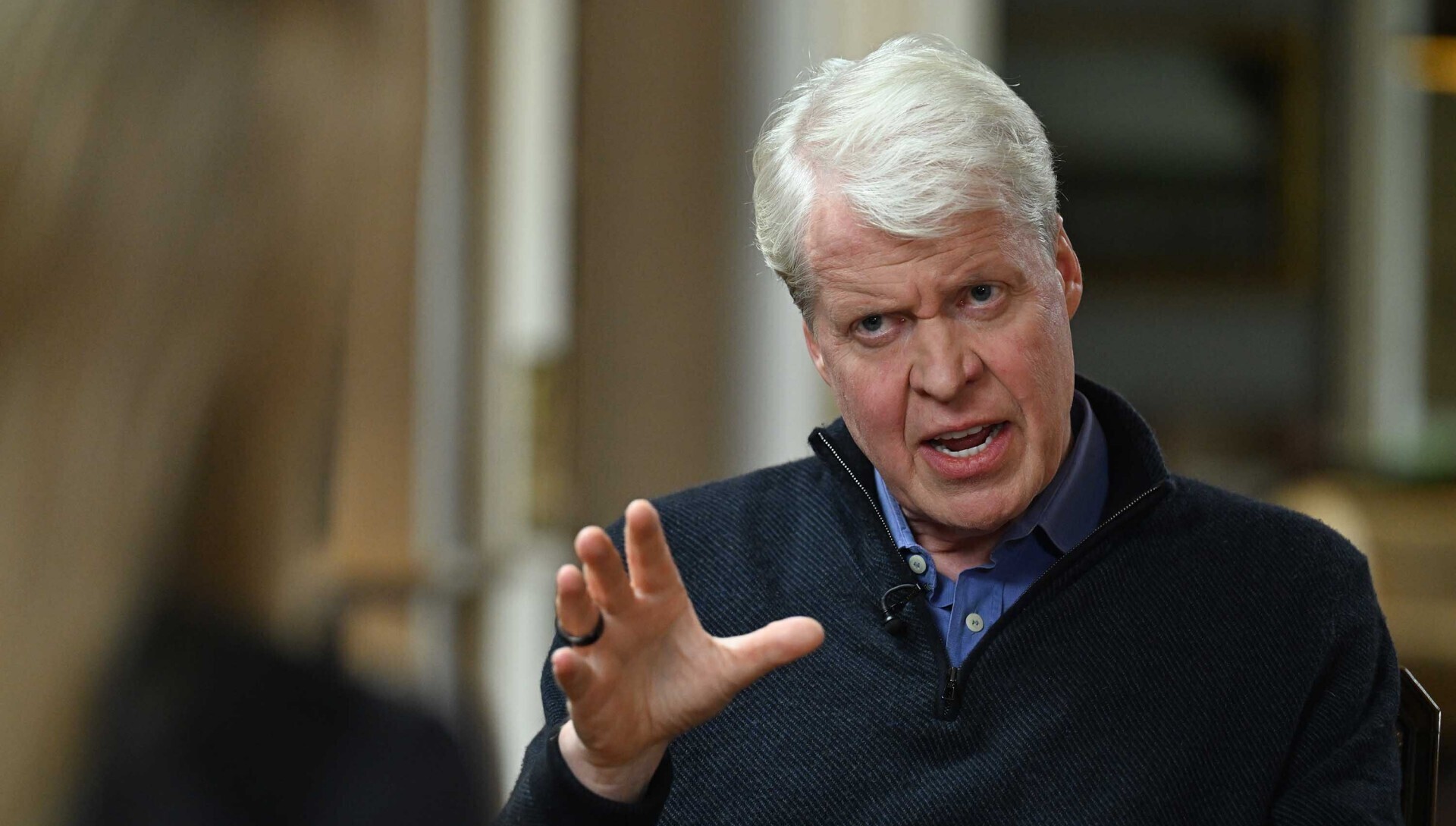
Earl Spencer, brother of Diana, Princess of Wales, being interviewed by Laura Kuenssberg at his Althorp estate ahead of the publication of his book, ‘Swan Song: Diana, My Sister’, which is due to be published next week. Picture: Jeff Overs/BBC/PA

AD: Heritage And Restaurant Lounge Bar
The Palace clearly considers the allegation serious enough to warrant an unusual public intervention.Those are meaningful facts, but there is a line that should not be crossed. Spencer’s allegation does not provide evidence that Charles was involved in causing Diana’s death.
The alleged conversation took place after her death. Even if every word Spencer remembers were subsequently corroborated, it would establish something about an alleged conversation and Charles’s attitude towards Diana — not that he knew about, arranged, or participated in the events that caused the crash.
However, it could also fuel speculation in some or many quarters that the king was happy to see his former wife dead. Even that speculation, as troubling as it would be, could still be neither here nor there. Comments of that nature would also depend on context, what preceded it, and the overall mood of the communicator.
The view from Spencer that the present king at the time was giddy and elated as a lottery winner will not go down well for any member of the public who chooses to believe Spencer’s account and perception of Charles’s mood and behaviour at the time.
The 2008 inquest into Diana’s death considered extensive conspiracy allegations and found no basis for the claim that the crash had been staged as an assassination involving members of the Royal Family or the security services.
The jury ultimately found Diana and Dodi Fayed were unlawfully killed through the grossly negligent driving of Henri Paul and the pursuing vehicles. Spencer’s memoir does not overturn those findings. What it does is reopen the question of how Charles behaved and what he thought in the extraordinary days after Diana’s death.
Why the words matter
The alleged phrase — “we’ll forget her soon enough” — carries particular force because of the multiple ways it can be interpreted, and the fact history proved the opposite. Diana was not forgotten. Ofcourse she is not spoken about everyday, and neither is King Charles, or public figures. The once most beautiful and most photographed woman in the world, remains etched in the memory of the British public,
Princess Diana’s image became one of the most enduring in modern British public life. Her sons have carried her memory into their own public lives. Her death remains one of the defining moments of the late Queen Elizabeth II’s reign. Indeed, the renewed interest in Diana this week demonstrates the very point.
Nearly 30 years after her death, a single alleged sentence from a private conversation has become international news. If Spencer’s recollection is accurate, it would present a deeply uncomfortable picture of Charles’s attitude towards Diana at a moment when the country was mourning her. That picture would be really disturbing, and capable of opening up a can of worms.
The problem for the king is larger than whether one sentence was spoken.Charles and Diana’s marriage was one of the most scrutinised relationships of the twentieth century. Their separation, the revelations of infidelity, the collapse of their public relationship and Diana’s subsequent global popularity permanently altered the public perception of the monarchy.
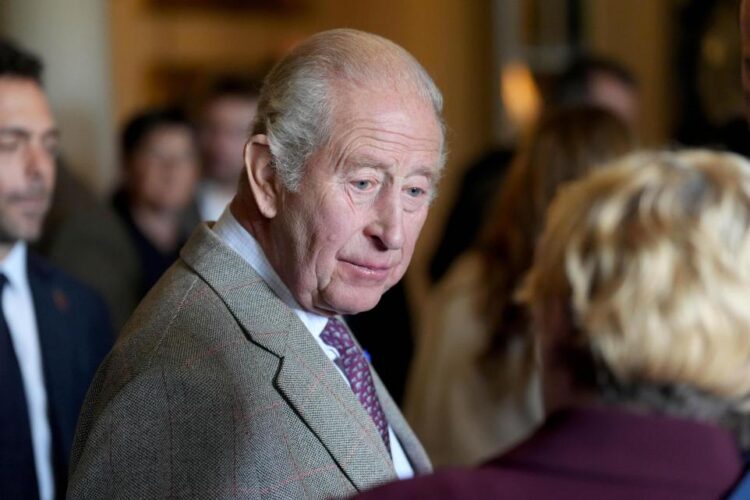
Under attack: King Charles III has been accused of being happy as a lottery winner following Princess Diana’s death in 1997
Diana’s death then transformed the conflict from a royal marital drama into a national trauma. The monarchy survived it. Charles eventually married Camilla. The institution modernised. But Diana remained part of the King’s story.
And now, on the eve of the 30th anniversary of her death, her brother reopened the file.Reuters has noted that the renewed controversy demonstrates the enduring public fascination with Diana and the continuing difficulty for Charles in escaping the legacy of their troubled marriage.
That is perhaps the most significant implication of Spencer’s intervention. It is not that his memoir proves a hidden conspiracy. It is that it demonstrates how little has been settled emotionally about Diana’s place in the royal story.
The real battle is over the historical record
Ultimately, this is becoming a contest over memory. Spencer is adamant he remembers exactly what was said by Charles thirty years ago, but the king, whilst presenting no outright denial of the conversation, says Spencer’s memory has been coloured by grief.
Neither position, by itself, resolves the historical question. The decisive evidence would be contemporaneous documentation or independent witnesses who can corroborate the conversation. Spencer says he spoke about it to friends and family at the time.
Independent verification from those friends and family that Spencer described the conversation shortly after it occurred, would still not prove that Charles used the precise words alleged — but it could strengthen the case that Spencer’s recollection was not created decades later. Until then, the fairest conclusion is narrower — but still significant.
Earl Spencer’s memoir has certainly placed Charles’s behaviour after Diana’s death back under scrutiny. Buckingham Palace’s unusual response has confirmed that the allegation has struck a nerve. And the language used by the Palace recalls its earlier strategy of acknowledging deeply serious allegations while leaving room for competing recollections.
It also does something arguably more immediate and politically potent for the monarchy’s public image. It brings the King back into the story of Diana.And that is a story from which Charles has never completely escaped.