
By Aaron Miller-
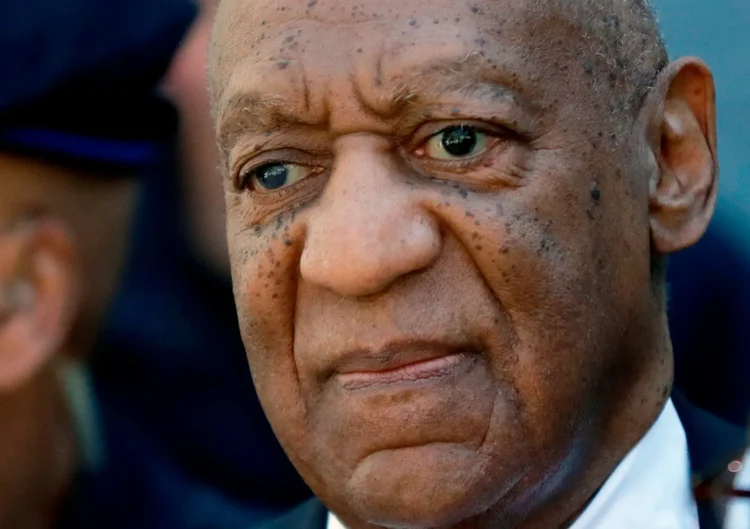
In a landmark civil verdict that reverberates across decades of legal, cultural, and social change, a jury has found Bill Cosby liable for a sexual assault dating back to 1972. The ruling, which awarded the victim nearly $60 million in damages, represents one of the most significant financial judgments in a historical sexual assault case and underscores the evolving landscape of accountability in the justice system.
The case, rooted in allegations that remained unresolved for more than half a century, brings renewed attention to both Cosby’s legacy and the broader societal reckoning surrounding sexual misconduct by powerful figures. For the victim, whose identity has been protected in legal proceedings, the verdict marks a profound moment of validation after decades of silence and delayed justice.

AD: Capeesh Restaurant
After a nearly two-week trial in Santa Monica, California, jurors on Monday found the 88-year-old guilty of the sexual battery and assault of Donna Motsinger, who was a server at a restaurant in Sausalito near San Francisco at the time of the aggression.
In her lawsuit, filed in 2023, Motsinger said Cosby had invited her to his stand-up comedy show at a theatre in nearby San Carlos. Both were in their 30s at the time.
She said Cosby gave her wine and two pills that she believed were aspirin, and that she was going in and out of consciousness as two men put her in a limousine.

AD: Oysterian Sea Food Restaurant And Bar
“She woke up in her house with all her clothes off,” the lawsuit said. “She knew she had been drugged and raped by Bill Cosby.”
The lawsuit centered on claims that Cosby sexually assaulted the plaintiff in 1972, during a time when he was rapidly rising to prominence in American entertainment. According to court filings, the victim alleged that Cosby used his influence and position of trust to commit the assault, leaving lasting emotional and psychological trauma.
The case remained dormant for years, like many historical allegations of sexual violence—due to a combination of social stigma, fear of retaliation, and limited legal pathways available to survivors at the time. Only in recent years, amid shifting public attitudes and legal reforms, did the opportunity arise for the case to be brought before a jury. Legal experts point to changes in statutes of limitations and the introduction of “look-back windows” in some jurisdictions as key factors enabling older cases to proceed. These legal mechanisms allow survivors to file civil claims even after traditional deadlines have passed, acknowledging the complex realities of trauma and delayed reporting.
During the trial, jurors heard testimony detailing the alleged assault and its long-term impact on the victim’s life. The proceedings included both personal accounts and expert testimony addressing the psychological effects of sexual violence, particularly when experienced in environments shaped by power imbalances.
Cosby’s legal team contested the allegations, arguing that the claims were unsubstantiated and too distant in time to be reliably adjudicated. They raised questions about evidence, memory, and due process—issues that frequently arise in historical cases.
Despite these arguments, the jury ultimately found in favor of the plaintiff, concluding that Cosby was liable for the assault. The nearly $60 million award included both compensatory damages—intended to address the victim’s suffering—and punitive damages, designed to penalize particularly egregious conduct. The size of the award sends a clear signal about the seriousness with which the jury viewed the case. Legal analysts note that punitive damages of this magnitude are relatively rare and typically reflect a desire to deliver a strong message about accountability.
This verdict adds another chapter to Cosby’s already complicated legal history. Once celebrated as a groundbreaking figure in television, Cosby became one of the most prominent figures to face widespread allegations of sexual misconduct during the early years of the #MeToo era.
In 2018, he was convicted in a criminal trial related to a separate case involving Andrea Constand. However, that conviction was later overturned in 2021 by the Pennsylvania Supreme Court, which ruled that a prior agreement with prosecutors had been violated.
The overturning of the criminal conviction sparked intense debate about due process, prosecutorial conduct, and the rights of defendants. For many observers, it also highlighted the limitations of the criminal justice system in addressing sexual assault cases—particularly those involving influential individuals. Civil cases, such as the one involving the 1972 allegation, operate under a lower burden of proof than criminal trials. Instead of requiring guilt “beyond a reasonable doubt,” civil juries determine liability based on a “preponderance of the evidence,” meaning it is more likely than not that the misconduct occurred. This distinction has made civil litigation an increasingly important avenue for survivors seeking accountability when criminal prosecution is not possible or has failed.
The Broader Cultural Context
The verdict arrives in the wake of a broader cultural transformation in how society understands and responds to sexual misconduct. Movements such as #MeToo movement have played a pivotal role in amplifying survivors’ voices and challenging long-standing norms that discouraged reporting.
In the years since the #MeToo movement gained global traction, numerous high-profile figures across industries—including entertainment, politics, and business—have faced allegations and legal consequences. These cases have collectively reshaped public discourse, emphasizing the importance of accountability regardless of status or fame. Cosby’s case, in particular, has often been viewed as a precursor to the movement. Long before #MeToo became a global phenomenon, dozens of women had come forward with allegations against him, describing similar patterns of behavior. While not all of these claims resulted in legal action, they contributed to a growing awareness that ultimately influenced public perception and legal proceedings.
One of the most striking aspects of the 1972 case is the sheer passage of time between the alleged incident and the trial. Historical cases present unique challenges for both plaintiffs and defendants, including the availability of evidence, the reliability of witness testimony, and the fading of memories.
Coming forward decades later victims often involves revisiting deeply painful experiences while facing scrutiny and skepticism. Advocates argue that these challenges underscore the importance of legal frameworks that accommodate delayed reporting, recognizing that trauma can significantly affect when and how individuals choose to speak out.
Defense attorneys, on the other hand, emphasize the importance of fairness and due process, arguing that the ability to mount an effective defense can be compromised when cases rely heavily on recollections from the distant past.
The tension between these perspectives continues to shape legal debates and policy decisions, particularly as more historical cases enter the courts.
Attorneys representing the victim described the ruling as a moment of long-overdue justice, emphasizing the courage required to pursue the case after so many years. In statements following the verdict, they highlighted the broader significance of the decision for other survivors who may still be considering whether to come forward.
“This verdict is not just about one individual,” one member of the legal team said. “It’s about acknowledging the reality that justice can still be pursued, even decades later.”
Cosby’s representatives have yet to provide a detailed public response to the ruling, though legal observers anticipate the possibility of an appeal. Appeals in civil cases typically focus on procedural issues or questions of law rather than re-examining the facts of the case.
Public reaction has been mixed but largely reflective of broader societal divides. Supporters of the verdict see it as a necessary step toward accountability, while critics raise concerns about fairness in cases involving long-past allegations.
The nearly $60 million award stands out not only for its size but also for what it represents.
Large financial judgments in civil cases serve multiple purposes. They includecompensating victims, deterring similar conduct, and signaling societal condemnation of the behavior in question.
In this case, the award includes both economic and non-economic damages, addressing factors such as emotional distress, pain and suffering, and the long-term impact on the victim’s life. The punitive component further underscores the jury’s intent to impose consequences beyond simple compensation.
Legal experts note that while such awards can be reduced on appeal or through post-trial motions, they nonetheless carry significant symbolic weight.
Cosby was regarded as a cultural icon, or decades for his role in The Cosby Show and his influence on American television. His work was widely credited with breaking racial barriers and reshaping representations of Black families in mainstream media.
However, the accumulation of allegations and legal battles has dramatically altered public perception. Institutions have distanced themselves from his legacy, and many honors and accolades have been rescinded.
This latest verdict further complicates an already contentious legacy, reinforcing the extent to which his career achievements are now viewed alongside—and often overshadowed by—serious allegations of misconduct.

AD: Heritage And Restaurant Lounge Bar