
By Theodore Brown-
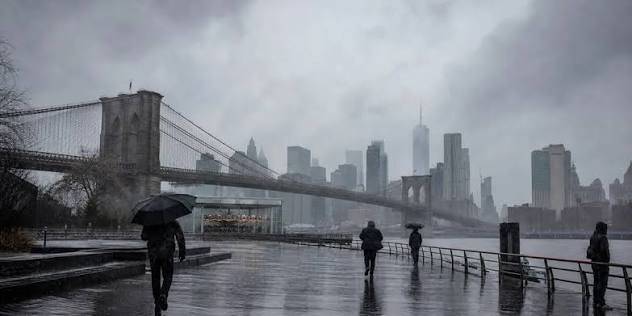
A powerful storm swept across the central and eastern United States on Thursday, November 26, disrupting Thanksgiving celebrations, knocking out electricity to more than 900,000 homes and businesses and forcing the postponement of New York’s iconic Macy’s Thanksgiving Day Parade for the first time in its 100-year history.
The severe weather, driven by a powerful nor’easter, brought torrential rain, damaging winds and widespread flooding, creating dangerous travel conditions during one of the busiest holiday periods in the United States. Pennsylvania, Maryland and Virginia were among the worst-affected states, as emergency services and utility providers faced mounting pressure to respond to widespread disruption.
AD: Capeesh Restaurant
The scale of the disruption was reflected in figures from power outage tracking website PowerOutage, which reported that more than 900,000 homes and businesses had lost electricity. Meanwhile, flight tracking service FlightAware recorded nearly 400 flight cancellations and more than 2,000 delays across the country, with the majority affecting airports along the eastern seaboard.
However, one of the most striking consequences of the storm was the postponement of the world-famous Macy’s Thanksgiving Day Parade in Manhattan. Organisers announced that the spectacular annual event, renowned for its enormous colourful balloons, elaborate floats and millions of spectators, would instead take place on Saturday, citing an abundance of caution amid concerns over dangerous weather conditions.
The decision marked an unprecedented moment in the parade’s century-long history. Apart from its cancellation for three consecutive years during the Second World War, the event had never previously been prevented from taking place on Thanksgiving Thursday.
AD: Oysterian Sea Food Restaurant And Bar
The safety concerns were not without precedent. In 1997, strong winds caused an 18-foot inflatable figure of the Cat in the Hat to lose control and topple a lamppost, leaving one spectator unconscious. Reflecting on the difficult decision to postpone this year’s celebrations, Macy’s parade executive producer Will Coss said organisers were heartbroken but insisted that the safety of participants, partners and spectators would always come first.
Beyond the parade, the storm caused widespread disruption across communities along the East Coast, with heavy rainfall and powerful gusts bringing down trees, damaging property and sending debris onto roads and power lines. Flooding was reported in several areas, while saturated ground increased the risk of further trees collapsing under the force of the winds.
In Washington DC and surrounding areas, the National Weather Service forecast rainfall of between one and three inches, accompanied by wind gusts reaching up to 55 miles per hour. Images from the capital showed the destruction caused by the conditions, including a fallen tree crushing a parked vehicle in the city’s Van Ness neighbourhood.
The impact of the power outages also raised concerns about essential infrastructure. Authorities in Maryland’s suburbs of Washington DC urged nearly two million customers to conserve tap water, warning that electricity disruptions could affect the water treatment network.
With conditions remaining dangerous, officials appealed to residents to avoid unnecessary journeys and exercise caution. Several major bridges were closed because of high winds, while New Jersey Governor Mikie Sherrill, who declared a state of emergency on Wednesday, urged residents to prepare for continued disruption.
In a message posted on social media platform X, Sherrill advised people to keep their electronic devices charged, report electricity outages directly to utility providers and stay well away from fallen power lines.
Despite the disruption, some Americans were determined not to allow the storm to completely ruin the Thanksgiving festivities. Celebrity chef José Andrés offered a glimpse of how families could adapt to the conditions, posting a video on X showing a candlelit dining room and lobsters cooking on a gas-powered stove, accompanied by the message: “No electricity? No problem.”
The Thanksgiving storm came amid a wider spell of severe weather across the United States. On the West Coast, California also experienced significant weather disruption during the same week, with powerful waves battering coastal communities, prompting evacuations in some areas and bringing heavy rain to San Francisco.
What should have been a day of family gatherings and celebration for millions of households in america instead became a holiday overshadowed by power cuts, travel chaos and severe weather warnings. The postponement of one of New York’s most cherished annual traditions provided a particularly striking illustration of the storm’s severity, as authorities continued to prioritise public safety amid challenging conditions.
AD: Heritage And Restaurant Lounge Bar