
By Isabelle Wilson-
The idea that a doctor, professor, surgeon or other highly educated professional could commit an act of extreme violence challenges one of society’s most enduring assumptions: that education, professional achievement and social standing are reliable indicators of good character and sound judgement.
Doctors are entrusted with preserving life. Academics are associated with intellectual discipline, while other professionals often occupy positions of considerable responsibility and public confidence. Their careers demand years of training, personal sacrifice and sustained commitment. Yet history has repeatedly demonstrated that professional success does not necessarily translate into emotional maturity, empathy or the ability to manage personal conflict.

AD: Capeesh Restaurant
The fatal shooting at a Washington DC gym, in which a doctor was identified in media reports as the suspected gunman, brings this uncomfortable issue into focus. Although investigators have yet to establish a definitive motive, reports have pointed towards an alleged dispute involving the suspect and his building’s homeowners association.
If that dispute proves relevant, it will raise difficult questions about how an apparently ordinary disagreement can escalate into devastating violence.
It may be premature to conclude that a property dispute alone explains theis dreadful attack. Psychologists say understanding extreme violence requires looking beyond the immediate disagreement and examining the psychological, social and situational factors that can sometimes combine to produce catastrophic consequences. When things like this occur, the media is not always privy to the full scale of the grievance that triggers this level of criminality.

AD: Oysterian Sea Food Restaurant And Bar
There is no single explanation for why someone commits an atrocity. However, psychological and criminological research provides important insights into how personal grievances, perceived humiliation, unresolved resentment and an individual’s response to adversity can, in exceptional circumstances, contribute to violence.
The psychology of grievance when Perceived Injustice can become an obsession
One of the most compelling explanations examined in contemporary research is grievance-fuelled violence. At its simplest, this describes situations in which an individual becomes increasingly preoccupied with what they believe to be an injustice committed against them.
The perceived wrongdoing may involve losing a job, professional humiliation, financial disagreements, rejection, damaged reputation or a prolonged dispute with an organisation. In some cases, the grievance may have a genuine foundation. In others, the individual’s interpretation of events may become increasingly distorted or disproportionate.
What matters is not simply whether somebody has been treated unfairly, but how they process that experience. Most people encounter disappointments, disagreements and perceived injustices during their lives. They may become angry, seek legal advice, complain to authorities or pursue other legitimate remedies.
The overwhelming majority never contemplate violence. However, a small minority may become consumed by resentment, repeatedly revisiting the perceived injustice until it assumes an increasingly dominant position in their thinking. This process is sometimes described as fixation.
The individual becomes preoccupied with a particular person, institution or event, interpreting subsequent experiences through the lens of the original grievance. Their sense of identity may become increasingly connected to the belief that they have been wronged and deserve redress.
In extreme circumstances, the desire to obtain justice can become entangled with a desire for revenge. A particularly valuable academic contribution to understanding this behaviour is a 2022 study by Nathan Brooks and Justin Barry-Walsh, published in Frontiers in Psychology, titled Understanding the Role of Grievance and Fixation in Lone Actor Violence.
The researchers examine how perceived injustice, rejection, victimisation and challenges to personal identity can contribute to grievance-fuelled violence. They argue that understanding an individual’s particular circumstances and psychological vulnerabilities is essential when assessing the potential for violence.
Their work is especially relevant because it moves away from the simplistic assumption that mass violence must always be explained through political ideology, extremism or an identifiable psychiatric condition. Some attacks may instead emerge from deeply personal grievances that develop over time. The authors also emphasise the importance of understanding the individual’s circumstances rather than relying on a single label to explain their behaviour.
Narcissistic Injury
Another important concept is narcissistic injury, which refers to a perceived blow to an individual’s self-image, status or sense of personal importance. For someone whose identity is closely connected to professional achievement, authority or recognition, being criticised, rejected or humiliated may be particularly difficult to process.
However, it is important not to confuse narcissistic injury with a clinical diagnosis or assume that people experiencing it are violent. The concept offers one possible explanation for how some individuals respond to perceived humiliation, not a means of predicting who will commit an offence.
Research into targeted violence also identifies a possible progression from grievance to violent thinking and, in some cases, preparation and action. Stephen W. Weston discusses this in his 2021 work, Rethinking the Path to Intended Violence, which examines how individuals may move through stages of grievance, ideation, research, planning and preparation before an attack.
The significance of this research is that it challenges the idea that extreme violence always happens spontaneously. In some cases, the process may unfold over weeks, months or even years.
Why profesisonal Status and Intelligence do not always guarantee good conduct
Perhaps the most unsettling aspect of cases involving doctors and other highly educated professionals is the apparent contradiction between their professional responsibilities and their capacity for violence.
A medical qualification requires considerable intellectual ability, discipline and years of training. Yet none of these qualities necessarily provides protection against destructive emotional responses, poor interpersonal judgement or an inability to manage personal conflict.
Professional identity can become particularly important when individuals derive much of their self-worth from their occupation. For some, a successful career provides not only financial security but also recognition, authority, social standing and a sense of purpose.
When those foundations are threatened, the resulting distress can be significant. A professional who experiences disciplinary action, rejection or perceived humiliation may struggle to reconcile their established image of themselves with circumstances they regard as unfair.
This does not mean that highly educated people are more likely to commit violence. Nor does it suggest that professional frustration is inherently dangerous. Rather, it demonstrates that intelligence and occupational achievement should never be confused with emotional resilience or moral judgement. Historical cases illustrate this distinction.
In 2017, former physician Henry Bello opened fire inside Bronx-Lebanon Hospital in New York, killing a doctor and injuring six other people before taking his own life. The attack followed workplace difficulties and allegations involving sexual harassment.
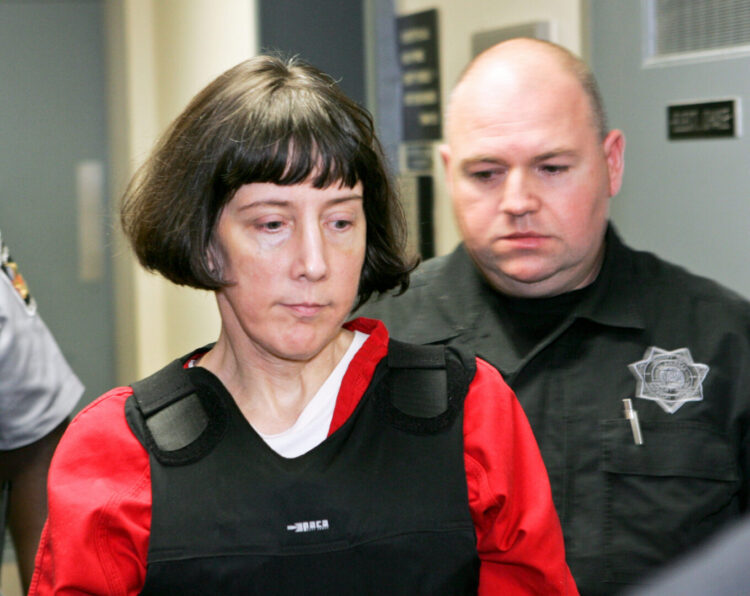
In 2010, Amy Bishop,(pictured) a Harvard-educated academic, shot and killed three colleagues during a university faculty meeting in Alabama. The incident followed a dispute concerning her academic career and tenure application.
Research by the US Federal Bureau of Investigation also provides an important perspective. Its examination of workplace violence identifies grievances, perceived injustice, revenge and a desire to regain control as recurring motivations in some targeted attacks.
The FBI has emphasised that mass shootings are not necessarily spontaneous acts, with some perpetrators considering and preparing their actions beforehand. Its research also highlights the importance of colleagues and other people recognising concerning behaviour and reporting it appropriately.
The research should also be approached without reinforcing damaging stereotypes about mental illness. Mental health difficulties alone do not establish that somebody is dangerous, and the overwhelming majority of people experiencing mental health problems never commit violence.
Indeed, the US Secret Service’s National Threat Assessment Center stresses that there is no single demographic profile of a targeted attacker. Its research instead emphasises the importance of examining behaviour, communications, circumstances and potential warning signs.
The UK Government has also examined these issues in its recent research on violence-fixated individuals, highlighting the importance of perceived victimhood, repetitive anger and unresolved grievances in some pathways towards violence. Its analysis reinforces the argument that identifying and understanding the underlying grievance may be more useful than simply concentrating on the final act.
If the reported dispute with the homeowners association proves to have played a significant role, investigators will need to establish how the circumstances developed, whether there were previous warning signs and whether opportunities existed to prevent the violence.
There is also a wider responsibility for institutions, employers and public authorities to take credible threats seriously, provide appropriate channels for resolving disputes and ensure that concerning behaviour is not dismissed simply because an individual enjoys professional standing.
The most important lesson is that society must distinguish between professional competence and personal character. A medical degree demonstrates the ability to acquire and apply complex knowledge; it does not automatically establish empathy, emotional maturity or an ability to manage adversity.
Nor should we assume that someone who appears successful and socially respectable is incapable of destructive behaviour. Understanding why a small minority of people cross the boundary between grievance and violence is essential, not because every dissatisfied professional represents a potential threat, but because recognising genuine warning signs may help prevent another tragedy.
How the American society can better understand the complex human vulnerabilities that sometimes exist behind even the most respectable professional façades, and how those vulnerabilities can be addressed before innocent people pay the ultimate price, must be the ideal goal for every American today.

AD: Heritage And Restaurant Lounge Bar