
By Theodore Brown-
A convicted killer who murdered his prison cellmate in a calculated attempt to secure his own execution, smiled at witnesses before delivering a remarkably casual final statement moments before his death in Florida.
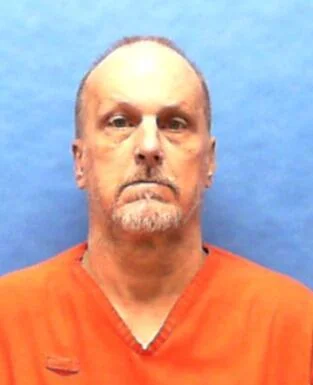
James Robertson, 63, was pronounced dead at 12.32pm on Tuesday, October 13, after receiving a lethal injection at Florida State Prison. When asked by the prison warden whether he had any final words, Robertson reportedly looked towards those watching through the glass, smiled and replied: “Nah, I’m straight.”

AD: Capeesh Restaurant
The brief remark brought an extraordinary end to a case that has drawn international attention because of Robertson’s chilling admission that he deliberately killed another prisoner to escape the prospect of spending the rest of his life behind bars. His execution was Florida’s 17th this year, underscoring the state’s increasingly aggressive use of capital punishment.
Robertson was sentenced to death for the December 2008 murder of his cellmate, Frank Richard Hart, at Charlotte Correctional Institution. The attack was not the result of a reported dispute between the two men. Robertson’s stated objective was to be transferred to death row, where he believed his circumstances would be preferable to the restrictive conditions he was experiencing in prison.

AD: Oysterian Sea Food Restaurant And Bar
Hart was strangled while sleeping in their shared cell, using prison-issue socks, according to accounts of the killing. In one of the most heartbreaking details surrounding the case, Hart’s daughter, Rebecca Hart, said her father was just eight days away from his scheduled release when he was murdered. He had been preparing to return to his family, only for his life to be cut short inside the institution responsible for holding him.
Robertson made little effort to conceal his motive after the killing. Instead of denying responsibility, he acknowledged that the attack had been deliberate and pursued the death sentence he wanted.
In a sworn statement submitted on October 19, 2012, Robertson confessed to the premeditated murder. He also disclosed that he had previously attempted to attack a correctional officer in an effort to obtain master keys, with the intention of killing another inmate. He warned authorities that he would continue committing murders behind bars if the state did not sentence him to death.
The admissions presented prosecutors and the courts with an unusual case: a prisoner who was not merely accepting capital punishment as a possible consequence of murder but actively seeking it as his preferred outcome.
Robertson pleaded guilty to first-degree murder, waived his right to a jury trial during the penalty phase and declined further post-conviction appeals. His decisions removed the prolonged legal challenges that often accompany capital cases and left little uncertainty about his determination to see the sentence carried out.
His story reached an even wider audience after he appeared in the Netflix true-crime documentary series I Am a Killer. The programme explored his background and his explanation for killing Hart, bringing renewed attention to the circumstances that led a prisoner to commit another murder in pursuit of his own death.
Robertson’s history of incarceration stretched back to 1980, when he entered prison as a teenager following burglary and assault convictions. Subsequent offences behind bars extended his imprisonment, and he spent years under highly restrictive conditions. Advocates opposing his execution have argued that prolonged isolation, a lack of rehabilitation and the absence of meaningful human contact contributed to the despair that shaped his decisions.
Those circumstances, however, do not diminish the loss suffered by Hart’s family. His murder deprived him of the opportunity to return home, while his relatives were left to endure nearly two decades of grief before witnessing the conclusion of the case.
Robertson’s execution also reignited a fierce debate over whether capital punishment can deter violent crime when a condemned prisoner deliberately commits murder to obtain a death sentence.
Floridians for Alternatives to the Death Penalty, an advocacy organisation opposing executions, argued that the case exposed a fundamental contradiction in the state’s approach. If a prisoner sees execution as preferable to continued imprisonment, the threat of death may fail to prevent violence and, in extraordinary circumstances, may even become an incentive.
The organisation also called attention to the conditions Robertson experienced during his imprisonment, while stressing that Hart was a victim whose life and family deserved compassion. Its position reflects a broader argument among abolitionists that the justice system should protect the public, hold offenders accountable and prevent further violence without resorting to state-sanctioned killing.
For supporters of capital punishment, Robertson’s execution represents the completion of a sentence imposed for a deliberate and devastating crime. For opponents, it raises difficult questions about deterrence, rehabilitation and the state’s responsibility for the people in its custody.
Inside the prison, Hart’s family witnessed the final chapter of a case that had followed them for almost 18 years. Outside, opponents of the death penalty gathered to protest Florida’s execution programme.
Robertson’s final smile and dismissive words offered no apparent resolution to those competing arguments. Instead, his death left behind the same disturbing question that has shadowed the case from the beginning: what does it say about a system of punishment when a man is willing to kill another human being simply to be killed himself?
Editorial note: The story is based on the material you supplied, checked against reporting by the Associated Press, The Independent and the advocacy organisation Floridians for Alternatives to the Death Penalty.

AD: Heritage And Restaurant Lounge Bar