
By Lucy Caulkett
LONDON, Tuesday, October 13, 2026 — Britain’s economic outlook has received a modest boost after the International Monetary Fund raised its forecast for UK growth this year, but millions of households may see little immediate relief as high energy costs, persistent inflation and borrowing pressures continue to weigh on family budgets ahead of the autumn Budget.
In its latest economic assessment published on Tuesday, the IMF raised its forecast for UK economic growth in 2026 to 1.3 per cent, reflecting stronger-than-expected performance during the first half of the year, particularly expansion linked to artificial intelligence industries. However, the improvement offers only partial reassurance. The Fund expects growth to slow to 1.2 per cent in 2027, while inflation is forecast to average 3.3 per cent this year and 2.8 per cent next year, remaining above the Bank of England’s 2 per cent target.

AD: Capeesh Restaurant
It is not absolutely certain if that growth will translate into lower living costs, better financial security and greater purchasing power. A stronger national growth forecast does not automatically mean cheaper food, reduced rent, lower mortgage payments or smaller energy bills. Families who have already spent years adjusting their spending to accommodate higher prices may continue to feel the strain even if economic activity improves.
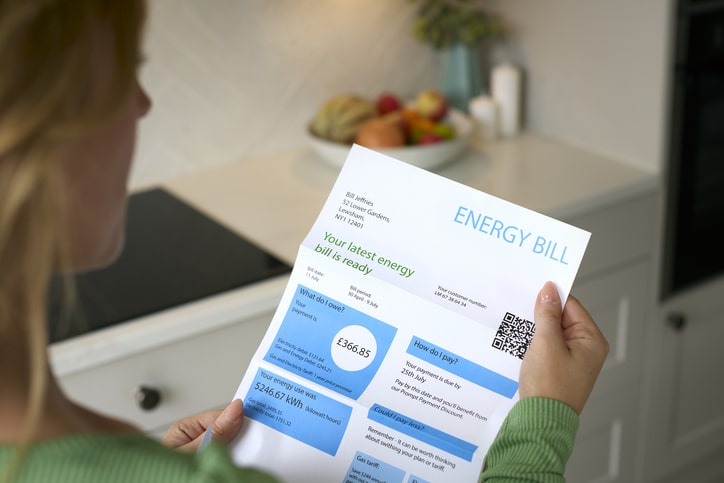
Energy costs are emerging as one of the most pressing concerns. With higher bills expected in January, households face the prospect of entering the new year under renewed financial pressure just as the Government prepares its Budget for October 28.
The timing places additional scrutiny on ministers, who must weigh demands for assistance against the need to maintain control of public finances. The IMF has cautioned against broad energy subsidies, favouring targeted and temporary support instead. <Cite refs={[“turn472412news26”]}/>

AD: Oysterian Sea Food Restaurant And Bar
That recommendation presents a difficult choice for policymakers. A universal subsidy could offer immediate help to a wide range of households, but it would also place a substantial cost on public finances and provide assistance to people who may not need it.
Targeted support could concentrate resources on low-income families and vulnerable consumers, although identifying eligible households and ensuring that assistance arrives quickly can present practical challenges. The Government’s approach will therefore be judged not only by the amount it spends, but by whether support reaches those most exposed to rising bills.
The IMF’s assessment also places the Government’s economic strategy under closer examination. Its chief economist, Silvana Tenreyro, has urged the UK to maintain its efforts to strengthen public finances, arguing that fiscal discipline remains important even as the growth outlook improves.
That position reflects a wider dilemma facing the Treasury: ministers are under pressure to respond to the cost-of-living squeeze while also addressing spending commitments and avoiding measures that could undermine economic stability. <Cite refs={[“turn472412news26”]}/>
The outlook for businesses is similarly mixed. Stronger growth can support investment, consumer demand and employment, particularly in sectors benefiting from technological development. Yet elevated energy costs and borrowing expenses can make expansion more difficult for companies that depend on affordable finance or operate with narrow profit margins.
Smaller businesses may be especially sensitive to higher overheads because they often have less capacity to absorb sudden increases in operating costs. If businesses pass those expenses on to customers, household budgets could face further pressure.
The role of artificial intelligence in the improved growth forecast also raises questions about how evenly economic gains will be distributed. Investment in AI-related industries can increase productivity and attract capital, but the benefits may not immediately reach workers in every sector or region.
A headline improvement in national output can therefore coexist with financial insecurity among households whose wages are struggling to keep pace with living costs. The broader challenge for policymakers is to ensure that economic growth supports employment, productivity and living standards beyond a relatively narrow group of industries.
The weeks ahead will be important in determining whether the improved forecast provides a foundation for greater economic confidence or merely offers limited comfort before another difficult winter.
The October 28 Budget is expected to provide a clearer indication of how the Government intends to balance fiscal restraint with demands for practical support. Decisions on energy assistance, public spending and taxation will help shape the immediate financial outlook for households and businesses.
Britain may be on course to grow faster than previously expected this year, but the real test will be whether that improvement reaches people who have yet to feel a meaningful recovery in their finances. Until wages, essential costs and household confidence move in a more favourable direction, a stronger growth forecast alone is unlikely to end the cost-of-living anxiety confronting many across the country

AD: Heritage And Restaurant Lounge Bar