
By Gabriel Princewill-
LONDON — The Rt Hon Alex Norris MP was formally sworn in as Lord Chancellor and Secretary of State for Justice today, becoming the third Labour Lord Chancellor in just two years and receiving a pointed reminder from the Lady Chief Justice of the constitutional duty to protect the independence of the judiciary.
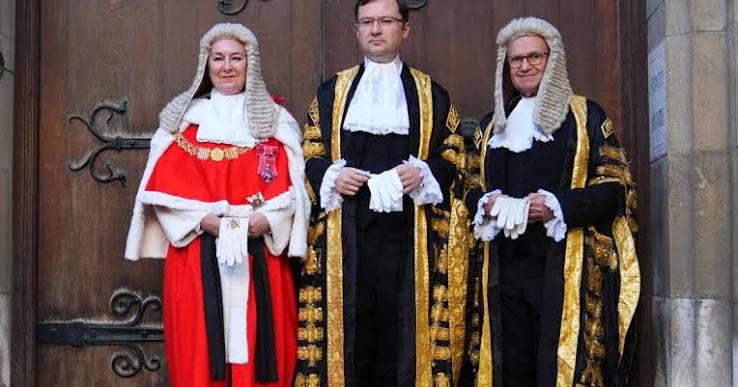
Norris, 42, a former trade union organiser, arrived at the Royal Courts of Justice at 8:45am without the traditional wig, taking part in a ceremony steeped in constitutional history. Led by the Tipstaff and the Mace of Office, he entered the court complex where he was greeted by Baroness Carr of Walton-on-the-Hill, the Lady Chief Justice, and Sir Geoffrey Vos, the Master of the Rolls.

AD: Capeesh Restaurant
The ceremony formally completes a process that began in July, when Norris was appointed by the Labour government to replace David Lammy as Lord Chancellor and Justice Secretary.
The interval between his appointment and formal swearing-in is understood to be the longest in recent history, adding an unusual feature to an office whose constitutional responsibilities extend far beyond the administration of the justice system.
Alex Norris, the MP for Nottingham North and Kimberley, vowed he would “bring with me a profound respect for the institutions that make our country great”.

AD: Oysterian Sea Food Restaurant And Bar
Norris’s arrival comes at a significant moment for the relationship between government and the courts. The Lord Chancellor occupies a distinctive position at the intersection of the executive, Parliament and the judiciary, carrying a statutory responsibility to uphold the rule of law and defend judicial independence.
That responsibility was placed firmly at the centre of the ceremony by Baroness Carr.In her address welcoming Norris, the Lady Chief Justice stressed that taking the oath at the Royal Courts of Justice was not merely a ceremonial formality but a public reaffirmation of the constitutional relationship between the Lord Chancellor and the judiciary.
“Taking the oath here, today, once more affirms – publicly – the particular, the fundamental relationship that the lord chancellor has with the judiciary, and the office’s statutory duty to defend judicial independence,” Baroness Carr said. She went further, stressing that the obligation to defend judicial independence is not confined to private discussions or constitutional convention.
“That duty has many facets to it,” she said, “but it includes a duty to speak out publicly in defence of that independence whenever necessary.”
The remarks put judicial independence at the heart of Norris’s first formal appearance in his new constitutional role. They also underline the unusual nature of the Lord Chancellor’s responsibilities.
The duty to defend judicial independence does not amount to the conclusion that judges are absolved from accountability for rulings or conduct that may be tantamount to judicial overreach.
The press and indeed ministers, are free to criticise judicial overreach or misconduct deemed to amount to an abuse of power. Athough he is a member of the government and a senior political figure, he is simultaneously entrusted with safeguarding the institutional independence of the courts.
Norris was accompanied during the ceremony by the traditional symbols of the office, including the Tipstaff and Mace of Office, as he entered the Royal Courts of Justice. After the formal proceedings, he stood alongside Baroness Carr and Sir Geoffrey Vos on the steps of the building, marking the beginning of his tenure in one of the most constitutionally sensitive positions in government.
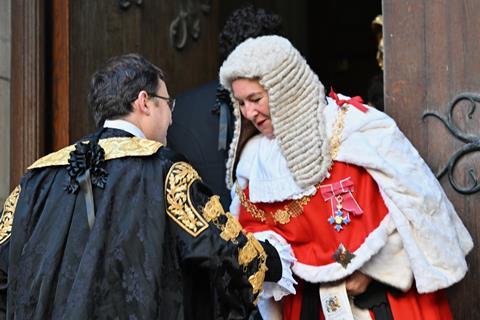
Lady Carr, the lady chief justice, greets Alex Norris MP on the steps of the Royal Courts of Justice (Image: Michael Cross)
His appointment makes Norris the third Labour politician to hold the combined offices of Lord Chancellor and Justice Secretary in two years. The rapid succession has placed particular emphasis on the continuity of the office and the constitutional obligations that survive changes in the political personnel occupying it.
Norris succeeds David Lammy, who previously held the post. The formal swearing-in also coincided with the appointment of Ellie Reed KC as Attorney General and Andy Slaughter as Solicitor General in Andy Burnham’s government, bringing the government’s senior legal offices formally into place.
The ceremony nevertheless belonged primarily to Norris and to the constitutional responsibilities attached to his office. The significance of the occasion went beyond the appointment of another government minister.
The Lord Chancellor’s relationship with the courts is deliberately distinctive within Britain’s constitutional arrangements. The office requires its holder to operate within government while maintaining a responsibility to defend judicial independence.
Her emphasis on the need to speak publicly when judicial independence requires defence is particularly significant. It makes clear that the Lord Chancellor’s responsibility is not merely to respect the independence of judges in principle, but to defend that independence when it comes under pressure.
Norris now assumes the office with that obligation formally reaffirmed before the senior judiciary. The ceremony at the Royal Courts of Justice thus marked both the completion of his appointment and the beginning of a constitutional relationship that will be closely watched. As Lord Chancellor, Norris will be required to navigate the competing demands of government policy, parliamentary accountability and the independence of the courts.
His first formal day in office ended with a clear message from the head of the judiciary. The Lord Chancellor’s role is not simply to administer justice on behalf of the government. It is also to stand up for the independence of the institution through which justice is administered.
The oath taken at the Royal Courts of Justice therefore carries a responsibility extending well beyond ceremony because it is a public commitment to the constitutional principle that the judiciary must remain independent—and, when necessary, to defend that principle publicly.
Image: James Manning/PA)