
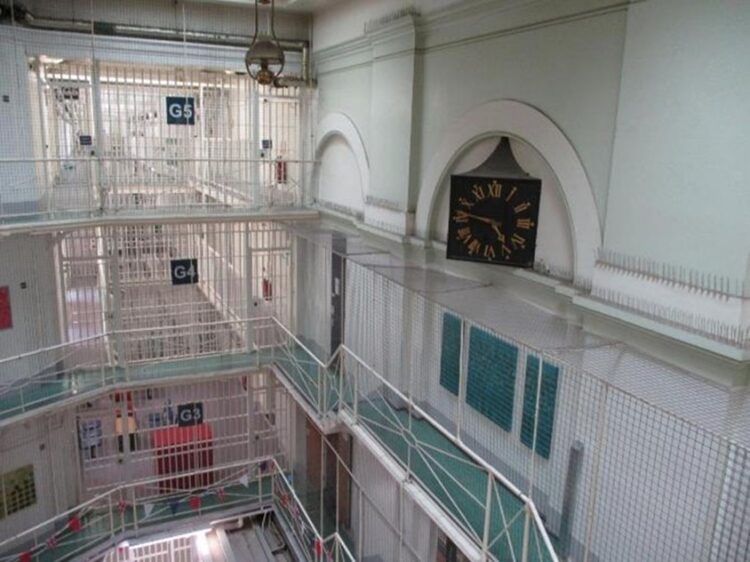
By Gavin Mackintosh-
Serious failings at one of Britain’s largest and most overcrowded prisons have exposed the mounting pressures facing the country’s prison system, after inspectors found inmates living in vermin-infested conditions, spending up to 22 hours a day locked in their cells and expressing widespread fears about their safety.
An inspection of HMP Pentonville in north London found what the chief inspector of prisons, Anne Owers, described as a culture of “institutional disrespect”, with basic standards of safety, decency and prisoner welfare failing to be consistently maintained.

AD: Capeesh Restaurant
The findings painted a troubling picture of a prison struggling to cope with an increasingly unstable and overcrowded population.
Built to accommodate 897 prisoners, Pentonville was holding 1,125 at the time of the inspection in June. The overcrowding was accompanied by inadequate facilities, poor access to education and activities, and shortages of basic items. Inspectors found that some prisoners did not even have pillows, while on one evening there was reportedly insufficient food for inmates.

AD: Oysterian Sea Food Restaurant And Bar
The inspection also revealed deep concerns about personal safety. More than half of the prisoners questioned said they felt unsafe inside the prison, while 40 per cent said they feared being victimised by staff.
The proportion of prisoners making such allegations had risen significantly since the previous inspection in 2005, when the figure stood at 29 per cent. Illegal drugs were also reported to be readily accessible. Four in ten prisoners said they could easily obtain drugs, adding to concerns about security and the ability of prison authorities to maintain effective control.
The conditions at Pentonville are particularly significant because the prison has a long and troubled history, as well as an important place in the history of Britain’s penal system. Opened in 1842, Pentonville was designed according to ideas that were influential in Victorian approaches to imprisonment.
Its original model emphasised strict discipline, isolation and reform, reflecting the belief at the time that prisoners could be rehabilitated through a highly controlled environment.
The prison was built during a period when Britain was rapidly expanding its use of imprisonment. The Victorian prison system increasingly sought to replace earlier forms of punishment with organised institutions intended to reform offenders as well as punish them. Pentonville became an important example of this new approach, although its early regime of isolation was itself controversial and was later modified.
More than a century and a half later, the inspection findings highlighted a very different problem: not excessive isolation as a deliberate method of punishment, but prisoners being confined to their cells for prolonged periods because the prison lacked the capacity and resources to provide meaningful activities.
Inspectors said the prison’s problems had worsened since the previous inspection. Pentonville’s population was described as particularly difficult to manage because it was highly transient, with increasing numbers of prisoners held on remand or awaiting sentence.
Managers were therefore facing a continual turnover of inmates, making it harder to establish stability and consistent routines.
Anne Owers acknowledged the staff who remained committed to creating a more decent environment, while stressing that the inspection should serve as a warning to ministers and the wider public about the scale of the problems facing overcrowded considerable difficulties confronting prison management, particularly the pressures created by overcrowding. However, she argued that these pressures could not explain away the prison’s underlying failures.
Systems intended to protect prisoners and maintain standards, she said, needed to be properly implemented and monitored rather than existing only on paper.
At the same time, the chief inspector recognised the efforts of prison employees who were attempting to improve conditions. She praised staff who remained committed to creating a more decent environment, while stressing that the inspection should serve as a warning to ministers and the wider public about the scale of the problems facing overcrowded and heavily pressured local prisons.
The findings were particularly serious because Pentonville was not dealing with a static prison population. The arrival of large numbers of new prisoners each day placed additional pressure on accommodation, staff, healthcare, security, food with as many as 100 new prisoners arriving each day.
Officials also said pest-control agencies had been brought into the prison following provision and rehabilitation programmes.
The Prison Service responded by saying that action was already being taken. Director of operations Michael Spurr said the senior management team had been strengthened and that the governor was taking a firm approach towards allegations of inappropriate behaviour by staff.
The operational capacity of Pentonville had also been temporarily reduced by 116 places in an attempt to ease the pressure.
The Prison Service said Pentonville had been operating under “significant pressure”, with as many as 100 new prisoners arriving each day. Officials also said pest-control agencies had been brought into the prison following the inspection and rejected the suggestion that prisoners would be left without food.
However, the assurances did little to remove concerns about the underlying conditions. The controversy intensified after 14 members of staff were suspended following allegations of corruption.
The allegations added another dimension to the inspection findings, raising questions about management, staff conduct and the ability of prison authorities to maintain proper standards.
Calls for Pentonville to close
Juliet Lyon of the Prison Reform Trust argued that the situation had become so serious that the Home Secretary should consider closing Pentonville. She described the prison as being “not fit for purpose”.
The political response was equally critical. Conservative home affairs spokesman Edward Garnier called for stronger leadership and accused successive ministers of failing to confront the underlying problems of the prison system.
Liberal Democrat spokesman Nick Clegg argued that the conditions exposed by the inspection represented a wider crisis. He warned that overcrowding and poor conditions could undermine efforts to rehabilitate prisoners and reduce reoffending.
The debate therefore extended beyond the immediate problems at Pentonville. At its heart was a wider question about the purpose of imprisonment and whether overcrowded institutions can realistically deliver the rehabilitation expected of them.
Pentonville’s problems reflected a long-running tension within Britain’s penal system. Prisons are expected simultaneously to punish offenders, protect the public, maintain order and prepare prisoners for eventual release.
When overcrowding, inadequate facilities, staff pressures and poor management combine, each of those responsibilities becomes more difficult to fulfil.
The history of Pentonville illustrates how dramatically the purpose and pressures of imprisonment have changed since the Victorian era. The prison was originally established as an ambitious experiment in controlled rehabilitation.
Yet more than 160 years later, inspectors were describing conditions in which prisoners could spend most of the day confined to their cells, while basic needs were sometimes not being met.
The challenge facing ministers and prison managers was therefore not simply to improve one institution. It was to address the structural pressures that had allowed overcrowding and deteriorating conditions to become entrenched.
The Pentonville inspection offered a stark warning. Vermin, overcrowding, allegations of staff misconduct, widespread fears about safety, limited access to education and inadequate basic provisions are not simply matters of comfort. They affect the ability of a prison to maintain order and, ultimately, its capacity to prepare prisoners for life after release.
Pentonville’s crisis consequently raised a fundamental question about Britain’s approach to imprisonment: how can prisons be expected to protect the public and reduce reoffending if they struggle basic standards was an urgent task. For the wider prison system, it was a warning that overcrowding and institutional pressure to provide prisoners with safe, decent and properly managed conditions?
The inspection showed that restoring those basic standards was an urgent task. For the wider prison system, it was a warning that overcrowding and institutional pressure could not be treated as temporary problems indefinitely.
Pentonville prison was contacted for comment

AD: Heritage And Restaurant Lounge Bar