
By gabriel Princewill-
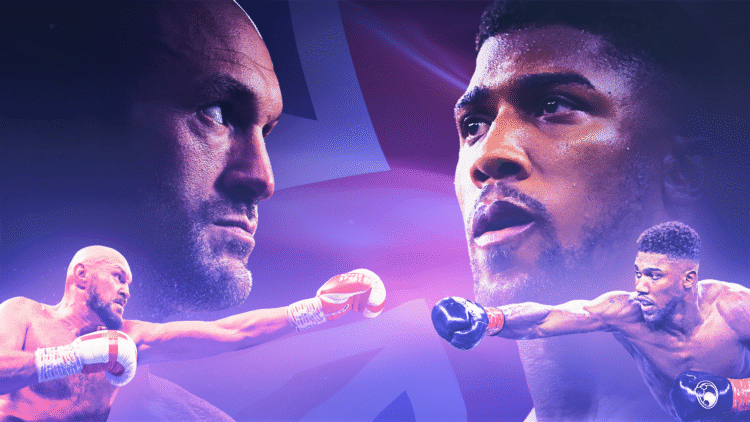
The fight between Anthony Joshua and Tyson Fury may finally be heading for Cardiff after years of false starts, broken negotiations and increasingly elaborate promises, For much of the past decade, their meeting has existed in the peculiar space between inevitability and impossibility. Whenever the heavyweight division seemed ready to make room for the two biggest British names of their generation, circumstances intervened and the contest slipped away again. Now, with the Principality Stadium emerging as the leading venue and December 12 being reported as the likely date, the fight has reached the point at which the old speculation is beginning to look like something more tangible. The final arrangements still require confirmation, but after so many years of waiting, Joshua-Fury is once again close enough to become real.
What makes this contest so compelling is not simply that Joshua and Fury are famous heavyweights, or that between them they have occupied much of the division’s most important territory over the last decade. It is that their careers have developed alongside one another without ever properly intersecting. They became British boxing’s two great heavyweight attractions at different moments and in different ways, yet the sport continually returned to the same unresolved question: what would happen if they fought?

AD: Capeesh Restaurant
Joshua’s rise was the cleaner of the two stories. An Olympic gold medallist at London 2012, the former world heavyweight champion moved rapidly through the professional ranks and became a world champion before establishing himself as one of the biggest commercial stars in the sport. His victory over Wladimir Klitschko at Wembley in 2017 seemed to confirm that he belonged among the division’s defining figures. A year later, when he defeated Joseph Parker in Cardiff, he unified three of the heavyweight titles and appeared to be moving towards the undisputed championship that had become the obvious ambition of his career.
Fury’s trajectory was altogether more complicated. He reached the summit by defeating Klitschko in Germany in 2015, taking the heavyweight titles from a champion who had dominated the division for more than a decade- 11 years to be precise. But his subsequent absence from boxing meant that the sport moved on without him. His eventual return became one of boxing’s great comeback stories, and his trilogy with Deontay Wilder transformed him from a controversial British champion into a global attraction whose personality was almost as significant to his appeal as his performances in the ring. The 6ft 9 gypsy king had convincingly dethroned two reigning world champions, in the process cementing his professional authourity and credentials as a credible world champiom. Joshua’s appeal began to fade slowly, as Fury took over the scene. Eventually talk of joshua facing Wilder’s conqueror for an all british showdown became the interest and expectation of British boxong fans
Joshua and Fury could talk about fighting one another as often as they liked, but heavyweight boxing has rarely been governed by sporting logic alone. Mandatory challengers had to be dealt with, rematch obligations had to be honoured, promoters had to agree on terms and broadcasters had their own commercial interests. The negotiations became part of the story, and every new development seemed to produce another reason why the fight could not quite happen yet.

AD: Oysterian Sea Food Restaurant And Bar
That history explains why the prospect of Cardiff carries a significance beyond the choice of venue. The Principality Stadium is not merely a large arena capable of accommodating a huge boxing audience; it is already part of Joshua’s professional history. He defeated Carlos Takam there in 2017 before returning the following year to beat Parker in a significant world-title unification bout. Bringing Fury to the same stadium would therefore give the proposed fight a distinctly British setting and, in Joshua’s case, a familiar one.
There had been serious discussion of taking the fight to the United States, including New York, where the commercial possibilities were considerable. But Joshua’s camp has pushed for the contest to remain in Britain, and Eddie Hearn has said that Joshua turned down a more lucrative American option in order to pursue a UK event. Those claims form part of the continuing negotiations and should be understood as statements from Joshua’s promoter rather than independently established facts about the entire financial structure of the proposed fight.
Cardiff consequently offers a compromise between spectacle and home advantage. The Principality Stadium has the capacity and infrastructure expected for an event of this scale, including a retractable roof, while its location gives the fight the atmosphere of a major British sporting occasion rather than making it another heavyweight blockbuster exported overseas. There is even a curious commercial consequence to the international audience: reports have suggested that the event could begin unusually late in Britain in order to accommodate American television viewers.
Yet the venue and the date are ultimately secondary to the question that has followed Joshua and Fury for years. Their rivalry has survived even as the circumstances surrounding it have changed because neither man has been able to provide the definitive answer to the other’s place in British heavyweight history. They have both won world titles, both fought some of the most important heavyweights of their era and both have suffered defeats that altered the direction of their careers. What remains absent is a result between them.
That absence has acquired a weight of its own. Had they fought several years ago, the contest would have been sold principally as a battle between two unbeaten or near-unbeaten champions at the height of their powers. Instead, if they finally meet in Cardiff, they will do so with the accumulated history of everything that has happened since the fight was first seriously discussed. Joshua’s defeats by Oleksandr Usyk and Fury’s own encounters with the Ukrainian changed the heavyweight landscape, while both men have had to rebuild their careers and reputations in the aftermath.
It means the fight can no longer be reduced to the simple question of who was the better heavyweight in his prime. It has become a contest between two established careers that have followed remarkably different paths but have repeatedly arrived at the same destination. For Joshua, victory would add the most conspicuous missing name to a résumé that already contains many of the division’s leading figures. For Fury, it would provide the opportunity to close one of the few remaining chapters in a career built around defeating the biggest names available to him.
That is why the old language surrounding the contest — the “Battle of Britain”, the long-awaited grudge match, the fight that wont go away, but must happen — continues to have such resonance. These phrases have been used so often that they risk becoming clichés, but in this particular case they describe a genuine historical continuity. The fight has been discussed across several generations of the heavyweight division, surviving changes in champions, promoters, broadcasters and venues. It has become a fixture of boxing conversation precisely because it has never been resolved.
The danger, of course, is that boxing has taught its audience to be cautious about celebrating Joshua-Fury before the first bell. There have been too many occasions when optimism about the fight has been followed by another delay or complication. The current reporting is considerably more advanced than some of the previous attempts, with Cardiff now being identified as the leading venue and December 12 reported as the likely date, but the distinction between a fight that is close to being announced and one that has actually been formally confirmed remains important
The most accurate description is also the most tantalising one. Joshua and Fury are closer than they have ever been to sharing a ring. If the final agreement is completed and the proposed Cardiff date survives the remaining negotiations, the fight will arrive carrying nearly ten years of anticipation with it. The talking that began when both men were younger, the negotiations that repeatedly stalled, the careers that rose and fell alongside one another and the countless arguments over who would win will finally be replaced by something much simpler and much harder to dispute: two heavyweights standing opposite each other with nowhere left to go except forward. The fight that spent years belonging to the future may finally belong to the present, and a rivalry that has been sustained almost entirely by possibility may at last be given the one thing it has always lacked: an answer.

AD: Heritage And Restaurant Lounge Bar